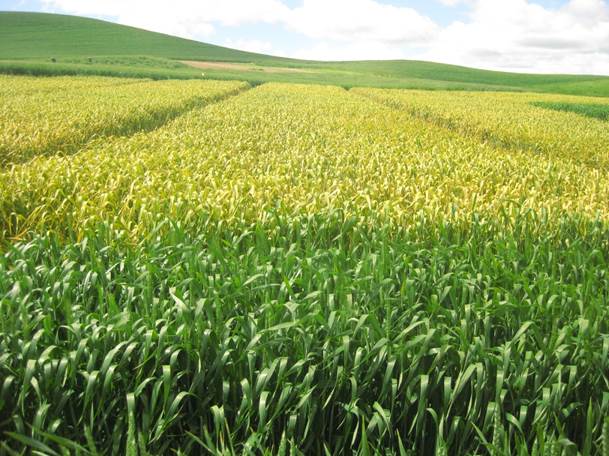
Stripe rust forecast is in the upper range of severe epidemics for Eastern PNW
Weather data collected by USDA’s Dr. Xianming Chen from November 2025 to February 2026 indicate severe epidemic levels of stripe rust. Highly susceptible varieties could experience yield losses of 40-60%. Commercial fields will likely have yield losses between 8% and 40% without a fungicide application.
Stripe rust is widespread, the pathogen is actively sporulating in central WA
On March 3, researchers checked winter wheat fields in Whitman, Lincoln, Adams, Franklin, and Walla Walla counties (including experimental fields near Pullman). The Whitman infection was found by a WSU Extension regional agronomist on March 6 in the Penawawa area. Statewide, rust incidence and severity were higher in the south than the north, correlating with regional temperature patterns. In Lincoln, 7 out of 10 commercial fields had stripe rust. Most pustules were dormant, with few actively sporulating (Figure 1).
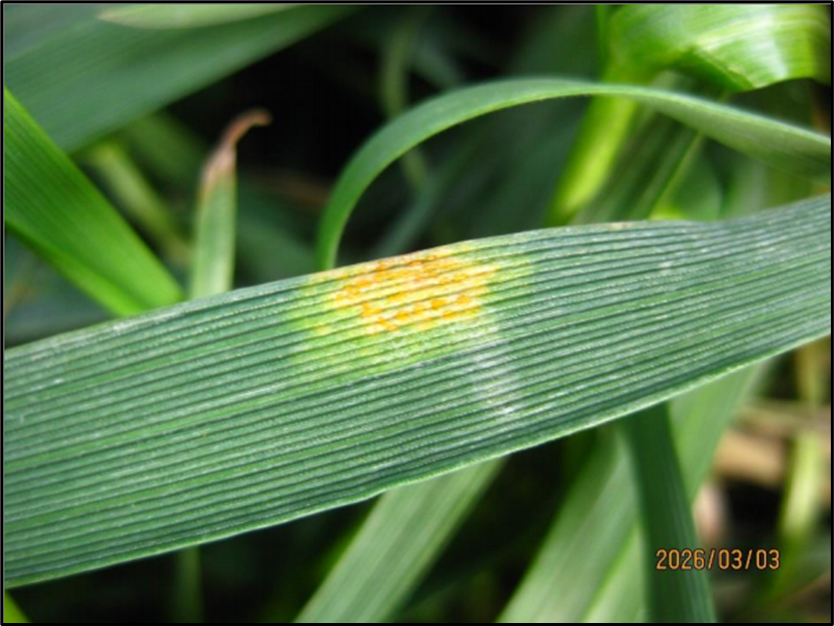
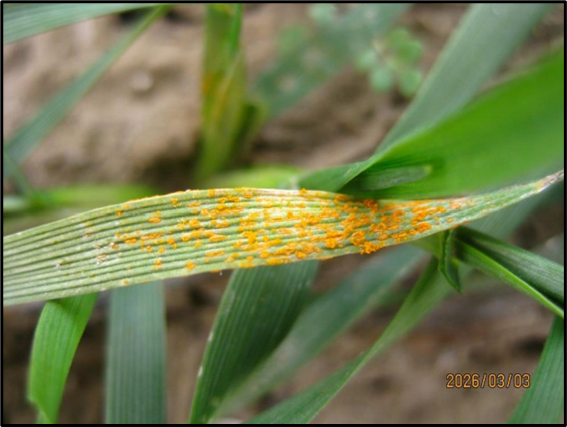
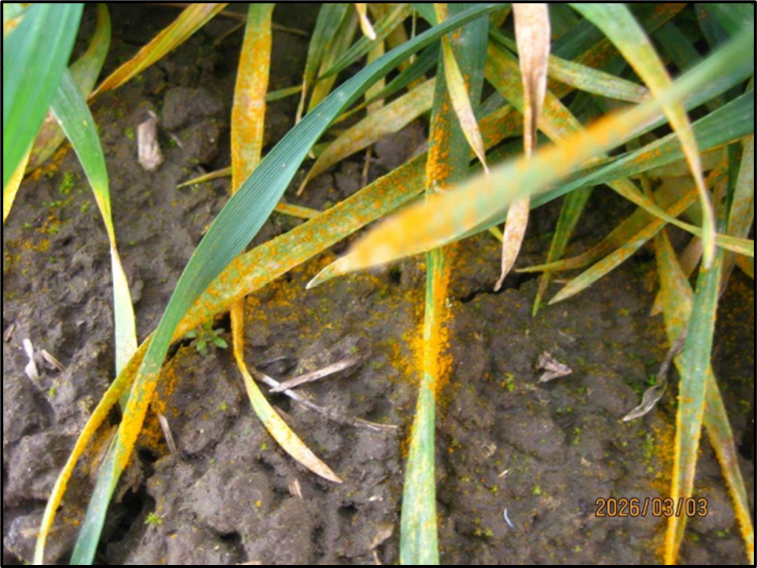
In Adams and Franklin Counties, stripe rust pustules are actively producing spores in eight of nine fields that were checked (Figures 2 & 3). In an experimental field at the WSU Lind Dryland Research Station (Adams Co.), stripe rust reached 50% incidence (Figure 4).
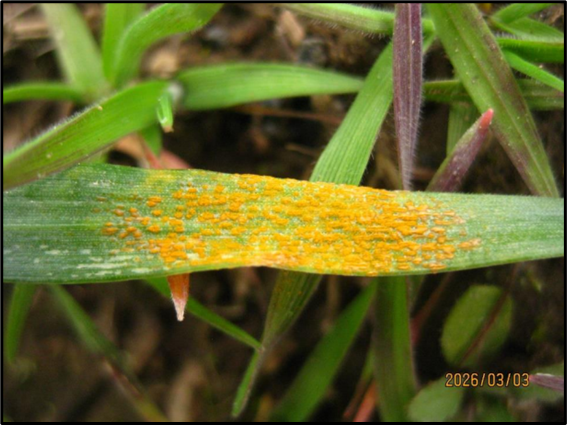
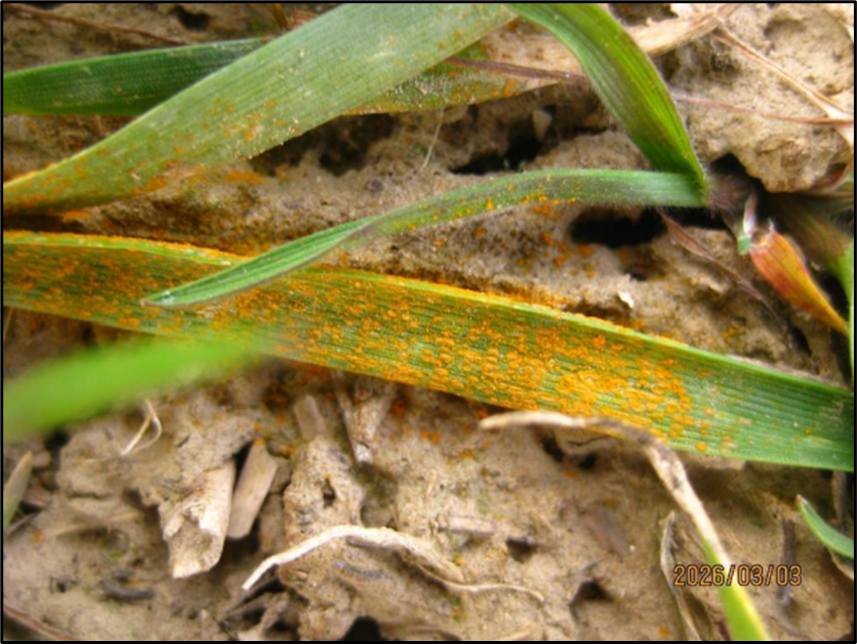
Stripe rust was more severe in experimental fields in Walla Walla, with incidence over 80% and rust reaching the top leaves of plants (Figure 5). This is the most widespread and severe stripe rust by this time of year in Washington since 2011.
Recommendations for managing stripe rust in the eastern Pacific Northwest
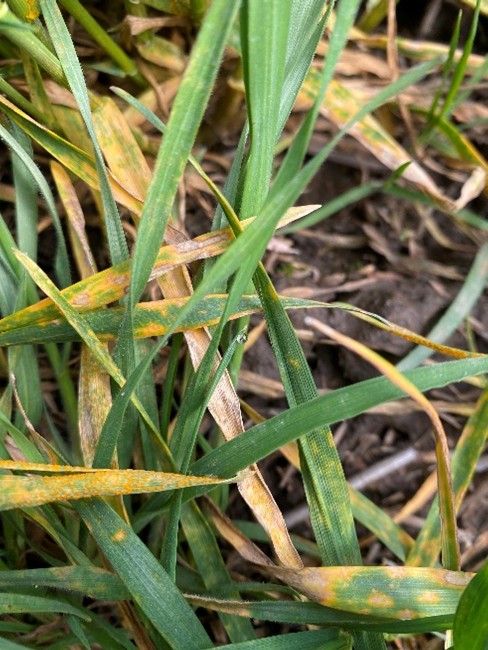
Field observations show unusually early development of stripe rust and predictions indicate high potential for yield losses in the 2026 wheat season for the eastern Pacific Northwest. Fungicide applications should be made in winter wheat fields with moderately resistant to susceptible varieties with stripe rust ratings 3 to 9 at herbicide timing. A second application may be needed 20 to 30 days after the first application. The need for a second application can be determined by whether active stripe rust appears after the first application. Closely follow the label for maximum number of applications and rates of active ingredient allowed per year. Many resistant varieties (stripe rust ratings of 1 and 2) only have high-temperature adult-plant (HTAP) resistance. HTAP will not be effective until warmer temperatures are reached and plants are at second node visible (Feekes 7). It is critical that all wheat fields are checked for stripe rust. If active infections, like those pictured, are found, a fungicide should be applied at herbicide timing.
Refer to earlier reports for stripe rust ratings of wheat varieties.
For spring wheat, stripe rust-resistant varieties, 1 or 2, should be planted. Varieties with ratings 3 to 9 will likely need a fungicide application at herbicide timing.
Recommendations from Dr. Christina Hagerty in her Eastern Oregon Stripe Rust Update say:
“For highly susceptible varieties, do not wait for flag leaf emergence–it’s best to spray as soon as rust is detected. In most cases, application timing is more critical than the specific fungicide product used.
- Triazole fungicides offer effective and economical control when applied promptly.
- Fungicide mixes containing both a triazole and strobilurin may provide longer-lasting protection in high-pressure situations but come at a higher cost.
- SDHI fungicides have not shown superior control over triazole/strobilurin mixes in our region.
Your product choice should factor in variety susceptibility, crop yield potential, product cost, and your budget.” (Hagerty, 2026 – Eastern Oregon Stripe Rust Update)

For questions or comments, contact Morgan Menaker via email at morgan.menaker@wsu.edu or by phone at 509-397-6290.