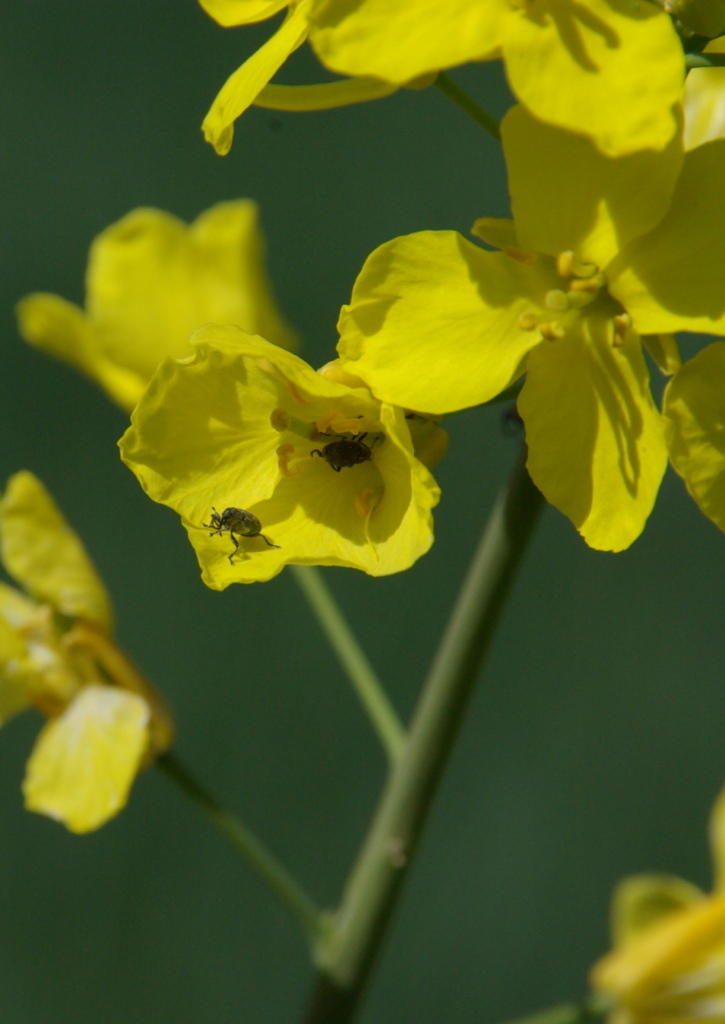
As canola acreage in central and eastern Washington continues to increase, so does the threat of crop damage caused by common canola insect pests. Therefore, it is important to understand the varying economic thresholds for insect pests in your fields.
Effectively managing insect pests in your canola fields can result in the decreased use of prophylactic insecticides which can save time and money, improve crop yield, and provide environmental benefits. Reduced insecticide usage can also allow for a healthy habitat for beneficial insects such as lady beetles and bees.
It is important to note that insect pests may be observed in canola without reaching the economic threshold or they may not be in a damaging stage of their lifecycle. When scouting your field, you’ll want to understand the insect lifecycle to help you determine if your crop is at risk.
On the WSU Wheat and Small Grains website, pest identification and management recommendations can be found for several common canola insect pests, including:
If an economic threshold is reached, use care and always be mindful of pollinators and other beneficial insects when spraying insecticides. Apply insecticides only as listed on the label. When mixing or applying insecticides, follow all label precautions to protect yourself and others around you. It is a violation of the law to disregard label directions. If insecticides are spilled on skin or clothing, remove clothing and wash skin thoroughly. Store insecticides in their original containers and keep them out of the reach of children, pets, and livestock.
Consult the online Pacific Northwest Insect Management Handbook for information regarding pesticide use and specific recommendations and application rates. The handbook is also available at Extension offices in Washington, Oregon, and Idaho. Additionally, make sure to comply with the EPA Endangered Species Protection Program by obtaining the pesticide use limitation areas for products with active Endangered Species Protection Bulletins.
Additional resources
Using the AgWeatherNet Spray Guidance Tool can help you identify the most favorable times for spraying for crop protection and weed management, while reducing chemical drift and human exposure. To use the tool, sign in, navigate to Models >> Human >> Spray Guidance.
The WSU Pesticide Information Center OnLine Database (PICOL) is a free, searchable database that provides electronic copies (PDFs) of most Washington and many Oregon registered labels for informational purposes. This database is not a substitute for obtaining, reading, and following pesticide label directions.
Repeated use of insecticides with the same mode of action can result in the development of resistant insect populations. The Take Action Insecticide Classification Chart groups insecticides by their modes of action to assist you in selecting insecticides that may help to delay the development of insecticide resistance.

For questions or comments, contact Jesse Ford via email at jesse.ford@wsu.edu.