As Seen in the WSU Plant Diagnostic Clinic in 2025

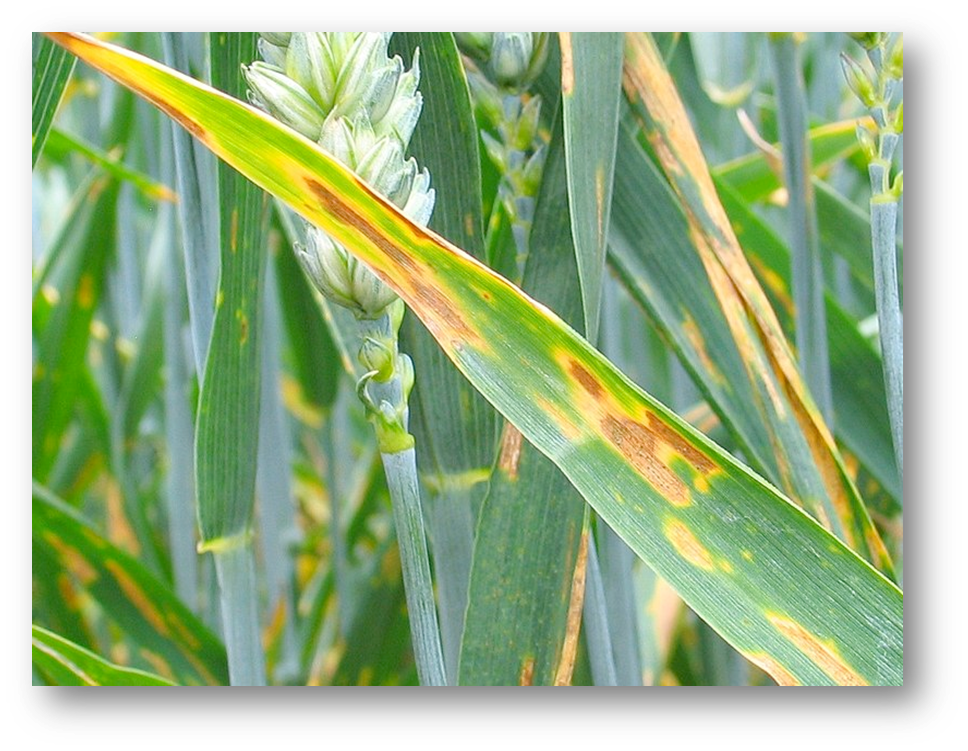
Close-up photograph of a wheat plant, showing a single, affected leaf blade prominently in the foreground against a background of healthy and other diseased foliage. The plant is green, suggesting it is in a relatively early stage of development, likely heading, with a wheat head visible just behind the main leaf. The most striking feature is the disease symptoms on the leaf. The prominent leaf has large, elongated, necrotic lesions running parallel to the veins. These lesions are a dark reddish-brown or tan color, indicating dead tissue. They are surrounded by a prominent, irregular halo of chlorotic (yellow) tissue. The lesions appear somewhat diamond-shaped or oval and are relatively large, covering a significant portion of the leaf's surface. The surrounding leaves in the background also show similar, though less distinct, yellowing and spotting. The overall impression is a field of grain crop struggling with a foliar fungal disease.
Field symptoms of Septoria leaf spot in wheat, note the characteristic black dots in the center of the leaf spot. A fungal pathogen of wheat caused by Septoria tritici.

The 2026 crop year is shaping up differently, with not a lot of moisture in August and September that fortunately results in less disease inoculum.

In anticipation of the 2026 crop season, here is an overview of the small grains problems that were diagnosed by the WSU Plant Pest Diagnostic Clinic in 2025.

Common abiotic issues that were seen from various counties across eastern Washington: weather-related, Physiological leaf spot, soil compaction-related issues, as well as nutrient imbalances and even some frost damage.

Diseases observed in the lab were few but included Fusarium foot rot (Lincoln County), Septoria leaf blotch (Lewis County), and Eyespot/Strawbreaker foot rot (also Lewis County). Viruses were not observed in 2025 in the lab.

Plant samples can be sent into the WSU Plant Pest Diagnostic Clinic year-round. For more information on submitting a sample and specialized testing available, please visit the Plant Pest Diagnostic Clinic’s website.

For questions or comments, contact the Plant Pest Diagnostic Clinic by email or by phone at 509-335-3292.

For questions or comments, contact the WSU Dryland Cropping Systems team at small.grains@wsu.edu. More information about WSU plant diagnostic services can be found online.