Diamondback Moth
Introduction
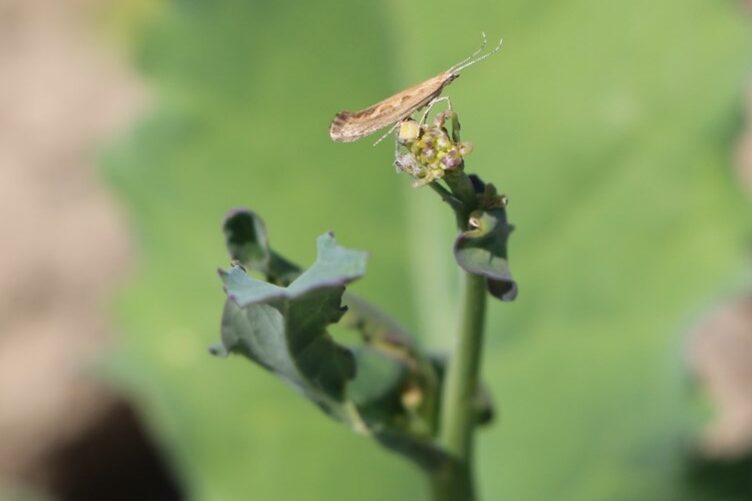
Diamondback moth, Plutella xylostella (Linnaeus), is not new to our area as it can be commonly found feeding on plants in the mustard family such as canola, oriental or yellow mustards along with weed species. It typically is not a pest of concern; however, in some years like 2023, populations can reach large numbers and cause significant economic damage.
Identification
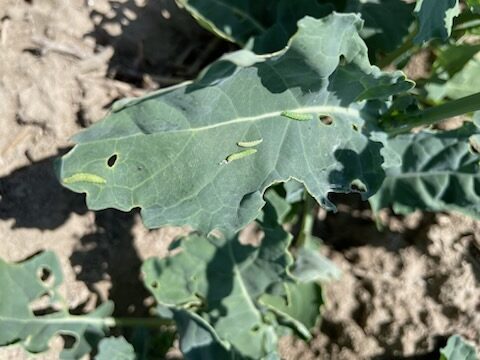
Adult moths are gray or brown (males have three yellow diamond-shaped spots when the wings are folded at rest hence the name). Larvae (caterpillars) are a pale yellowish-green to green color. They will feed on all parts of the plant for 10 – 30 days but are generally found to cause substantial leaf damage when populations reach outbreak levels.
Scouting
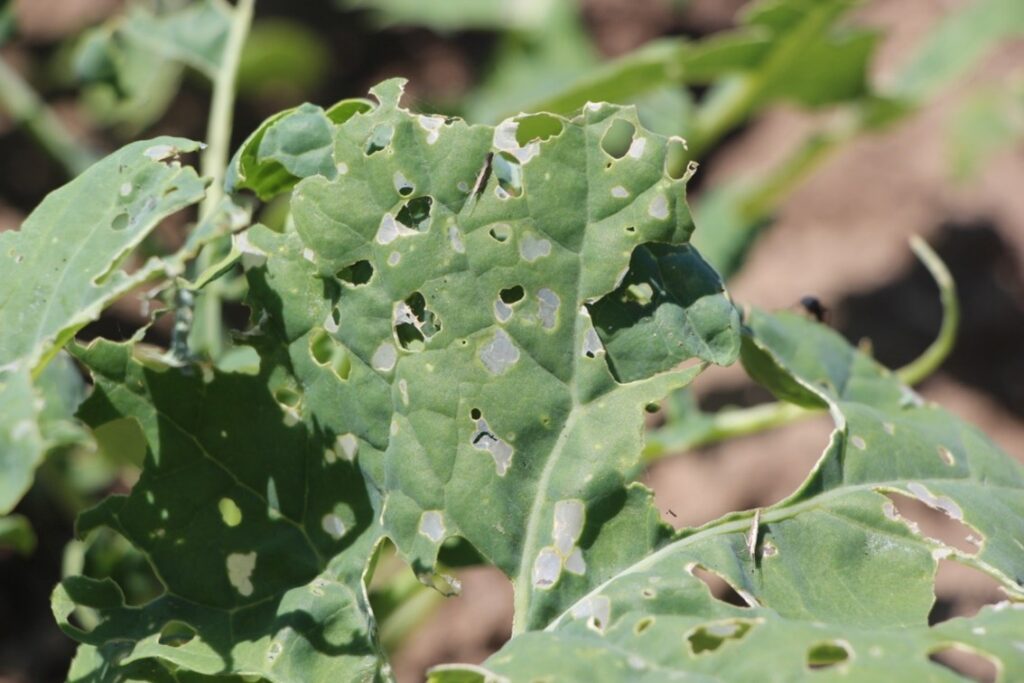
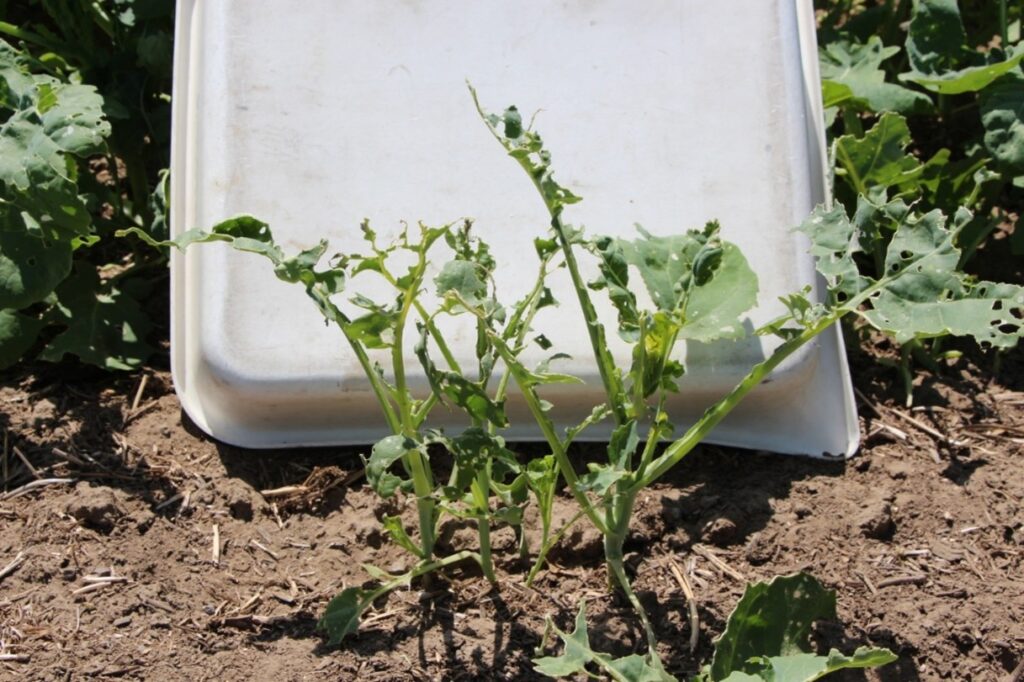
When scouting for this pest, one may observe adult moths fluttering about from plant to plant when disturbed. Remember, the larvae feeding causes yield loss; thus, the focus needs to be on them and the damage they cause. “Window paning” is a classic form of damage where the caterpillars will eat only the green leaf material thus leaving behind the clear upper cuticle, hence the name.
Management
The Canola Council of Canada states that if diamondback moths are identified, then insecticide treatment should be considered if the following economic threshold levels are reached:
- There is 25-33 percent defoliation at the seedling stage and larvae are still present on the plant.
- Larvae populations exceed 100-150 per square meter (10-15 per square foot) on plants between the vegetative to the flowering stage.
- Larvae exceed 200-300 per square meter (20-30 per square foot) on plants between the flowering to podding stage.
Several insecticide products such as Mustang Insecticide, Lamcap II Insecticide, Delta Gold, Bifen 2EC Select and others are registered for this pest. Consult the PNW Insect Management Guide for a complete list. When spraying insecticides, always be mindful of pollinators see (I Need to Spray for Insect Pests, But I Am Concerned About All the Bees) and other beneficial insects.

Use pesticides with care. Apply them only to plants, animals, or sites as listed on the label. When mixing or applying insecticides, follow all label precautions to protect yourself and others around you. It is a violation of the law to disregard label directions. If pesticides are spilled on skin or clothing, remove clothing and wash skin thoroughly. Store pesticides in their original containers and keep them out of the reach of children, pets, and livestock. Refer to the online version of the Pacific Northwest Insect Management Handbook for additional information regarding pesticide use and specific insecticide recommendations and application rates for Hessian fly (Hollingsworth 2019). The handbook is also available at Extension offices in Washington, Oregon, and Idaho.