If you haven’t already been walking your winter canola fields, now is the time, particularly after the very wet fall, warm temperatures right up to snow cover, and the extensive period of snow cover that added up to what can be perfect conditions for blackleg. In winter canola, look for lesions on primarily the lower leaves and leaf material that died back during the winter. The center of the lesions will have tiny black specks (pycnidia). Residue from previous canola crops and cover crops containing Brassica species should also be observed. Collect suspicious leaves, stems, and/or residues, and drop off or mail to the WSU Pullman Plant Pest Diagnostic Clinic.
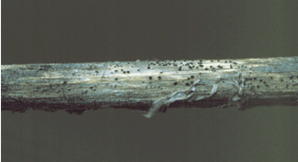
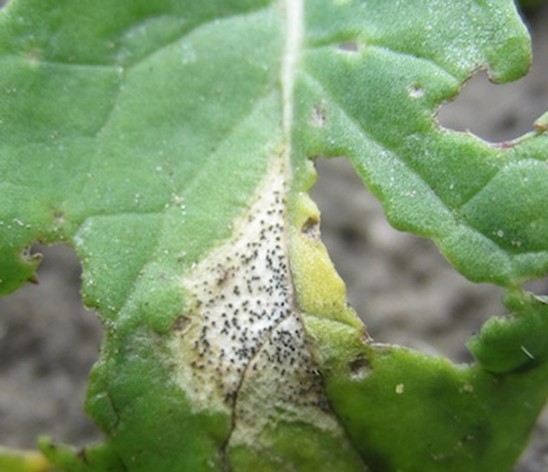
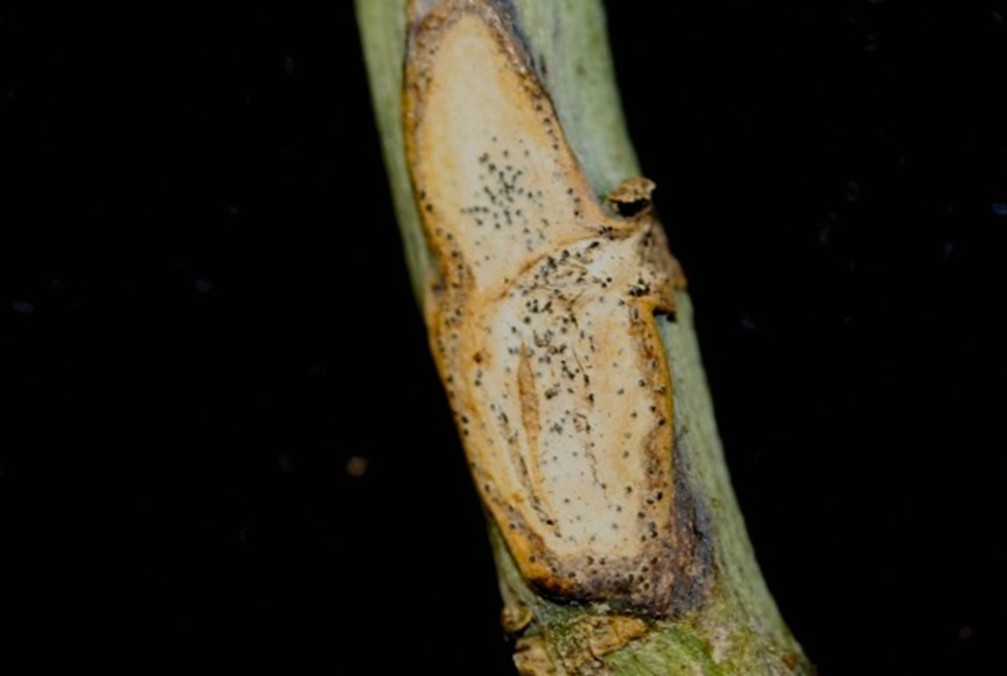
Blackleg Scouting Protocol
- Wear rubber boots that are tall enough to cover your calf muscles, whenever you enter a field, since rubber boots can be disinfected readily with alcohol. If the crop height is lower than your boots, you only need to sterilize the boots after you leave each field and before entering the next field. When you finish scouting/sampling a field, scrape and wash off any soil adhering to the boots. Then spray the boots with 70% alcohol (ethyl alcohol works well) after you’ve removed all the soil. We keep spray bottles with 70% alcohol in our vehicle for this purpose.
- If the canopy is taller than the height of your boots, wear a Tyvek suit to cover your pants (and your waist/chest/arms if the canopy is tall enough), and then spray the legs of the suit (or any part of the suit that might have come into contact with the canopy) with alcohol after you exit the field.
- Place a plastic tarp (or similar fabric that can be washed and sterilized readily) in the vehicle onto which boots and any other sampling/scouting equipment can be placed each time after they’ve been sterilized.
- Keep a separate pair of clean shoes to wear when driving between fields and make sure those shoes never touch soil or any other surface/substrate that might have come into contact with the blackleg pathogen. This can be the tricky part–transferring from boots worn in the field to the clean shoes without getting the clean shoes contaminated (e.g., don’t walk in the new shoes over areas where you walked in the field boots prior to sterilizing the boots, including areas around the vehicle).
- Wear latex gloves when sampling/scouting and put on a new pair of gloves for each field (or spray the gloves down thoroughly with 70% alcohol between fields).
- Put a trash container of some kind in the vehicle that is designated for discarded gloves, paper towels you might have used to wipe off soil, etc.–anything that potentially could be contaminated with the blackleg pathogen.
- At the end of the scouting trip, autoclave any waste material that could be contaminated with the blackleg pathogen.
Blackleg in Canola–Facts and FAQ
Provided by Washington Oilseed Cropping Systems
The top lines of defense
- Crop rotation – be sure that canola, other Brassica crops, mustard family crops, weeds, and cover crops containing Brassica or mustard family species are only grown in the same field every 4 years.
- Control volunteers and Brassica weed species. Tarp your trucks and duct tape any holes or gaps.
- Buy blackleg resistant varieties that have been tested and certified blackleg-free and have a seed treatment (e.g. Helix Xtra, Helix Vibrance, Prosper 400 and Prosper Evergol). In Washington state a green WSDA tag should be on every bag of seed that certifies it has been tested and found blackleg-free. This includes cover crop mixtures containing brassicas. When in doubt, ask!
- SCOUT your fields. If blackleg is discovered, consider applying fungicide (read and follow label instructions).
Some FAQs
Q: What is blackleg?
A: Blackleg is a disease of canola and other Brassica species caused by the fungus Leptosphaeria maculans, also commonly called Phoma lingum. It can be a serious disease of canola and can cause significant yield losses in susceptible varieties.
Q: Has blackleg been found in WA State?
A: Only in very low levels in a few scattered locations. However, it has been found in Idaho and Oregon. That should serve as a reminder of why we need to keep this disease out of Washington and other areas where the disease currently does not appear to be present.
Q: Is blackleg only an issue in winter canola?
A: No, blackleg can impact any Brassica crop, e.g. spring canola, rapeseed, mustard, tillage radish, and also Brassica weeds. It can also be a major problem in vegetable brassicas – cabbage, broccoli, cauliflower, and especially the seed production of these crops in the Skagit Valley of Washington. This disease could have a major impact on this industry.
Q: Should I scout my field? What if my canola winterkilled? And what should I look for?
A: Definitely scout your fields! Blackleg symptoms can be found on growing plants, winterkilled residue and residue from crops one and two years prior. For winter canola, look for lesions on primarily the lower leaves and leaf material that died back during the winter. The center of the lesions will have tiny black specks (pycnidia) (see photos below). The pycnidia may also be present on canola residue/stalks from previous crops. The lesions may be small and tricky to spot; be willing to get a close look near the base of the plants. If you had a cover crop containing Brassica species that residue should also be observed. Collect suspicious leaves, stems, and/or residues, and drop off or mail to WSU, UI, or OSU. See contacts at the end of this document.
Q: Should I go ahead and apply a fungicide just to be safe?
A: Not necessarily. Resistant or moderately resistant varieties should stop the disease if and when it enters the vascular (stem) tissue. In susceptible varieties, fungicide will help prevent non-infected plants from getting infected, but won’t kill the disease established in the plant if it’s already present.
Q: How do I know if the seed I buy has been tested and certified blackleg free?
A: The WA State Dept. of Agriculture requires all Brassica crops or cover crops containing Brassicas go through testing, seed treatment and certification. The certification (green tag from WSDA) must be clearly marked on any Brassica seed sold for any purpose. Seed company reps should also be able to supply this information in the absence of a seed tag that lists blackleg information.
Q: Where can I find more information?
A: The Washington Oilseed Cropping Systems website has resources including sampling protocol and presentations about blackleg. Other sources with blackleg information are Oklahoma State University and the Canola Council of Canada
Q: Are there WSU/OSU/UI/USDA-ARS people available to meet me at my fields to scout together?
A: Yes, several contacts are listed below. Also consider contacting your crop consultant, seed salesman, or your WSU County Extension Educator.
- Tim Paulitz, USDA-ARS Pullman, timothy.paulitz@ars.usda.gov, 509-335-7077
- Karen Sowers, PNW Canola Association, pnwcanola@gmail.com, 808-283-7013
- Cassandra Bates, WSU Plant Pest Diagnostic Clinic, plant.clinic@wsu.edu, 509-335-3292
- Don Wysocki, OSU, dwysocki@oregonstate.edu, 541-278-4396
- Kamal Khadka, UI, kkhadka@uidaho.edu, 208-885-6710
- Kurt Schroeder, UI, kschroeder@uidaho.edu, 208-885-5020
Co-author: Tim Paulitz, USDA-ARS Pullman, timothy.paulitz@ars.usda.gov, 509-335-7077