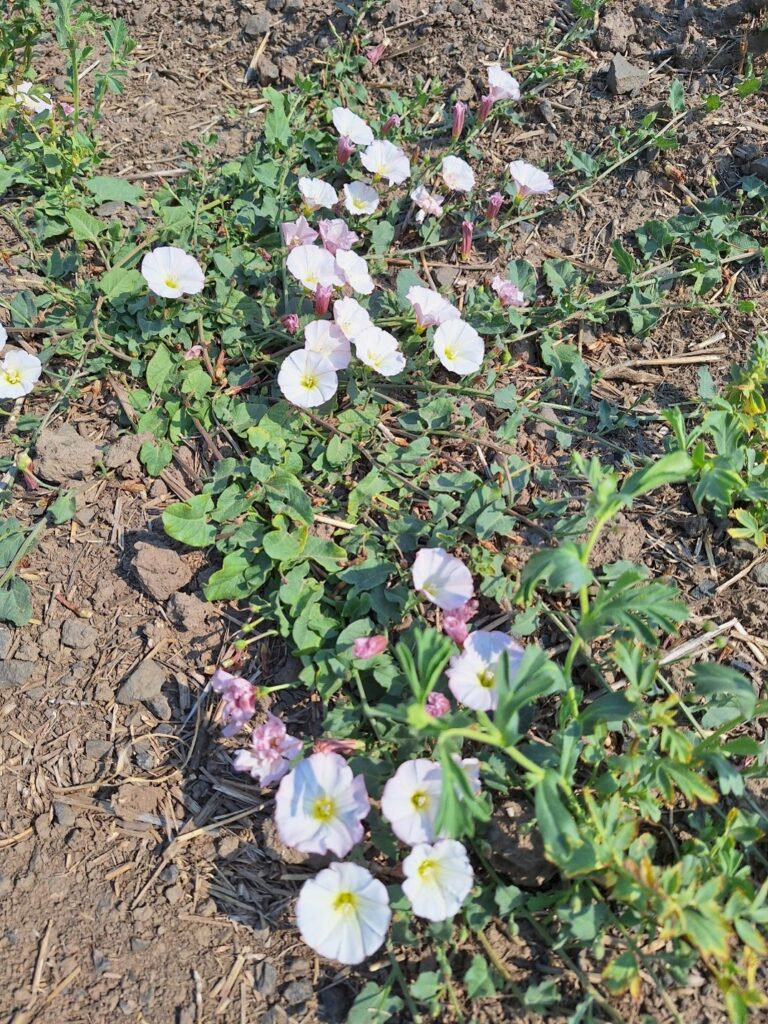
On a recent drive, I noticed a lot of field bindweed, a.k.a. morningglory or creeping Jenny, flowering in chickpea and lentil fields. Dry conditions this spring have resulted in reduced growth of spring-seeded pulse crops in the region. With reduced crop competition, field bindweed, a perennial weed with a deep and extensive root system, has thrived. While there is little that can be done at this time to control field bindweed in pulse crops, now is a good time to note the presence and location of field bindweed patches for future control efforts.
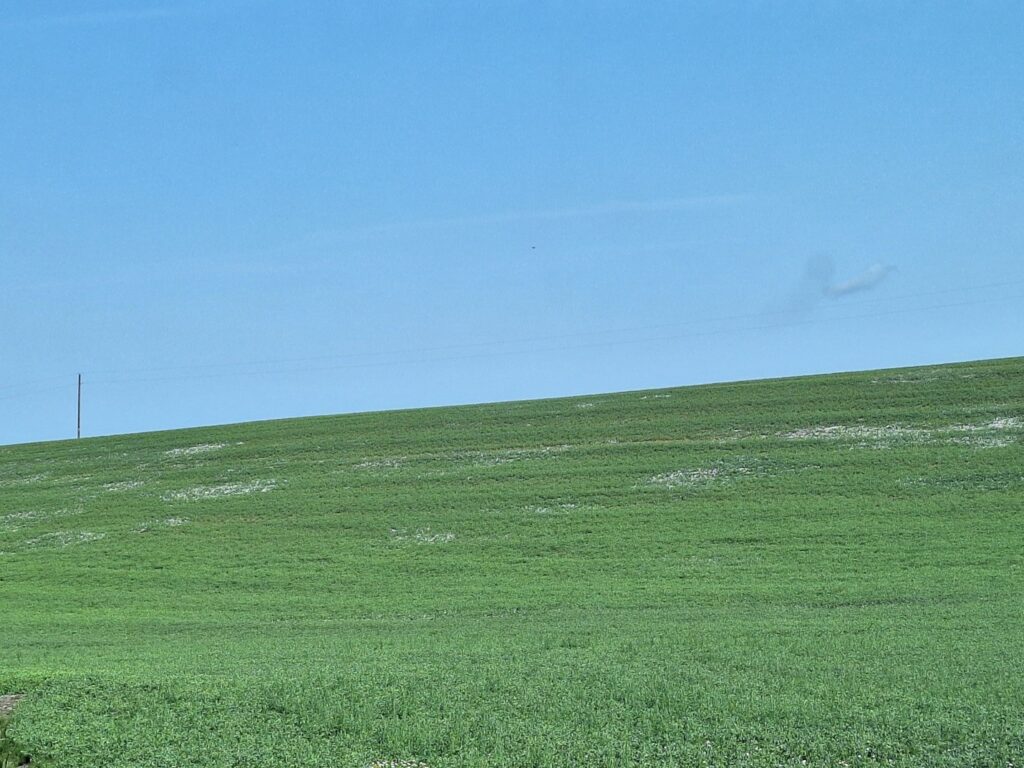
Field bindweed normally grows in circular patches because it creeps in every direction. Patches can grow 6 to 10 feet in diameter per year if left undisturbed. Field bindweed seed have a hard, impervious seed coat that enables some seed to remain dormant and viable in the soil for many years. Seeds have been documented to survive up to 50 years.
Since field bindweed seed can survive in the soil for multiple decades, eradication is not a realistic short-term goal; however, with sustained effort and the integration of cultural, mechanical, and chemical control practices, field bindweed can be effectively managed.
Growing a competitive crop is one of the best approaches to managing field bindweed. Crops that are up and are already shading the ground before field bindweed emerges in late spring are most effective. A vigorously growing stand of a fall-seeded crop like winter wheat is very competitive with field bindweed. Winter pea, winter canola, and alfalfa are other crops to consider where field bindweed is problematic. Field bindweed is a warm-season broadleaf weed that struggles to compete with crops that have a good head start on spring growth. Conversely, growing a non-competitive spring-planted crop like lentils or chickpeas will allow field bindweed greater opportunity to thrive.
Although tillage can be part of an integrated approach to managing field bindweed, tillage alone requires 3 to 5 years of sustained effort to be effective. This is not feasible for most crop producers. However, a thorough, well-timed tillage program may be an option during the fallow portion of a crop rotation. The best time to start a fallow tillage program is immediately after harvest. Tillage operations should continue at 2-week intervals until the shoots are killed by a hard freeze in the fall. Tillage should resume in the spring starting two-weeks after bindweed emerges and continuing at 2-week intervals. Tillage depths need to be no deeper than necessary to cut off all the bindweed shoots, usually 2 to 4 inches deep. Tillage works best when the soil is dry. When the soil is wet, consider using herbicides instead of tillage. Be sure to clean all root fragments off the tillage equipment before moving it to non-infested areas.
Herbicides commonly recommended for field bindweed control include various formulations of 2,4-D, dicamba, and glyphosate. Restrictions on application timing, crop rotation, and planting intervals vary by herbicide. Always read the label to ensure crop safety and effective weed control. The bud or early bloom stage is one of the best times to spray field bindweed if the plants are not water stressed. Quinclorac (Facet L herbicide) is another herbicide that is commonly used for field bindweed control. It works best when applied in the fall just before the first killing frost. Pulse crops should not be planted for 24 months following the application of quinclorac, and a bioassay should be conducted prior to planting these crops. The fall, before a killing frost, is a good time to apply a translocated herbicide to field bindweed. In the fall, the plants send food to the roots and translocated herbicides will move with the food to the roots, resulting in greater control. Dicamba tends to provide better control than 2,4-D or glyphosate when applied in the fall. Although picloram (Tordon 22K) provides effective control of field bindweed when applied during fallow, many broadleaf crops, including pulse crops, are very sensitive to soil residues. Broadleaf crops should not be planted for 36 months after application. Wheat may be planted the following year after picloram application
Managing field bindweed requires a sustained long-term effort. Although little can be done now to control field bindweed in pulse crop fields, this is a good time to make note of the problem areas and develop a long-term action plan to keep field bindweed under control.

For questions or comments, contact Drew Lyon via email at drew.lyon@wsu.edu or phone at 509-335-2961.