Cereal Leaf Beetle
Introduction
The cereal leaf beetle (CLB), Oulema melanopus, (Coleoptera, Chrysomelidae), can be a problematic pest of cereal grains, grass forage/seed crops, and other grass-host species in the Pacific Northwest (PNW) region (Oregon, Washington, Idaho, and Montana).
Identification
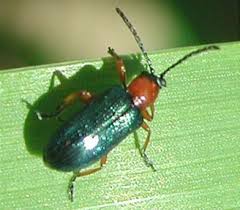
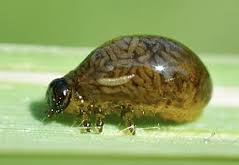
CLB eggs are yellow, about 1-mm (<1⁄16-inch) long and darken when they are about to hatch. They are usually found on the upper leaf surface, close to the mid-vein. The larvae have a pale-yellow body with a black head capsule. They camouflage and protect themselves with a covering of fecal material and slime giving them a “slug-like” appearance). Adult CLB are 7–9 mm long (approx. ¼”), slender and cylindrical with metallic, bluish-black wing covers (elytra), a black head, thorax and legs are orange-red in color.
Symptoms
CLB larvae and adults feed between the veins of the newest leaves on host plants. Larvae cause the most damage by removing long strips of tissue from the upper leaf surface, while leaving the translucent cuticle of the lower surface intact. This feeding pattern produces a characteristic “frosted” appearance. Tips of damaged leaves frequently turn white, giving heavily infested fields a frost-damaged appearance. Adults will chew completely through the leaf, which results in narrow slits, although the damage they cause is usually insignificant. Yield losses of 25% have been reported in irrigated spring wheat in Washington State. Yield loss is influenced by crop vigor and the timing and duration of the CLB infestation. Stressed growing conditions or poorly developed plants may increase potential damage.
Scouting
Begin scouting when springtime air temperatures exceed 50°F for several days. It is recommended to examine 100 tillers (10 each at 10 different random locations) per field while recording the number of CLB eggs and larvae present. The economic threshold levels for small grains from pre-boot until full emergence of flag leaf (Feekes 1-8) if three or more eggs and/or larvae are found per tiller. From boot-after flag leaf emergence but before head emergence (Feekes 9+) is one larva per flag leaf.
Management
Prevention
Effective cultural controls for the CLB rely on agronomic practices that favor well established stands with vigorous, well-tillered plants that can tolerate damage by CLB populations that are below threshold levels. Border strips (1–2 drill strips 45–60 ft wide) seeded to oats 2 weeks after spring wheat are an effective trap crop management strategy. The oats then provide areas of refuge that enable the survival and proliferation of parasitoid wasps and other predators.
Biological Control

The parasitoid wasp Tetrastichus julis provides effective control of the CLB. This biocontrol agent has established itself successfully in many areas of the PNW. T. julis parasitoid wasps are very small (1/8 inch) and produce two generations per year, which are timed with CLB larvae occurrence in the field.
Insecticide Control
If pest numbers exceed thresholds within the crop, and there is no sign of biological control activity, then foliar-applied insecticide products can be applied. Be sure and read and follow the pesticide label instructions before use.
Archived Publication
Integrated Pest Management (IPM) for the Cereal Leaf Beetle in Washington State
Use pesticides with care. Apply them only to plants, animals, or sites as listed on the label. When mixing or applying insecticides, follow all label precautions to protect yourself and others around you. It is a violation of the law to disregard label directions. If pesticides are spilled on skin or clothing, remove clothing and wash skin thoroughly. Store pesticides in their original containers and keep them out of the reach of children, pets, and livestock. Refer to the online version of the Pacific Northwest Insect Management Handbook for additional information regarding pesticide use and specific insecticide recommendations and application rates for Hessian fly (Hollingsworth 2019). The handbook is also available at Extension offices in Washington, Oregon, and Idaho.