Dr. Xianming Chen, USDA-ARS Research Plant Pathologist, released his first stripe rust of 2026. Using a set of forecast models based on weather data from November and December 2025, he is predicting that stripe rust in the 2026 wheat growing season may be a severe epidemic with anywhere from 0 to 40% yield loss in commercially grown varieties. Susceptible varieties could potentially lose between 35.3% – 78.2%, averaging 56.7% losses. The relatively warm and wet weather in November and December has been conducive to the survival of the rust fungus in wheat so far.
The next forecast will be made in early March based on winter (November-February) weather data. According to the current forecast, fields planted with winter wheat varieties with stripe rust ratings 5 (moderate, M) to 9 (susceptible, S) may need an early fungicide application at herbicide timing. Resistant (ratings 1 and 2) and moderately resistant (ratings 3 and 4) spring wheat varieties are recommended for planting, and varieties with MS and S ratings (6 – 9) should be avoided. Stripe rust ratings for wheat varieties based on trials conducted in 2025 can be used to determine the susceptibility of varieties.
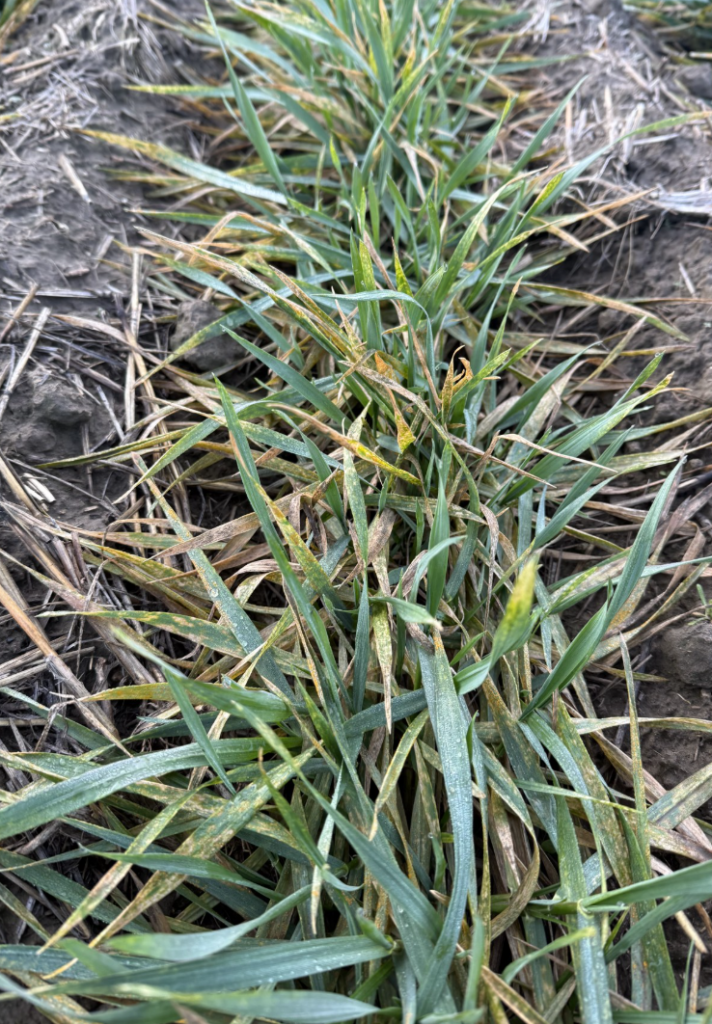
It was brought to WSU Extension agronomists’ attention that a grower’s commercial field of Nova AX in Franklin County has an active stripe rust infection (Figure 1). Given the warm spell that has lingered over most Eastern Washington and the frequent rain events, it is not surprising that this variety, with a Moderate (5) stripe rust rating, has succumbed to an infection.
For more information about stripe rust, refer to the Disease Resources section of the WSU Small Grains website.

For questions or comments, contact Morgan Menaker via email at morgan.menaker@wsu.edu or by phone at 509-397-6290.