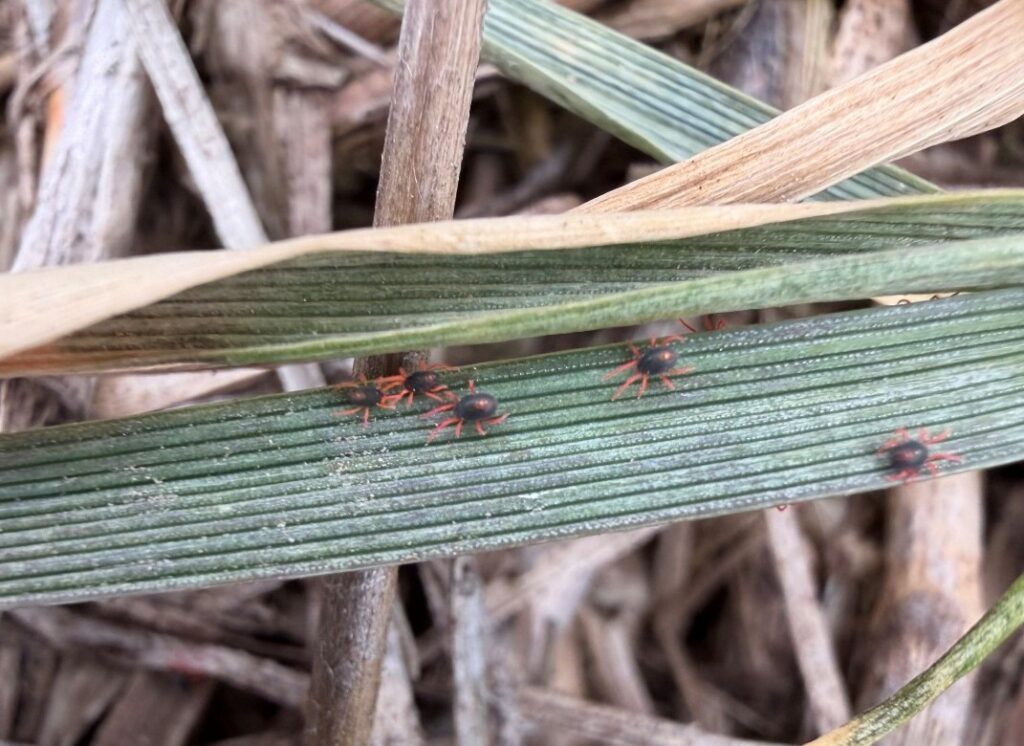
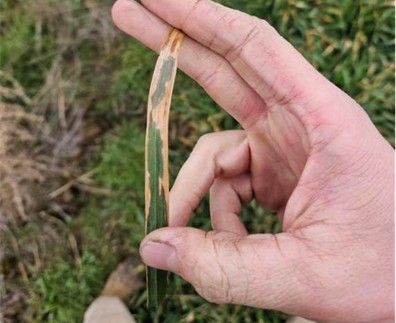
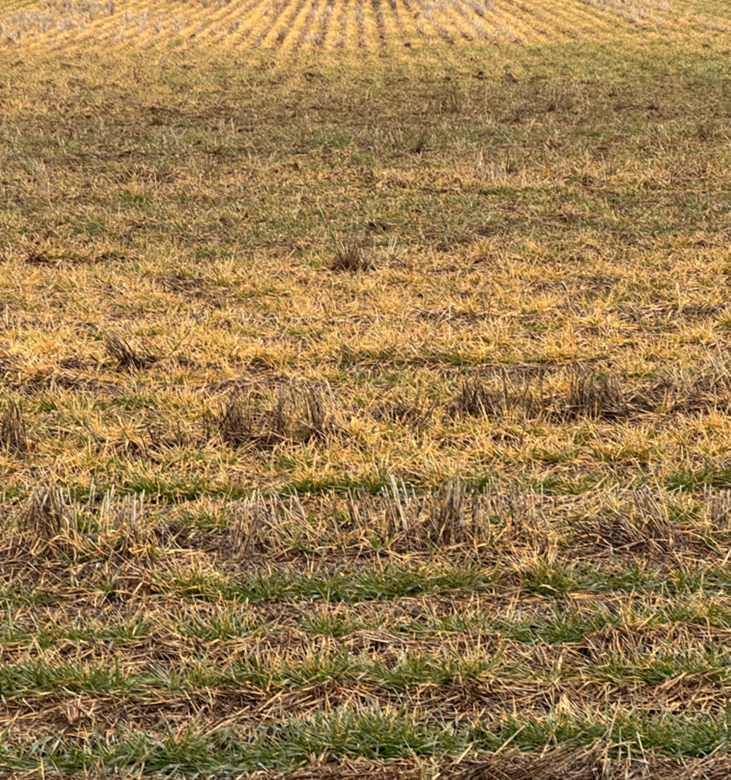
The unusually warm and wet winter we have been experiencing in late 2025 and into 2026 has brought out some less-than-usual winter wheat pests. WSU Extension agronomists have been getting reports from field consultants and growers in Northern Lincoln County that winter grain mite (Penthaleus major) has been identified and is actively feeding in wheat. The mite, more closely related to arachnids than insects, often has two generations per year with each life cycle from egg to adult lasting about 100 days. The first generation may emerge as early as October and typically peaks in December or January with the right weather (wet and warm), with the second generation peaking in March or April. Damage maybe mistaken or misidentified as winter damage as the winter wheat leaves are yellowish and the plants are stunted.
Cultural Control
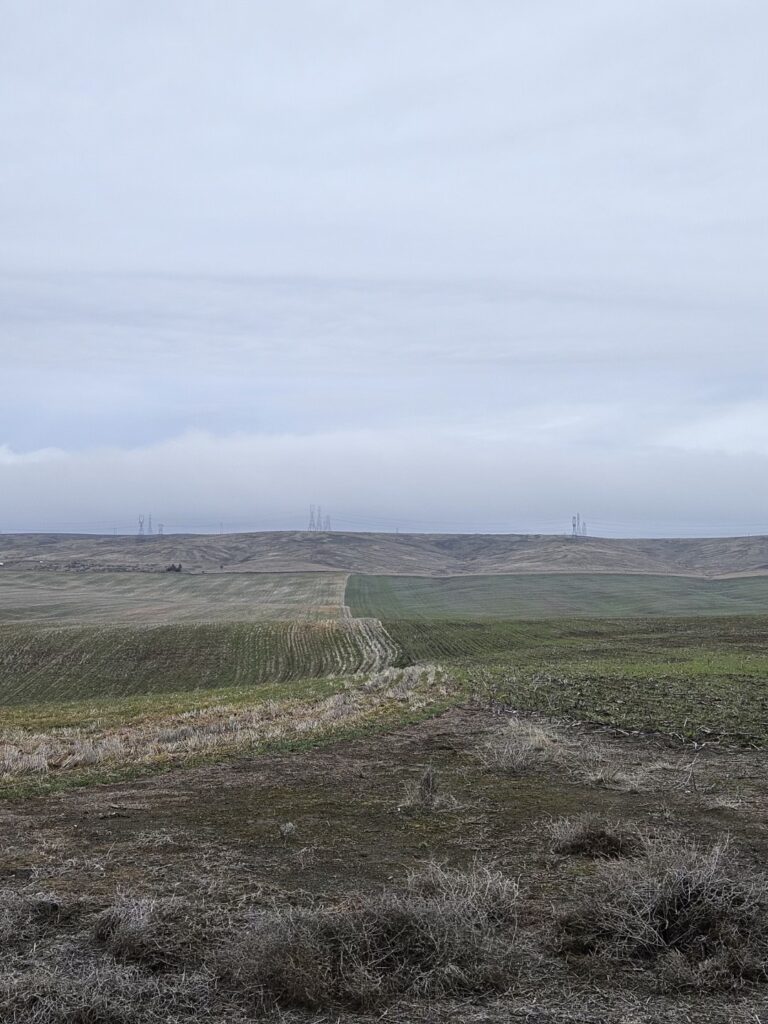
After scouting fields and responding to grower calls, WSU Extension agronomist Aaron Esser noted, “Where a farmer went winter canola, fallow, winter wheat, the crop looks excellent with zero damage at this stage. In the field where the farmer went winter wheat, fallow, winter wheat, it is heavily infected and has a very yellowish appearance.”
Chemical Control
The distinction between mites and other insects cannot be understated; mites are more closely related to spiders than insects and most insecticides will not work for control. Pyrethroids like Lambda-Cy (active ingredient; lambda cyhalothrin) may have some activity against mites but have been shown to kill natural enemies, and can even stimulate mite reproduction, leading to flare-ups post application. Although chemical control options for winter grain mite are limited, dimethoate (a systemic insecticide and miticide) is expected to provide control when effectively delivered to mites when they are feeding. Mites prefer to feed during cool, overcast, moist conditions, and often feed at night, and applications during overcast conditions will maximize product efficacy.
Note: If wheat is listed on the label and no label restrictions apply, products may be used for winter grain mite under FIFRA Section 2(ee), provided all label directions for wheat are followed, including rates, timing, safety requirements, and harvest intervals.
Related Resources
WSU Small Grains Insect Resources
To identify between different mite species in wheat fields (open in new tab)
To understand the lifecycle and control options (opens in new tab)
Kansas State Wheat Insect Pest Management Guide (2025) (opens in new tab)

For questions or comments, contact Morgan Menaker via email at morgan.menaker@wsu.edu or by phone at 509-397-6290.