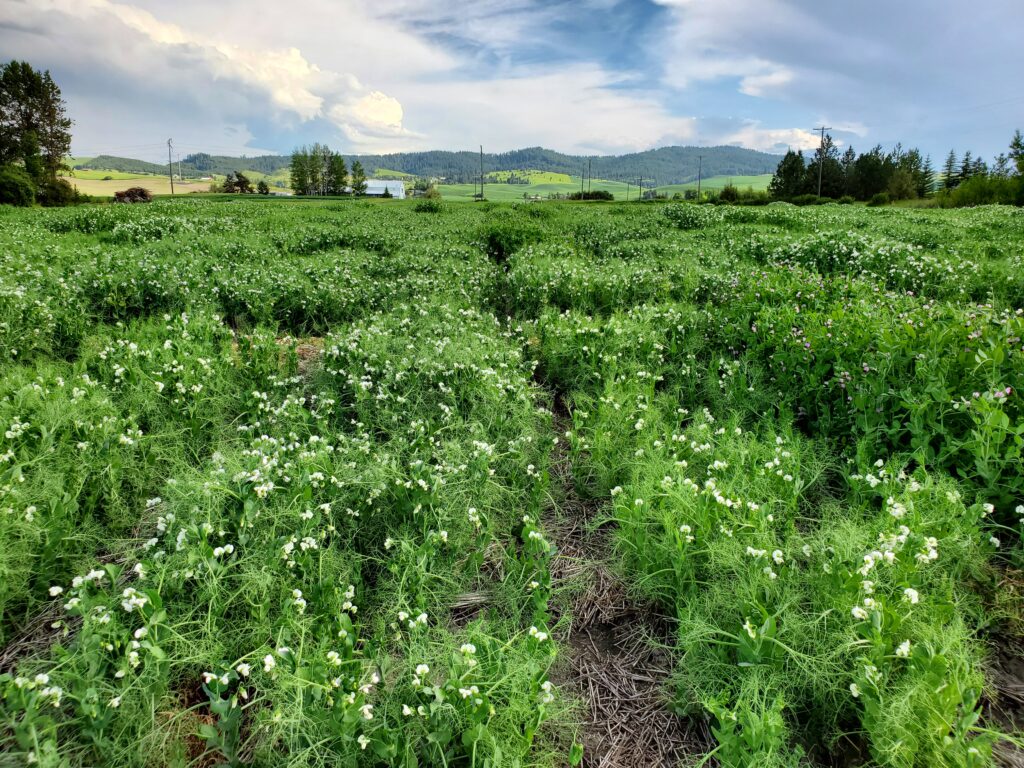
Results from the 2024 Washington Pulse Crop Variety Trials (provided by the University of Idaho) have been posted on the WSU Wheat and Small Grains website.
For the past two years my program has been managing the variety testing trials in eastern Washington with funding from the USA Dry Pea & Lentil Council. Since the University of Idaho program runs the trials in both northern Idaho and eastern Washington at this time, the placement of trial locations has been strategic between the two states to maximize the representation of pulse growing acres in the region. For winter pea trials, the Washington locations included Farmington in northern Whitman County and Walla Walla to complement existing locations in Moscow and Greencreek on the southern end of the Camas Prairie in Idaho County. The spring pea, chickpea, and lentil trials were planted in Fairfield, Washington, in addition to Idaho locations in Genesee and Ferdinand.
The 2023-24 growing season presented unique challenges, not unlike most years in rainfed regions of the Pacific Northwest. The winter of 2023-24 was relatively mild except for a cold snap in mid-January, but this did not appear to impact winter pea stands. The spring of 2024 had relatively mild temperatures, but well below average precipitation, which significantly impacted spring pulse yields across the region. In addition to weather events, the Walla Walla winter pea trial was challenged by cutworms that required fall applied insecticides for management to reduce the impact on yield. Similarly, all pea trials required timely insecticide applications in May and June during flowering to limit the impact of pea seed weevil.
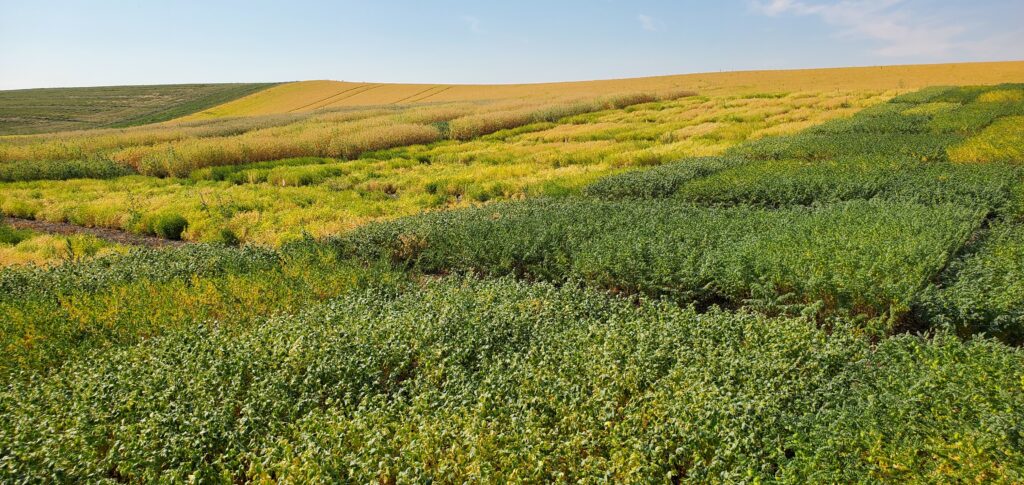
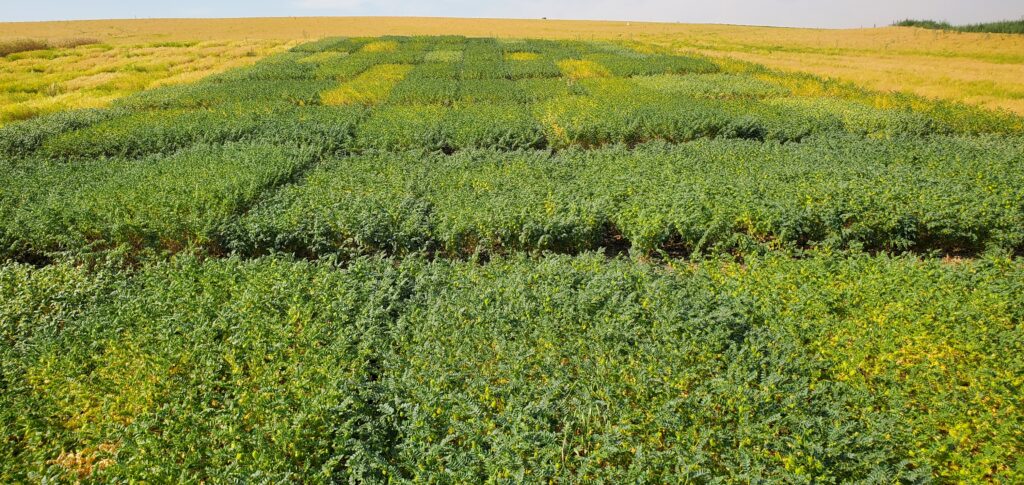
The winter pea trials consist of yellow and green cotyledon peas with several released varieties and experimental breeding lines meeting food quality requirements with respect to seed size and clarity of seed color (translucent seed coats). The average winter pea yields were 3726 lb/A at Farmington and 4429 lb/A at Walla Walla, both locations exceeding the yields observed in 2023. At Farmington, the top yielding varieties included Goldenwood, Keystone, and Blaze, while the top yielding varieties at Walla Walla were MiCa, Blaze, and KurtWood. Considerable shatter was observed in several entries at the Walla Walla location.
The chickpea trials consist exclusively of cream-colored Kabuli-type chickpeas. Sizing data is generated on chickpea seed to determine the proportion of seed that meets the large “A” seed size (percent greater than 22/64”). Due to the number of entries, the spring pea trials are split into two separate studies, one for green cotyledon peas and a second for yellow peas. Lentils include multiple classes including Spanish browns, medium green, and large green types. While the Idaho spring locations had reduced yields compared to previous years, the yields of spring planted chickpea, pea, and lentil at Fairfield were high with averages of 2830, 3272 and 2042 lb/A, respectively. The highest yielding chickpea varieties included MT Bridger (NDC160236), CDC Palmer, and CDC Frontier. MT Bridger was recently released by Montana State University but will require additional data before a determination can be made on classifying as a large chickpea in the Pacific Northwest. The highest yield green peas included Passion, Banner, and Hampton, while AAC Chrome and Carousel were the highest yielding yellow peas. Limited varieties of lentil were included in the spring lentil trial, with Avondale being the highest yielding variety, although several Richlea- and Pardina-type lentil experimental breeding lines topped the trial. It is always recommended to take multiple years of data into account when selecting new varieties for your farm.
Contributed by:
Kurtis Schroeder
Associate Professor & Extension Specialist, University of Idaho