Cereal Aphids
Introduction
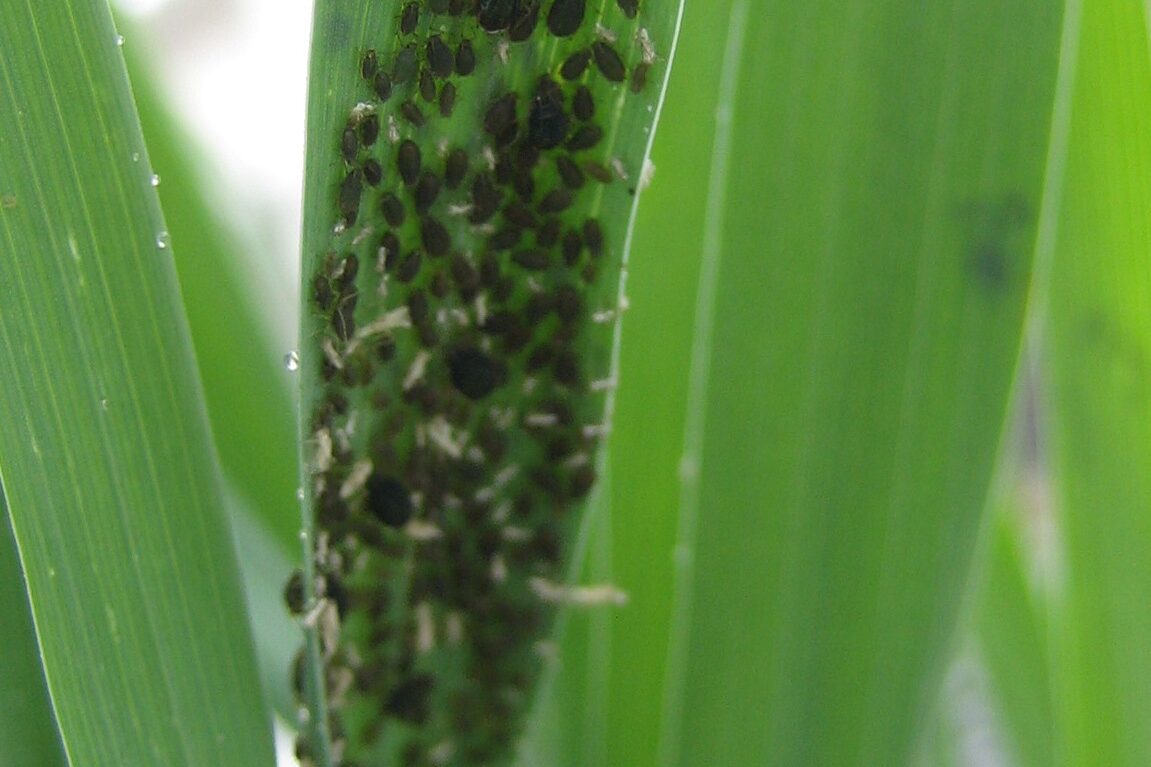
Aphids can be problematic pests in wheat. There are several species of aphids in wheat fields. These include the English grain aphid, Sitobion avenae, bird-cherry oat aphid, Rhopalosiphum padi, rose grass aphid, Metopolophium dirhodum, Russian wheat aphid, Diuraphis noxia, greenbug, Schizaphis graminum, and the cereal –grass aphid, Metopolophium festucae cerealium. Different species have different life cycles. Aphids do little direct damage to wheat plants but can be problematic due to transmission of viruses.
Symptoms and Identification
One way to distinguish between aphid species is to look at the color of cornicles. Cornicles are upright backward-pointing structures found towards the end of the abdomen that are used to emit defensive secretions or pheromones. They are often mistaken for cerci.
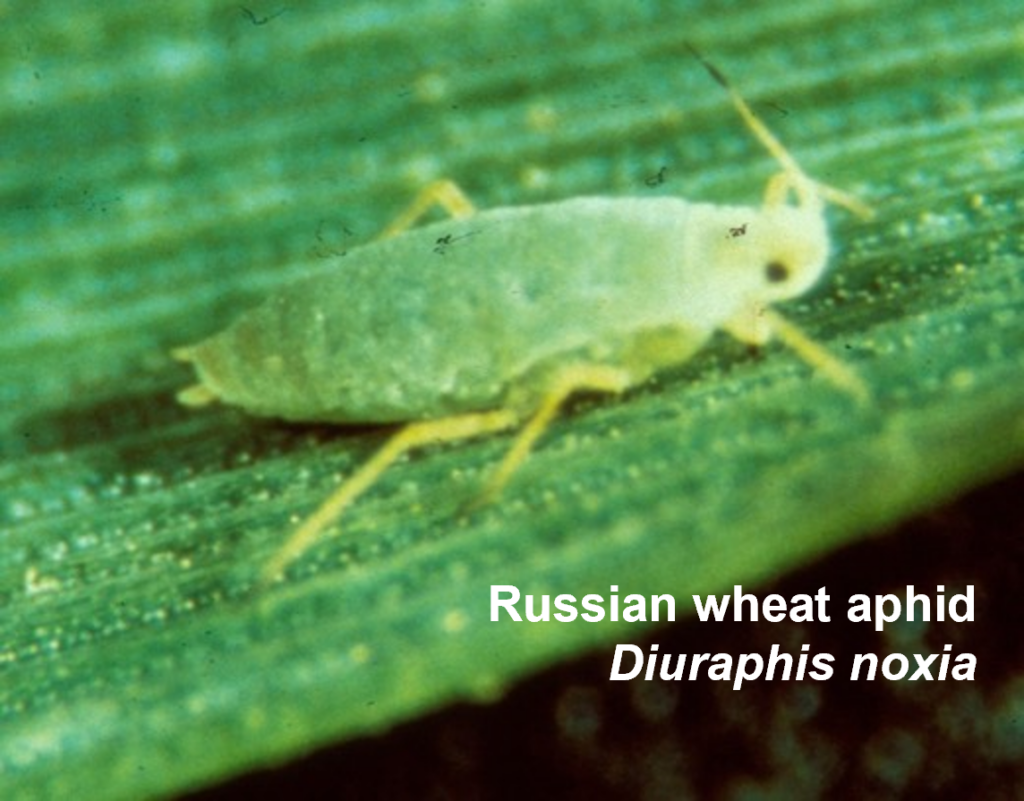
Russian wheat aphids (RWA) can be distinguished from other aphid species in that the cornicles will be extremely hard to see. RWA is known to inject a toxin that causes leaf and head curling.
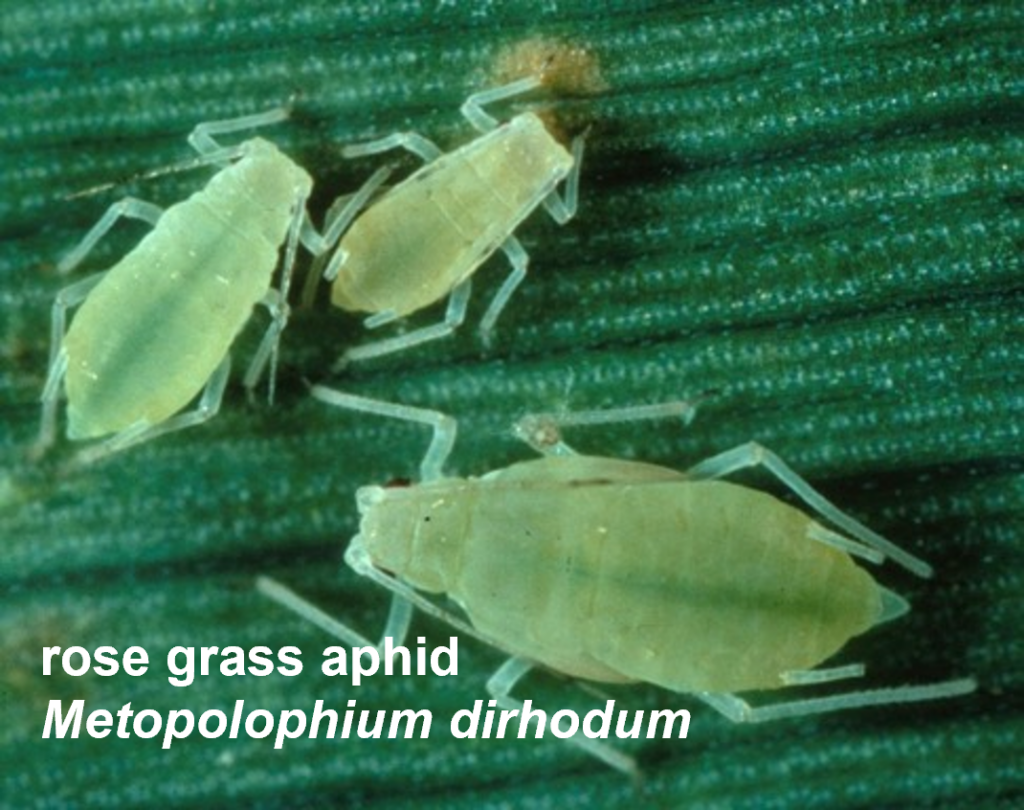
Rose grass aphids will have entirely pale cornicles compared to other species that may have partial or complete “black” cornicles.
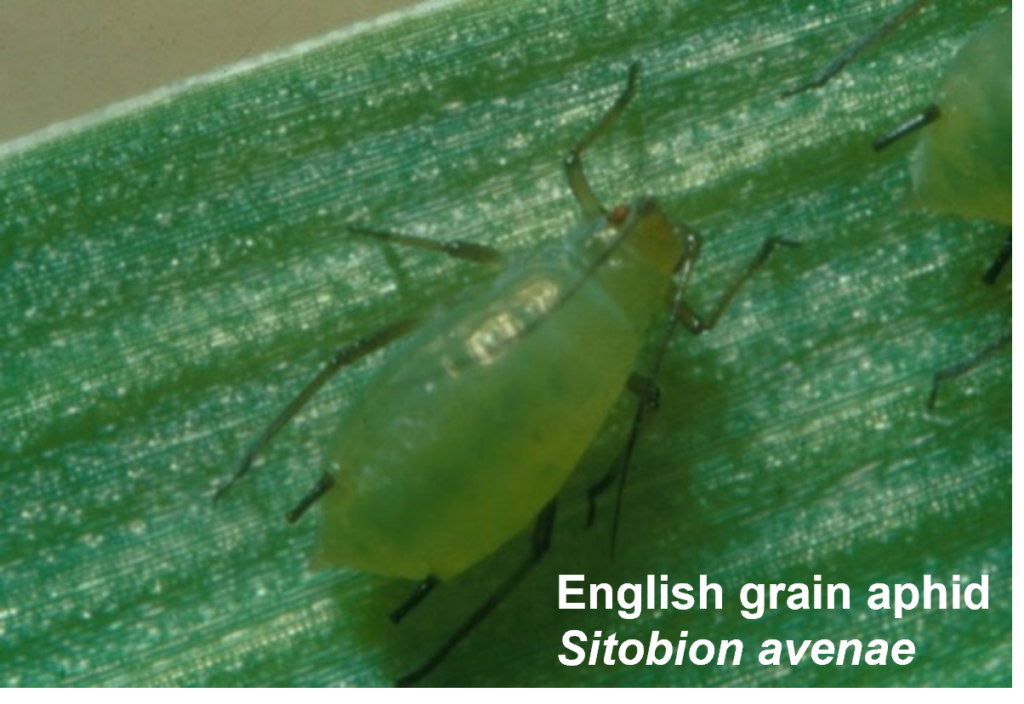
English grain aphids (EGA) appear in cereals, especially wheat, as grain begins to fill. Multiple color variations are usually present. Some are green, some are light green, some are red, and some can be almost black all in the same field population. One way to identify (EGA) is that the cornicles are entirely black.
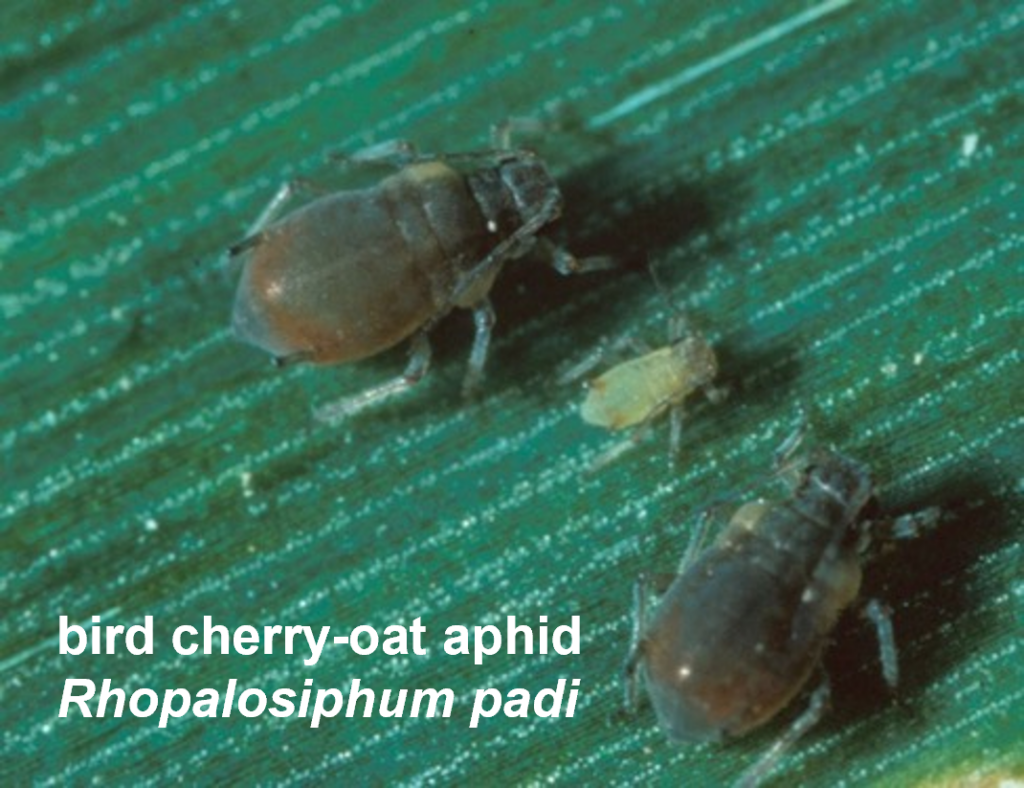
Bird-cherry oat aphids can be a major pest of wheat and barley due to the transmission of barley-yellow dwarf virus. These olive-colored aphids will exhibit an orange patch of color between the cornicles. They feed on multiple host species and movement between crops maintains populations of the aphid and virus. These pests often invade winter wheat from October to early December. Actual symptoms of barley-yellow dwarf virus appear in February.
Greenbugs unlike the bird cherry oat aphid are pale green and will lack any orange color between the cornicles. They will have a dark stripe that will run vertically across the abdomen. This aphid can inject a toxin that causes necrosis.
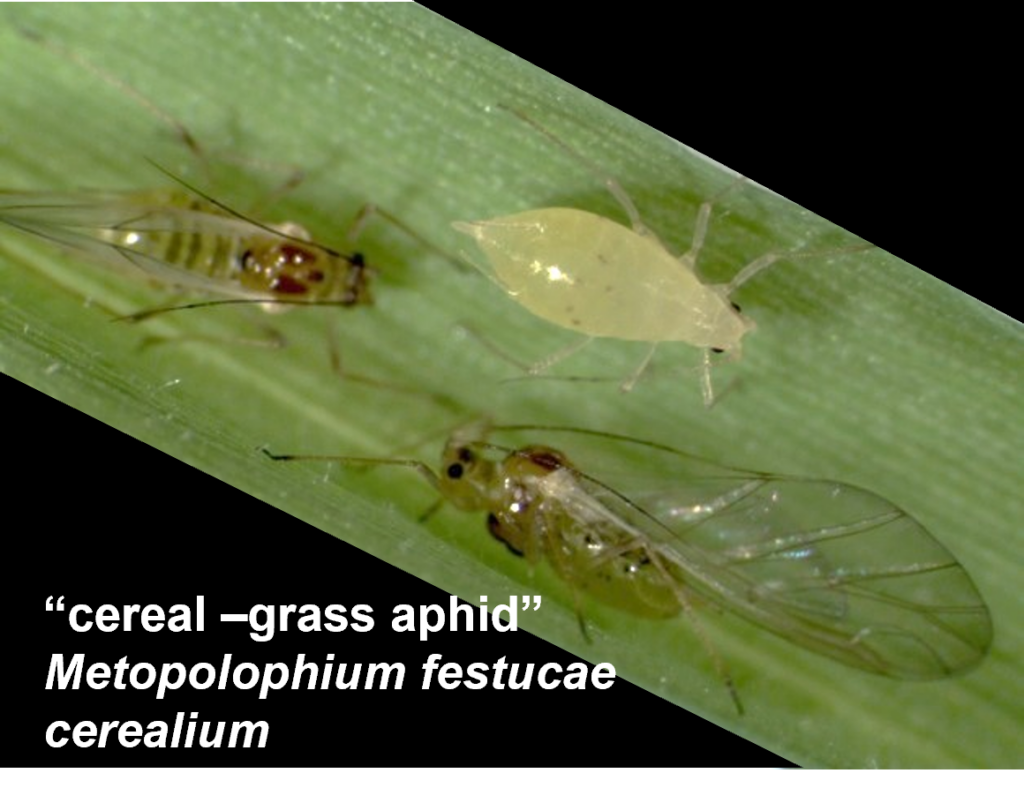
Cereal–grass aphids resemble Greenbugs but will lack a dark stripe running vertically across the abdomen. This is a relatively new aphid for the PNW in past years but has rather suddenly become dominant and continues to be one of the most abundant. Based on a greenhouse experiment with wheat seedlings, feeding of this pest induces a distinctive chlorotic reaction in wheat and other hosts, presumably causing more per capita injury than by other cereal aphids in the region. Imagine if this was the flag leaf which makes up approximately 75 percent of the effective leaf area photosynthesis that contributes to grain fill. Old literature says it can spread Barley-Yellow-Dwarf-Virus (BYDV) but recent studies suggest otherwise. WSU and the University of Idaho are currently studying if this aphid can transmit other strains of BYDV.
Scouting

A sweep net, insect beating sheet, or visual inspection can be used to determine if aphids are present. Thresholds have not been updated recently. The amount of injury and threshold will differ with crop stage (no preventable injury at dough or later). Exact thresholds will depend upon costs of control and potential yield; therefore, the following “old” thresholds should provide an idea of what to look for.
Management
Natural enemies are effective at reducing populations below injurious levels due to direct injury. Foliar insecticides are available and can reduce direct injury; apply these based on thresholds. Seed treatments (all registered are neonicotinoids) can reduce aphid infestations and may reduce the spread of viruses.
Use pesticides with care. Apply them only to plants, animals, or sites as listed on the label. When mixing or applying insecticides, follow all label precautions to protect yourself and others around you. It is a violation of the law to disregard label directions. If pesticides are spilled on skin or clothing, remove clothing and wash skin thoroughly. Store pesticides in their original containers and keep them out of the reach of children, pets, and livestock. Refer to the online version of the Pacific Northwest Insect Management Handbook for additional information regarding pesticide use and specific insecticide recommendations and application rates for Hessian fly (Hollingsworth 2019). The handbook is also available at Extension offices in Washington, Oregon, and Idaho.