Sawfly
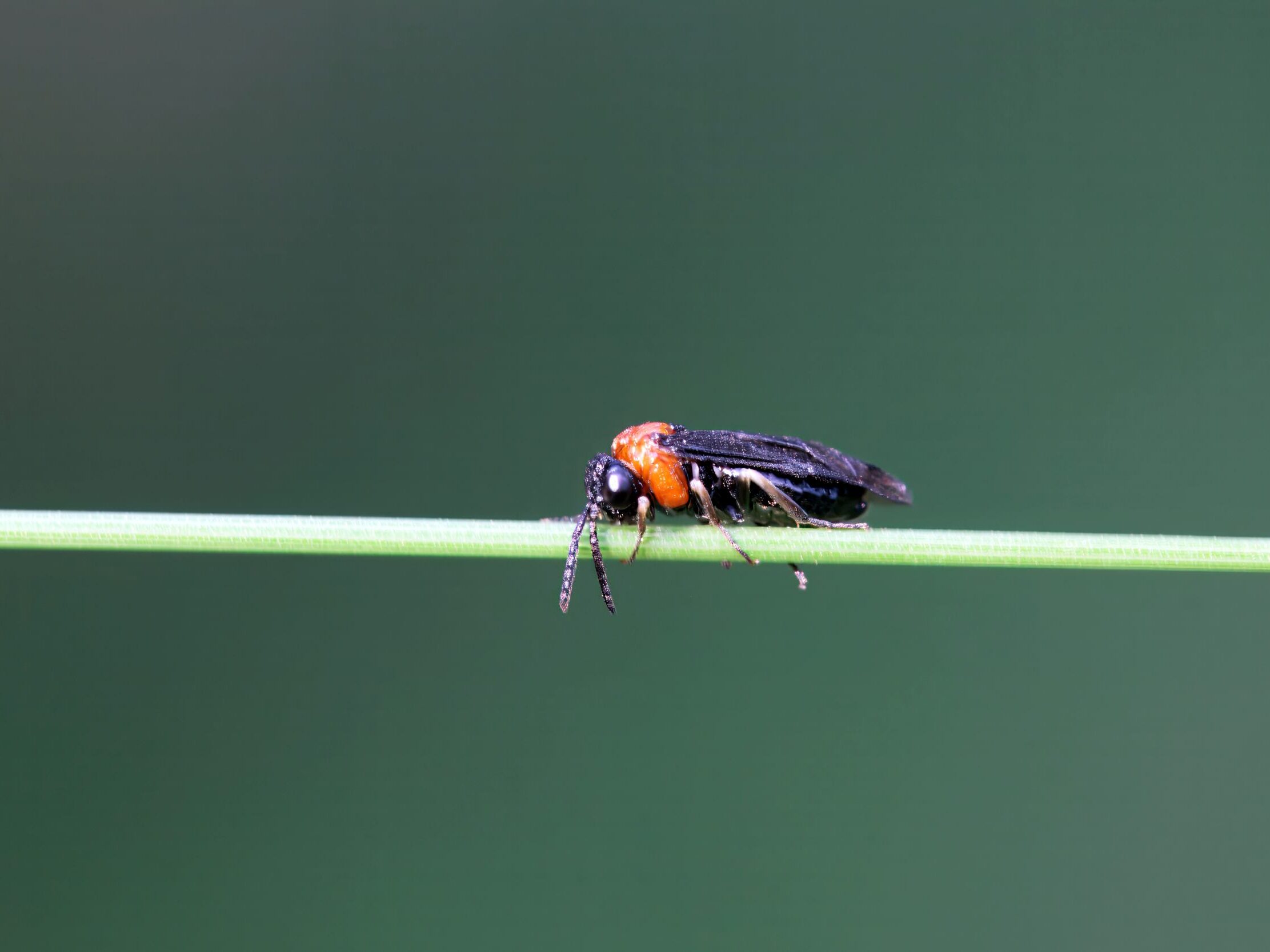
Sawflies are slender wasp-like insects with a shining black abdomen and yellow bands. They range in size from 10mm to 15mm long. Females tend to be larger than males and are easily distinguished by the presence of a serrated ovipositor at the end of their abdomen, which saws into plant stems to lay eggs, thus the name “sawfly”.

Symptoms
Sawflies feed in the hollow stems of wheat and other cereals, usually above the 1st node below the head. They cause white heads and flagging. Often an emergence hole is in the stem above the node. Sawfly damage can lead to stem breakage or lodging prior to harvest. Montana growers have reported significant economic losses, but this pest has not been particularly problematic in Washington.
Prevention
Tillage has been shown to reduce wheat stem sawfly survival. Trap crops such as barley, oats, and rye near wheat fields may also attract sawflies and reduce damage to wheat. Finally, planting wheat in large blocks, as is typical in much of Washington may reduce sawfly damage because sawflies are weak flyers and will not reach the center of fields.
Management
Cultural controls are the most effective form of management. In Colorado, insecticides have not proven to be highly effective for sawfly management.
Use pesticides with care. Apply them only to plants, animals, or sites as listed on the label. When mixing or applying insecticides, follow all label precautions to protect yourself and others around you. It is a violation of the law to disregard label directions. If pesticides are spilled on skin or clothing, remove clothing and wash skin thoroughly. Store pesticides in their original containers and keep them out of the reach of children, pets, and livestock. Refer to the online version of the Pacific Northwest Insect Management Handbook for additional information regarding pesticide use and specific insecticide recommendations and application rates for Hessian fly (Hollingsworth 2019). The handbook is also available at Extension offices in Washington, Oregon, and Idaho.