Wireworms

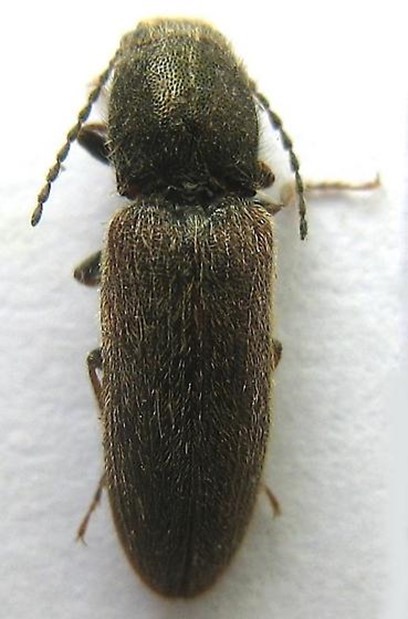
Wireworms are the immature larval stage of click beetles, and these beetles can spend several years in this larval stage feeding on germinating seeds and young seedlings, resulting in thin crop stands and lower yields. There are 13 species of wireworms in the region; however, Sugarbeet wireworm, Limonius californicus (Mannerheim), Western field wireworm, Limonius infuscatus Motschulsky, and Great basin wireworm, Selatosomus pruininus (Horn) have been shown to cause the most damage.
Identification
Wireworms are 1/4 to 3/4 inch long and have slender, semi-cylindrical bodies. They are a white, yellowish, or coppery color and have three pairs of legs behind the head.
Detection
When to begin scouting
Wireworm scouting should start in fields that historically have had excessive weed pressure and disappointing grain yields. Ideally, sampling should be done:
- When soil temperatures reach a minimum of 45°F in the spring or less than 80°F in the fall.
- Before planting so rates of seed-applied insecticide can be adjusted.
Shovel Method
The shovel method is the quickest and easiest way to sample for wireworms, but it may be the least accurate.
- Step 1: Dig down about 10 inches and lift the shovel of soil for examination.
- Step 2: Round off the soil sample to approximately 6 inches in diameter.
- Step 3: Sift through at least 20 shovels of soil from different locations in the field. This is extremely important because wireworm distribution is usually patchy or irregular.
A suggested threshold for determining the level of economic injury is an average of 4 or more wireworms per 20 shovels of soil.
Modified Solar Bait Trap Method
The modified solar bait trap method requires additional time and is more difficult to use, but it is also the most accurate method for wireworm sampling.
- Step 1: Monitor soil temperature in the field until it nears or reaches 45°F at a depth of 4 inches.
- Step 2: Mix equal parts untreated wheat and corn seed. Pour 1/2 cup of the wheat-corn mixture into a nylon stocking and tie off the end with string. Soak the filled stocking in water for 24 hours. Soaking the seed mixture is crucial because it starts the germination process. Because wireworm locations can be patchy, a minimum of 10 traps should be used per field.
- Step 3: Dig a hole in the soil approximately 3-5 inches deep and 8-10 inches wide. Place the bait trap in the hole and spread the grain mixture across the bottom of it. Leave the string outside the hole to help relocate the trap.
- Step 4: Cover the bait tap with sufficient soil to create a mound over the bait, but do not pack the soil.
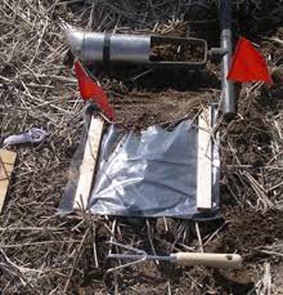
- Step 5: Cover the soil with a piece of black plastic approximately 1 to 3 feet square, and then cover this with a piece of clear plastic that is the same size or a little larger. This helps warm the soil, which helps germinate the bait that will attract wireworms. Cover the does of the plastic with soil to keep it from blowing away. Place a flag in one corner of the plastic to make it easier to relocate the site. Another method of covering the trap is to staple both the black and the clear plastic to wood lath and drill a hole for a flag that will keep the plastic in place and make it easier to relocate the site.
- Step 6: Seven to ten days later, remove the bait traps and be careful to collect any wireworms that may fall out when removing the bait traps from the soil. Place the bait traps in a small bucket or a resealable plastic bag. Wireworms may be found in the grain and/or may be caught up in the mesh of the stocking.
- Step 7: Cut the bait trap open and examine the grain inside. Then count the number of wireworms in each trap. Record the average number of wireworms per bait trap for fields and field site to determine which fields and field portions warrant treatment. Table 1 provides recommendations based on the average number of wireworms per trap.
- Step 8: Determine what level of control is needed. If wireworms are detected, several integrated pest management options can be used. These include incorporating fallow, treating with seed-applied insecticide, and/or delaying planting time.

| Average Number of Wireworms per Trap | Risk of Economic Damage | Wireworm Treatment Recommendation* |
|---|---|---|
| 0 | Low | No treatment |
| 0-1 | Moderate | Possible Treatment |
| 1-2 | Probable | Treat with Recommended Rates |
| 2-4 | High | Treat with Recommended Rates |
| > 4 | Extreme | Extreme Methods + |
* knowing field history also helps with developing treatment recommendations
+ extreme methods of control include using the highest rates allowable of neonicotinoid insecticides, higher seeding rates, and delated seeding.
Management
Cultural controls such as the following can be implemented:
- Rotating out of wheat can reduce wireworm populations.
- Seedbed preparation, in which the soil is well packed, will support healthy and vigorous plant growth and limit wireworm movement and damage.
- Repeated years of no-till planting may cause an increase of wireworm damage.
Today nearly all spring cereal crop acres in eastern Washington are treated for wireworm control with seed-applied neonicotinoid insecticides. These insecticides are under the trade names Cruiser® (thiamethoxam) and Gaucho® (imidacloprid) and are traditionally applied at rates between 0.190-0.315 oz/cwt. At these levels, the neonicotinoids are toxic at sub-lethal doses to wireworms, or in other words, they repel or provide only seedling protection.
More recently, Teraxxa® a seed treatment containing the active ingredient broflanilide has been shown to kill wireworms.
Publications and Articles
Wireworm problem greatly reduced, longtime WSU researcher says | Capital Press
WSU Extension’s Aaron Esser credits improved management with minimizing wireworms as a pest in cereal grains.
Identifying Wireworms (FS175E)
Wireworm Scouting 101: Shovel Method and Modified Wireworm Solar Bait Trap (FS059E)
Archived Publications and Videos
- Wireworm Control Poster 2011 (pdf)
- Wireworm Control with Neonicotinoids and Oriental Mustard (pdf)
- A New Seed-applied Insecticide for Wireworm Control in Cereal Grains
- Wireworm Trapping 101
Use pesticides with care. Apply them only to plants, animals, or sites as listed on the label. When mixing or applying insecticides, follow all label precautions to protect yourself and others around you. It is a violation of the law to disregard label directions. If pesticides are spilled on skin or clothing, remove clothing and wash skin thoroughly. Store pesticides in their original containers and keep them out of the reach of children, pets, and livestock. Refer to the online version of the Pacific Northwest Insect Management Handbook for additional information regarding pesticide use and specific insecticide recommendations and application rates for Hessian fly (Hollingsworth 2019). The handbook is also available at Extension offices in Washington, Oregon, and Idaho.