Wheat Midge
Identification
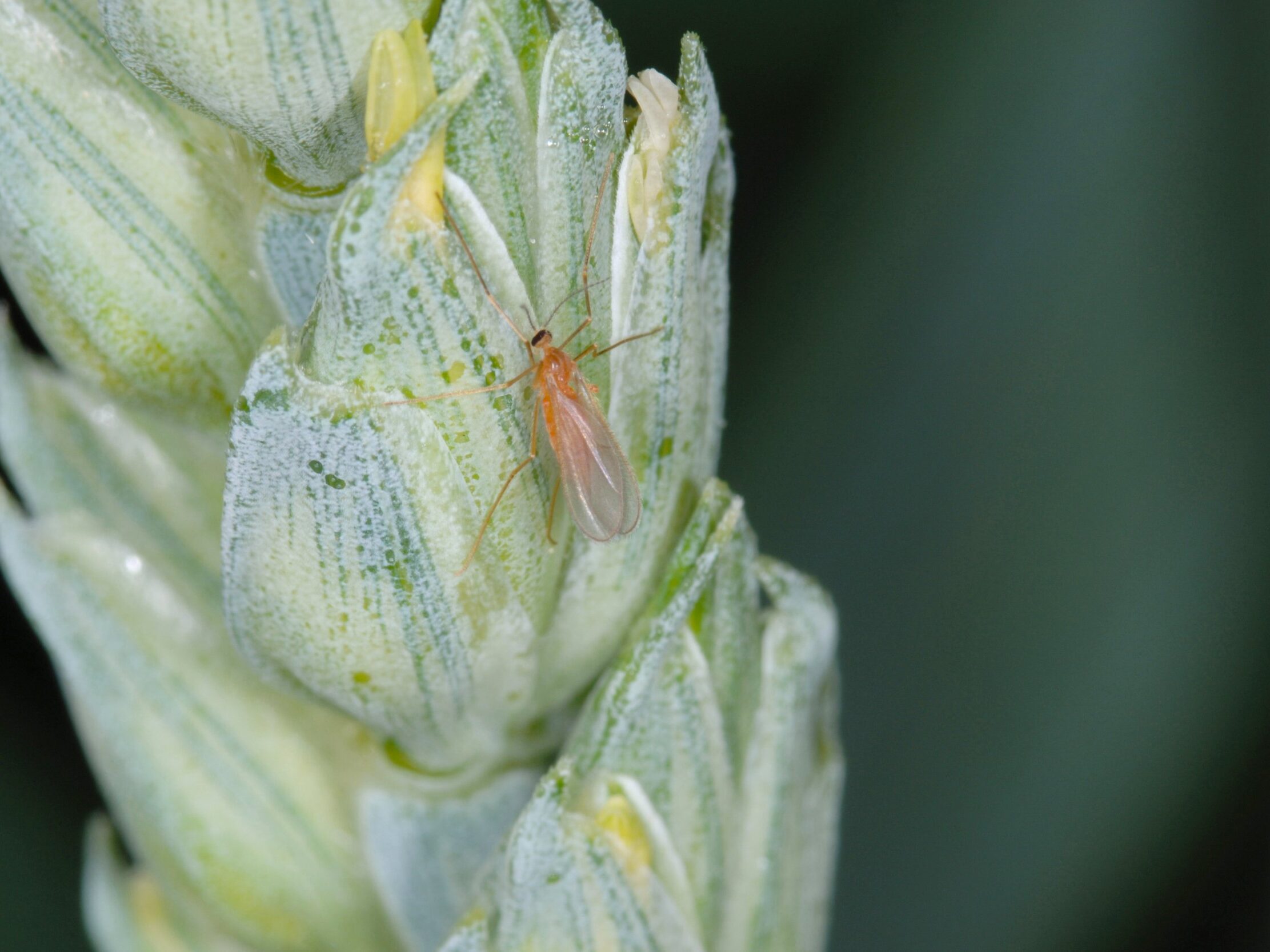
The midge is also called the “orange wheat blossom midge” because it is orange in color and it infests wheat at pollination (flowering). It originated in Europe and has been an economic pest in Canada and the northern U.S.
The adult wheat midge is about 1/2 the size of a mosquito with an orange body, conspicuous black eyes, three pairs of legs and wings. The females lay eggs on the awns and heads of wheat plants. The eggs hatch into larvae and crawl inside the floret to feed on the developing grain. The larvae are about the same size, shape and color as the anthers of the wheat floret.
Prevention
Work from North Dakota suggests that early planting is a useful cultural control method for wheat midge. If the crop heads and flowers before peak emergence then damage can be minimized. Similarly, late planted varieties that head and flower after peak emergence may also be less susceptible to wheat midge
Management
There are no established economic thresholds for midge infestations in Washington State. In North Dakota, the thresholds are 1 midge per 5 heads for hard red spring wheat or 1 midge per 7 heads for durum wheat.


Archived Resource
Wheat Midge A Possible New Wheat Pest in Washington State
Use pesticides with care. Apply them only to plants, animals, or sites as listed on the label. When mixing or applying insecticides, follow all label precautions to protect yourself and others around you. It is a violation of the law to disregard label directions. If pesticides are spilled on skin or clothing, remove clothing and wash skin thoroughly. Store pesticides in their original containers and keep them out of the reach of children, pets, and livestock. Refer to the online version of the Pacific Northwest Insect Management Handbook for additional information regarding pesticide use and specific insecticide recommendations and application rates for Hessian fly (Hollingsworth 2019). The handbook is also available at Extension offices in Washington, Oregon, and Idaho.