Broadleaf and grassy weed control in cereal grain cropping systems continue to be a challenge for farmers throughout the Pacific Northwest. Farms continue to experience limited control of downy brome with multiple group 2 herbicide applications, and University weed scientists have documented numerous cases of herbicide-resistant biotypes. Glyphosate-resistant Russian thistle has also become prevalent in our cereal grain cropping systems and horseweed (marestail) and prickly lettuce remain challenging.
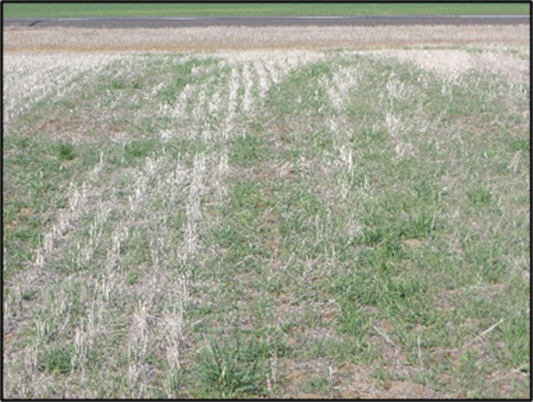
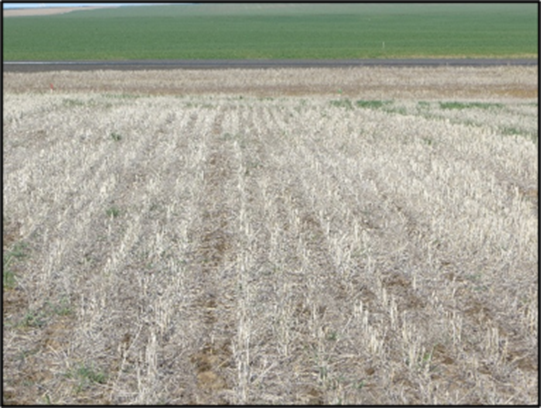
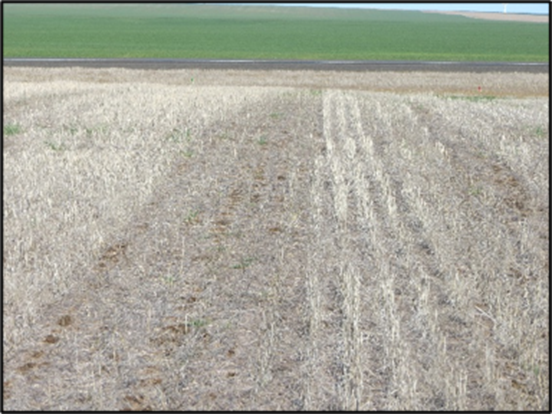
In the fall of 2021, two large on-farm trials were established in Adams County on fields going into no-till fallow. Residual herbicides were applied in November with rain in the forecast. Pictures were taken in the spring just prior to the first broadcast application of glyphosate. Residual herbicide applications reduced but did not eliminate the number of downy brome (Bromus tectoram) in the spring of the year, and they decreased but did not eliminate the number of difficult-to-control broadleaf weeds throughout the fallow season. Refer to the photos below for details of specific herbicides and application rates and to view a comparison of the treatment effects the following spring.

For questions or comments, contact Aaron Esser via email at aarons@wsu.edu.