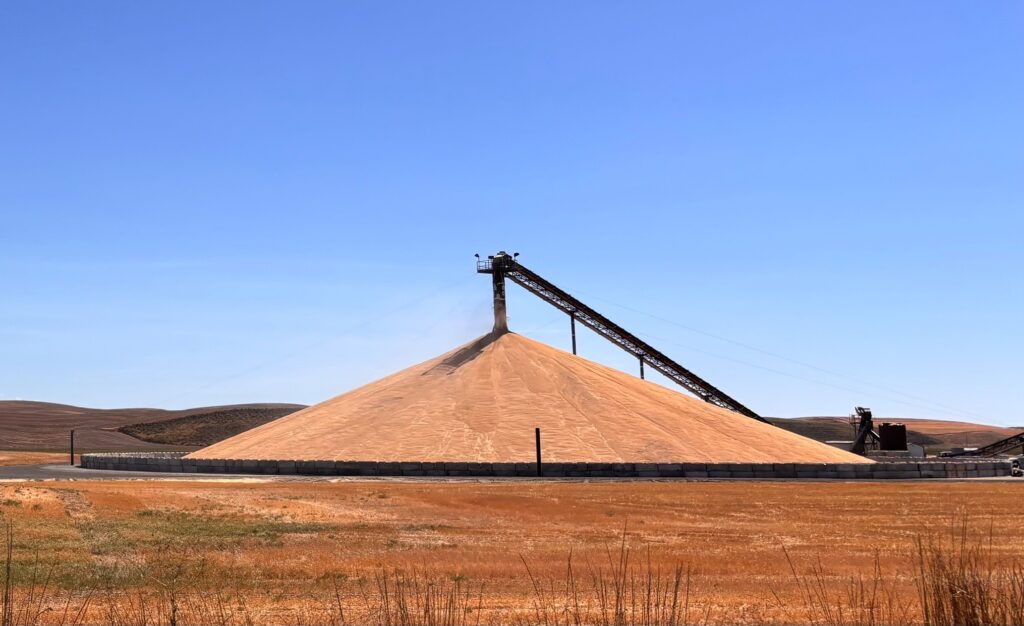
We have been hearing that farmers are harvesting soft white winter wheat with record yields but grain protein content are reportedly below 9% in certain areas, with some also having low falling numbers. Similarly, the Northwest Grain Growers harvest update from Monday, July 27, 2026, reports that some soft white wheat grain protein levels have been historically low to start harvest.
Why grain protein matters
According to cereal chemists, in soft white wheat with extremely low protein, the excess amount of starch in the grain can mill too fine and start clogging up (“blinding”) screens. Soft wheat doesn’t flow through mills as easily as hard wheat, and low protein presents additional flow issues. There is also a trend toward more damaged starch in exceedingly low protein grain, though more needs to be explored about this mechanism. Protein is also an important component of many soft wheat products such as crackers. There needs to be a moderate level of flour protein to create and maintain the structure and texture of crackers, snack-products, and hard biscuits.
There is also greater variability in milling performance when protein is very low. Most milling companies are familiar with changing formulations for higher protein because that is fairly common. However, formulations and blending may be challenging with a deviation in the opposite direction from what most companies are familiar with.
Causes of low protein wheat
Protein is mainly nitrogen. High grain yield and low grain protein often indicate fertility (primarily nitrogen and/or sulfur) was limiting grain protein. Low fertility could be due to inadequate fertilization and/or loss of nitrogen. However, there is also a dilution effect of spreading a fixed amount of nitrogen (and sulfur) over unexpectedly more bushels of wheat. Yields of the current winter wheat crop have been coming in much higher than expected based on weather forecasts made last fall and soil moisture conditions at the time of seeding and fertilizer application. So, when farmers fertilize for a yield of X and harvest a yield of 2X or even 3X, grain protein is going to be much lower. This shows that in a year like this one, even the best planning can get derailed when conditions change dramatically.
The inverse relationship between yield and protein can be seen in results from the WSU Cereal Variety Testing Program. For a market class like soft white winter wheat, entries at a location are all fertilized uniformly for an optimistic yield goal. However, if you look at the ranked list of entries those with the highest yield tend to have the lowest grain protein content. Early data from the VTP show high yields and reasonable grain proteins for the 2026 soft white wheat crop. Remember that the VTP results are always higher in yield and grain protein than the field average in which the plots are located. This is because the VTP locates plots on uniform, well-fertilized areas of the field to minimize variability and allow the program to focus on the genetic potential of the entries being evaluated.
We are still early in the 2026 wheat crop harvest and remain hopeful that, as additional fields are cut farmers and elevators begin to see some higher soft white wheat grain proteins. Soft white spring wheat often has higher grain proteins and may offer options for blending with low-protein soft white winter wheat to increase the protein content and marketability of the year’s crop.