Mites
Introduction
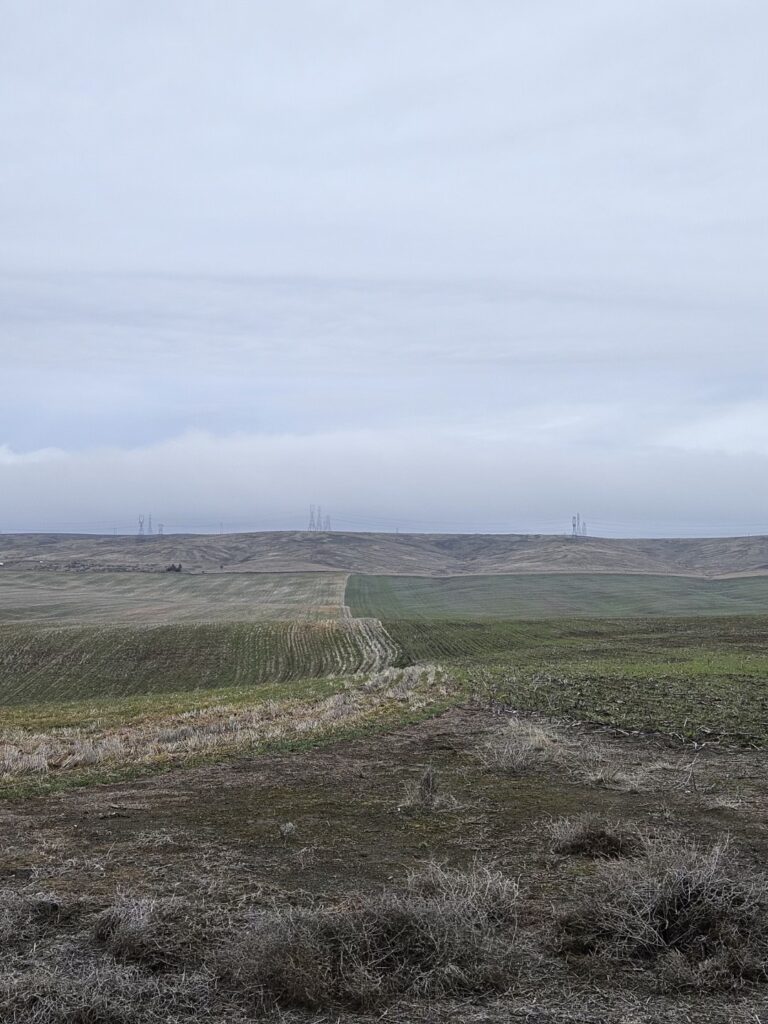
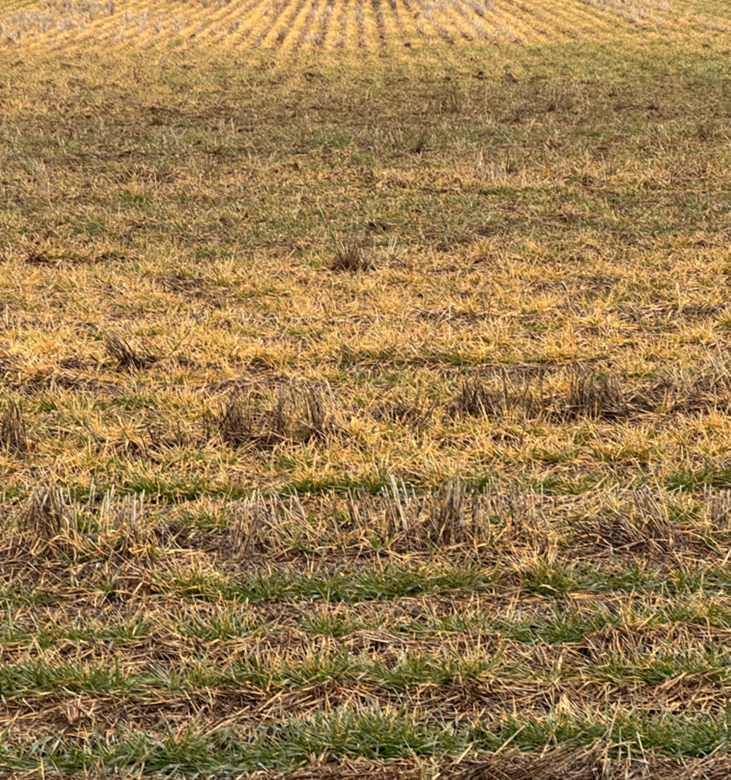
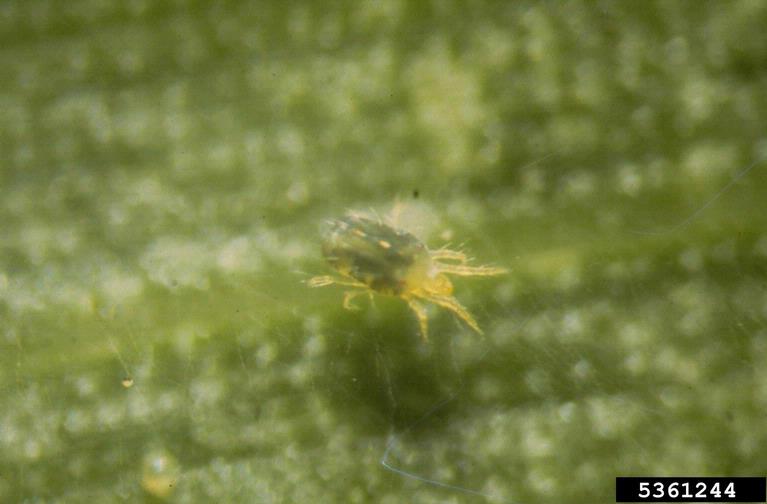
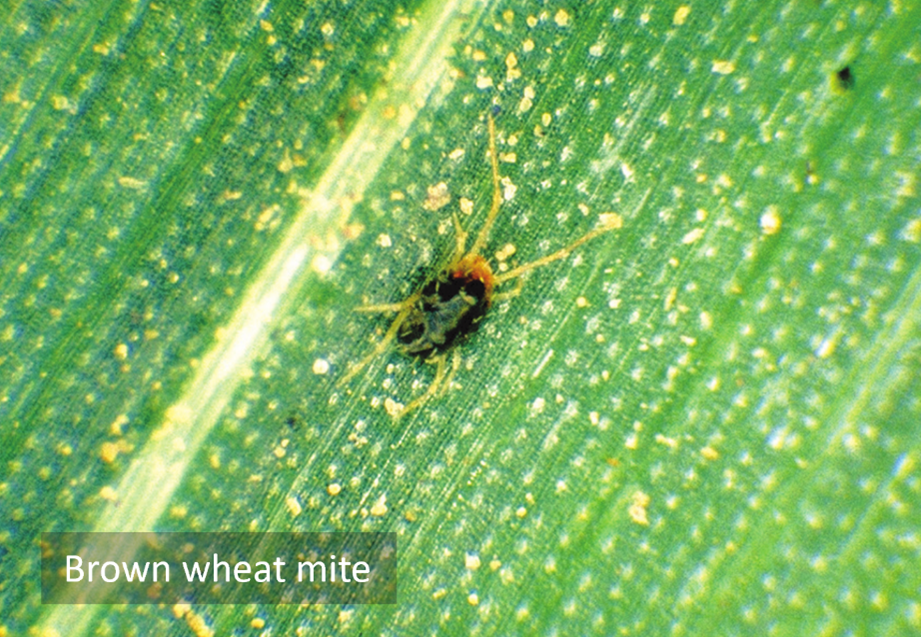
There are several mite species of economic agricultural importance in the PNW cereal crops; i.e., the brown wheat mite, Petrobia latens Müller, Banks grass mite, Oligonychus pratensis Banks, winter grain mite, Penthaleus major Duges, and the wheat curl mite, Aceria tosichella Keifer. Mites are polyphagous, feeding on numerous different host plants such as oats, barley, spring wheat, winter wheat, corn, and other grasses such as barnyard grass. Timothy hay in Idaho, Washington, and Oregon are susceptible to all four species. Because of their small size, mites can be spread by the wind. Fields with heavy infestations typically have a silver or gray coloration. Feeding damage causes reduced photosynthetic potential and reduced yield. The wheat curl mite is the only known vector of Wheat Streak Mosaic Virus (WSMV). WSMV infections can lead to heavy losses. Often WSMV infection accompanies other viruses transmitted by wheat curl mites such as High plains wheat mosaic or Triticum mosaic. This mite requires living plants to survive, so they will move from maturing grain crops or weedy hosts to nearby green hosts. When inoculum is suspected follow mite management recommendations diligently.
Identification
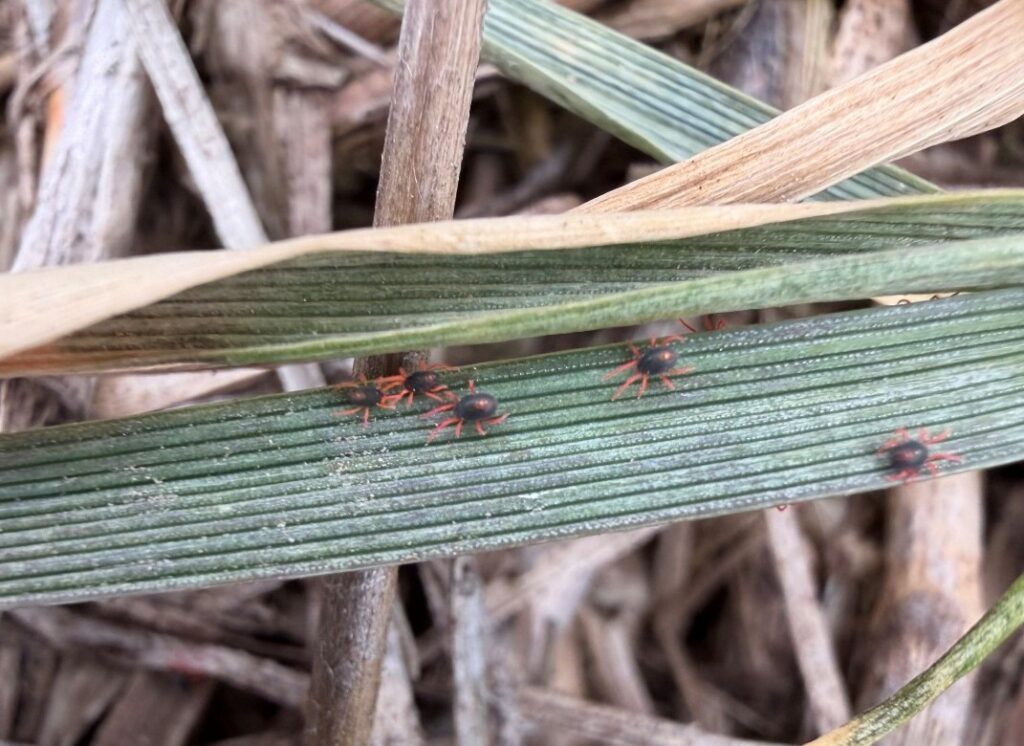
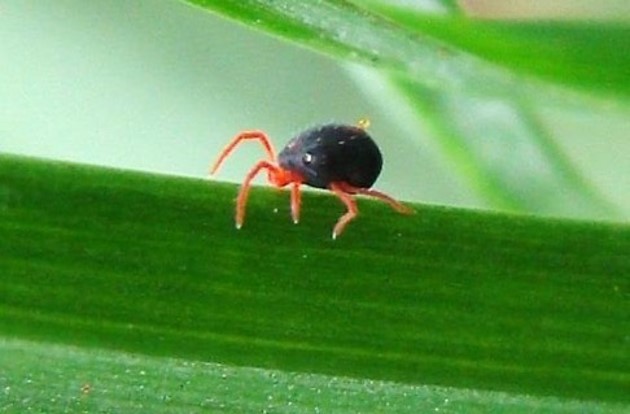
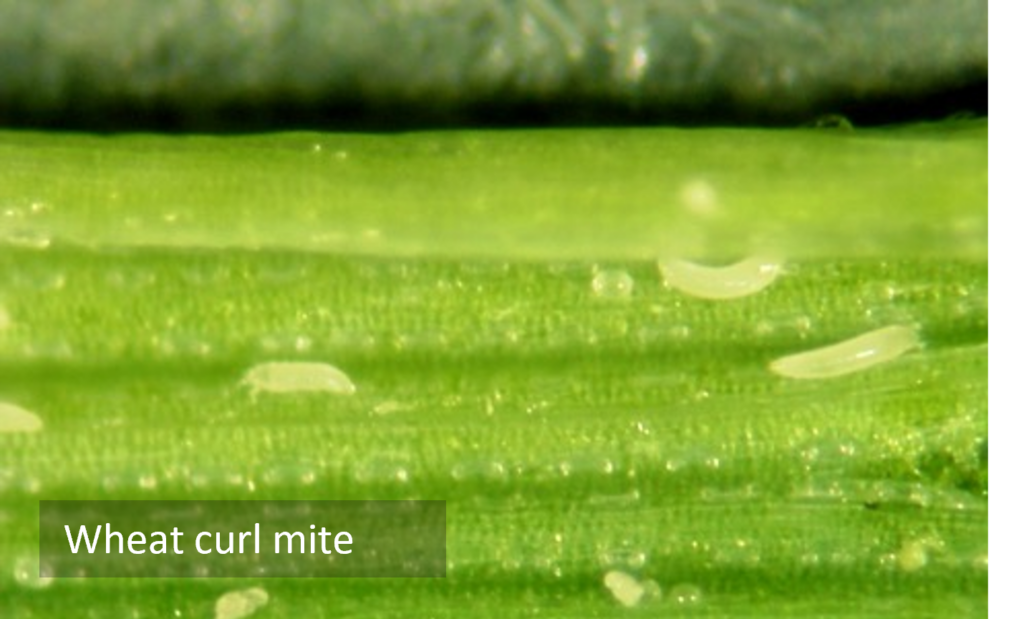
Mites are small and therefore a hand lens will be required for identification. Some species may appear spider-like in appearance such as the winter grain mite having a dark-colored body and eight red legs, while others such as the wheat curl mite are more cigar-shaped and whitish in color.
Scouting
Mites arrive from senescing alternative hosts via wind. Scout winter wheat from October to April; Brown wheat, Banks grass, and wheat curl mites should be scouted from April throughout mid-summer. Infestations often begin near field margins; however, like with other pests, the interior portion of fields should also be monitored by inspecting the base of plants. Silk (webbing) may be visible on plants with moderate to severe infestations. Plant samples may also be taken by shaking leaves over a white piece of paper. It is also recommended to become familiar with the type of plant damage that mites cause.
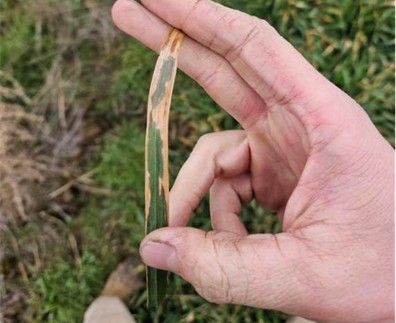
The brown wheat mite causes finely molted leaves and will be on plants during warm days. Chlorotic to bright yellow staining on plant leaves is associated with the Banks grass mite. The winter grain mite is associated with a “silvering appearance” on leaves. Leaves rolled at the edges are typical symptoms caused by the wheat curl mite.
If Wheat Streak Mosaic Virus (WSMV) is present, typically, infected plants are stunted and do not tiller well. Foliar symptoms include a light green to yellow mottled mosaic appearance. In winter wheat, plants can be infected in fall or spring, but symptoms usually begin to appear in spring. This virus from a distance may resemble spray drift damage. To confirm WSMV a sample must be tested for the virus. The WSU Plant Pest Diagnostic Clinic is available to test plants for this as well as other wheat viruses.
Management
Thresholds have not been developed for these mite species. Management of wheat curl mites with insecticides is not recommended as mites are NOT insects. There are several miticides that are registered for the brown wheat mite and winter grain mite, but not for Banks grass mite.
Late planting of winter wheat and rotations (and eliminating volunteer wheat) are effective for limiting mite infestations.
For the wheat curl mite, there are no miticides, either foliar or seed treatments, that will control this pest. Therefore, cultural control is going to be your only option…
- Disrupting the green-bridge to prevent mites from moving into the emerging crop is critical.
- Destroying volunteer wheat and other grain or grass crops with tillage or herbicides at least 2 weeks before planting is very effective.
- Late planting (1 or 2 weeks) of winter wheat and rotations (plus eliminating volunteer wheat) are effective for limiting mite infestations.
- Destroying volunteer wheat and other grain or grass crops with tillage or herbicides at least 2 weeks before planting is very effective. Grassy weeds should likewise be controlled before planting.