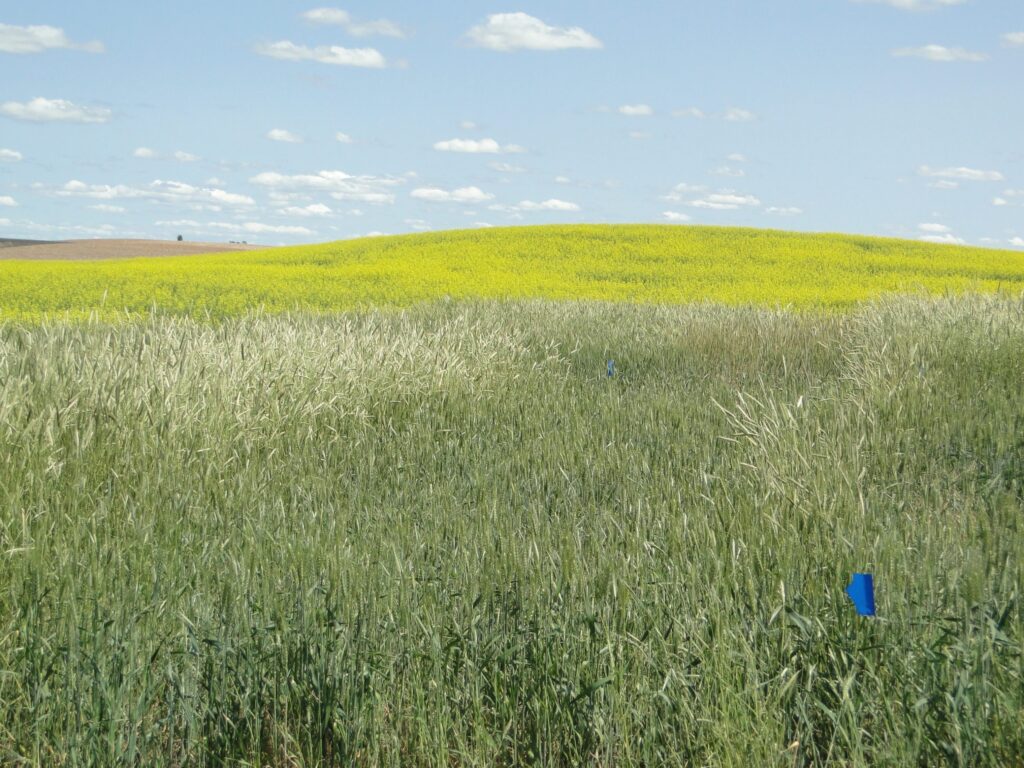
Feral rye (Secale cereale L.), also known as volunteer or cereal rye, is a troublesome weed in winter wheat production systems in the low and intermediate rainfall zones of eastern Washington and Oregon and southern Idaho. Integrated Management of Feral Rye in Winter Wheat (PNW660) was recently updated to include new information on the use of the CoAXium wheat production system and Aggressor AX herbicide for the management of feral rye. Other minor updates were also added, including new citations for research published since the last update in 2020.
Rye has been grown in the Pacific Northwest (PNW) for seed and as a cover crop, as well as for forage in hay production systems, pastures, and range. It has also been used in wildlife and soil conservation seed mixtures. Regional weed scientists think our current feral rye management problems in winter wheat originated when rye plants used for these other purposes escaped into cultivated fields. Since then, feral rye plants with the weediest characteristics (for example, early seed shatter and long seed dormancy) have thrived in the winter wheat– fallow rotations of the region.
If you struggle with the management of feral rye on your farm, consider downloading your free copy of the newly revised PNW660, Integrated Management of Feral Rye in Winter Wheat.

For questions or comments, contact Drew Lyon via email at drew.lyon@wsu.edu or phone at 509-335-2961.