Contributed by Anna Carroll, WSU
Funded by a Foundation for Food and Agricultural Research (FFAR) grant, a collaborative team (including researchers, growers, industry members, and nonprofits) has been working to develop and validate new tools to detect and prevent low falling number. The project has notably included the development of a rapid immunoassay which predicts falling number in wheat. Last summer and fall, the new rapid test underwent its first field season of pilot testing within the Pacific Northwest (PNW) and across the US– stay tuned for a publication describing the efforts in the PNW that is being prepared. The rapid test is commercially available from Envirologix, Inc. for soft white and soft red market classes.
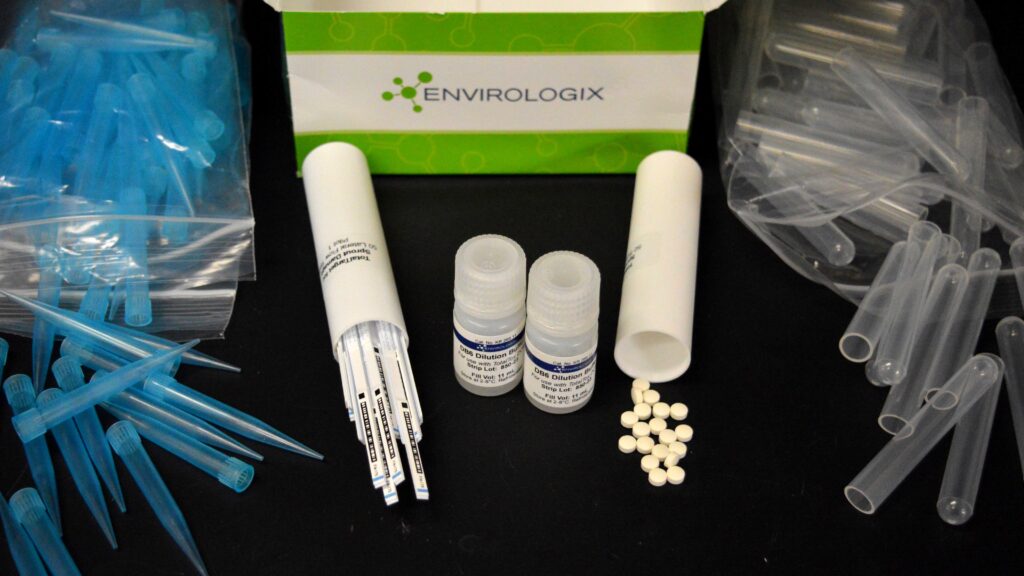
We are excited to announce the release of a new instructional video! This video provides a set of step-by-step details showing how the rapid test is performed on a milled wheat sample. The test uses a dipstick test strip to measure alpha-amylase enzyme activity, which breaks down starches and leads to lower falling number. The test strip is read by a digital scanner, which is calibrated across a range of falling numbers to calculate an estimated falling number for the sample.
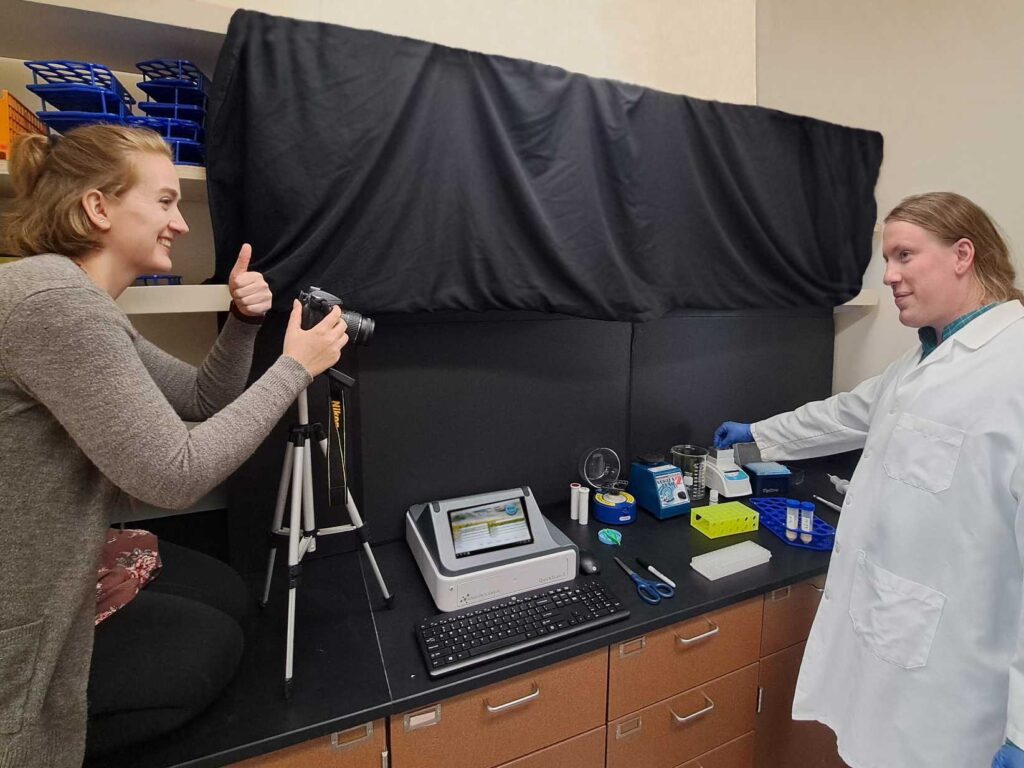
Did you know that this project goes beyond the new rapid test? Our new webpage is housed on the WSU Wheat and Small Grains website under “Grain Quality Resources”. In addition to the rapid test instructional video, you can also explore project background and objectives, published materials and podcasts, and other media related to this project. It’s a great way to learn more about the progress in developing better understanding and detection of low falling number.
Contact us to request an in-person demonstration of the new rapid test.