Seven-spotted Lady Beetle
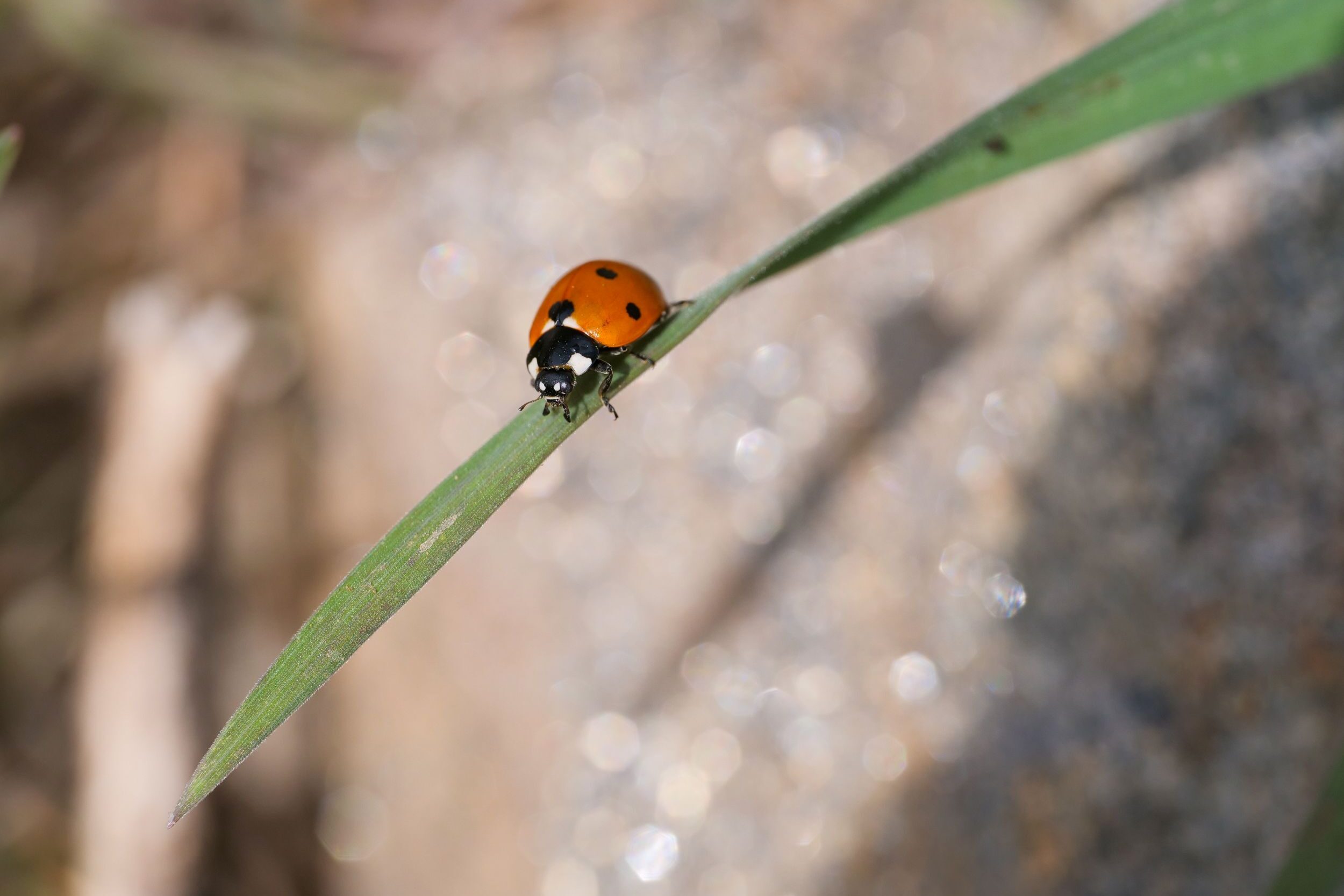

Coccinella septempunctata (Linnaeus, 1758) (Coleoptera: Coccinellidae)
This lady beetle has been repeatedly introduced to North America from Europe as a biological control agent. It was established in the early 1970s in New Jersey and has been spread naturally throughout North America. Both the adults and the larvae are voracious predators of aphids. C. septempunctata may be a more effective predator than some native lady beetle species, displacing them in some areas. These predator are found in aphid infested crops, including potatoes, legumes, sweet corn, alfalfa, wheat, sorghum, etc.
Description
This beetle is 7-10 mm in size with a white spot on either side of the head. It has 7 black spots (spot pattern is usually 1-4-2) on the red or orange forewings from which this species derives its name. The body is oval in shape. The distinctive spots and attractive color make these beetles unappealing to predators such as birds. Additionally, if threatened these beetles can both play dead and secrete unappetizing fluids to protect themselves. Larvae are dark brown or nearly black, alligator-like. They are usually 7-8 mm in length and have three pairs of prominent legs. Eggs are spindle shaped and small, about 1 mm long.
Lifecycle

Both the adult and larvae are considered useful insects since they are major predators of aphids, scale insects, or mites which are pests in gardens, agricultural fields, orchards, and similar places. Within the colonies of such plant-eating pests, they will lay hundreds of eggs, usually underneath the leaf, well protected from the predators. The eggs are small (about 1 mm) and spindle-shaped. When the larvae hatch, they will commence feeding immediately. Additionally, female may lay 10-15 eggs around a place that the babies can find food once they hatch. Once the metamorphosis is complete, the larvae skin will split open. That is when the full grown ladybug will emerge; however, it will not look like the normal ladybug that we are used to seeing. It will look pale or soft and pink for a few hours until the actual shell hardens. While the shell is getting hard, it gains pigments, which is why the ladybug turns red. Adults can live for weeks or months, depending on the location, availability of prey, and time of year. These beetles have multiple generations per year.
Conservation
Overwintering adults may be less susceptible to recommended application rates of some pesticides than active adults and larvae.
References
- Gordon, R.D. (1985) The Coccinellidae (Coleoptera) of America North of Mexico. J. NY Entomol. Soc., 93: 1-912.
- Habeck, D.H., Bennett, F.D., and Frank, J.H. (1990) Classical Biological Control in the Southern United States. Southern Cooperative Series Bulletin No. 355, IFAS Editorial, University of Florida, Gainesville, FL. 197 pp.
Use pesticides with care. Apply them only to plants, animals, or sites as listed on the label. When mixing or applying insecticides, follow all label precautions to protect yourself and others around you. It is a violation of the law to disregard label directions. If pesticides are spilled on skin or clothing, remove clothing and wash skin thoroughly. Store pesticides in their original containers and keep them out of the reach of children, pets, and livestock. Refer to the online version of the Pacific Northwest Insect Management Handbook for additional information regarding pesticide use and specific insecticide recommendations and application rates for Hessian fly (Hollingsworth 2019). The handbook is also available at Extension offices in Washington, Oregon, and Idaho.