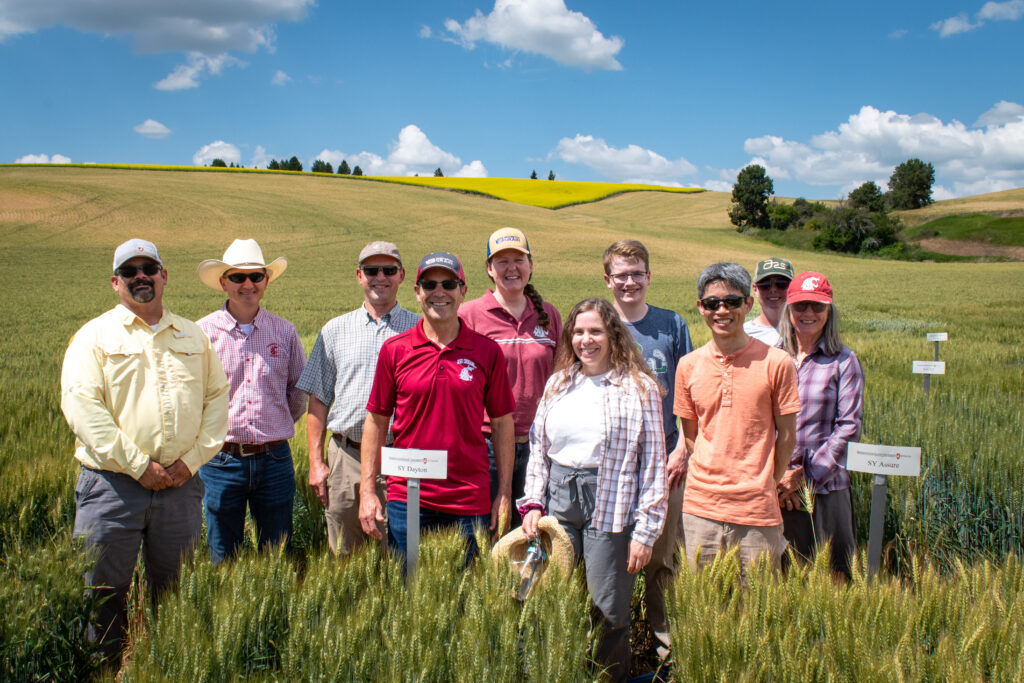
Funded by the Foundation for Food and Agriculture Research (FFAR), this project is a widespread collaborative effort between university researchers, industry partners, nonprofits, and growers. Together, we are working to develop and validate tools, including a wheat quality test, that are more accessible to the wheat industry.
On this webpage you will find links to information about the work being done on this project, including popular press articles, research articles, extension articles, podcast interviews, and more! We will be releasing regular updates about the status of the development and testing of the rapid test, as well as education and outreach efforts.
Why is this important?
Worldwide, the wheat industry experiences substantial financial losses due to low falling number (FN), and the frequency of low-FN events is increasing. The FN test is the standard in the industry, but it is slow and uses expensive and bulky equipment that makes it unrealistic to run on-farm. A less expensive and more mobile-ready testing setup is a great supplement that opens the door to opportunities for earlier testing. Testing on-farm or at elevators will minimize disadvantageous mixing of sound and unsound grain, and the speed of testing will be helpful to breeders who have many lines to test.
Project Goals
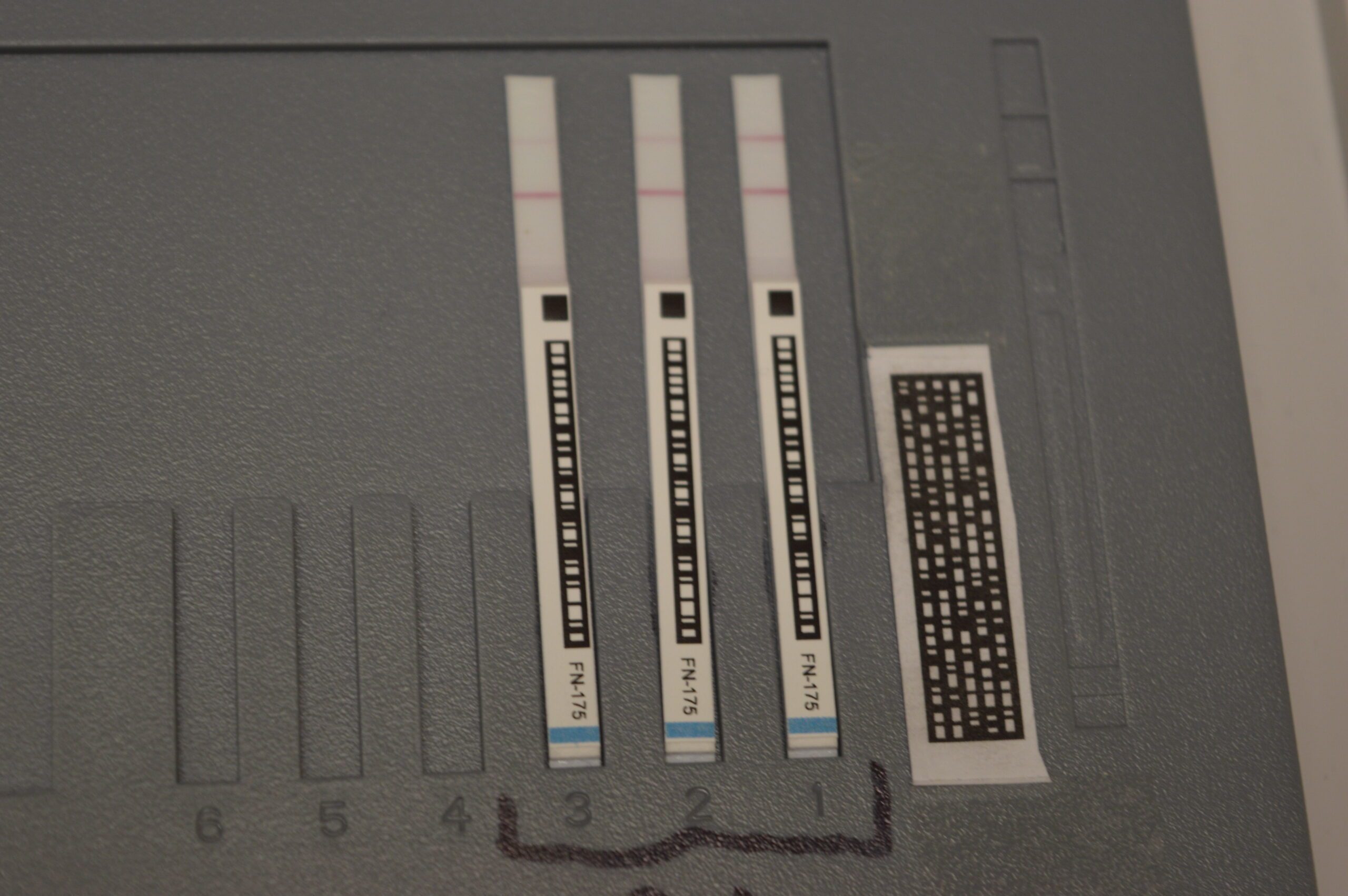
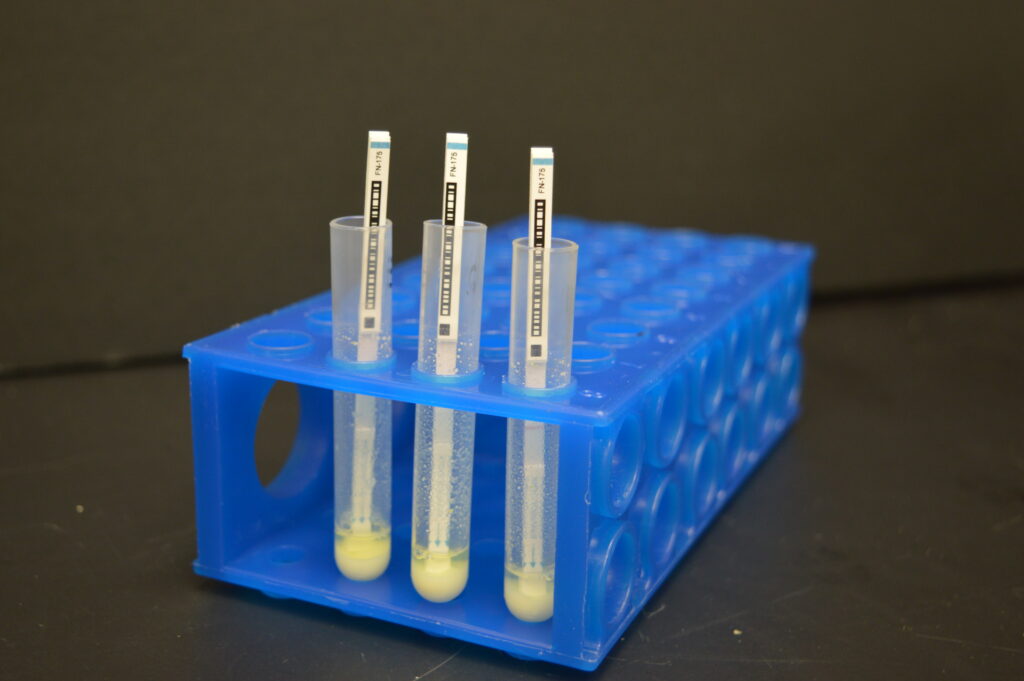
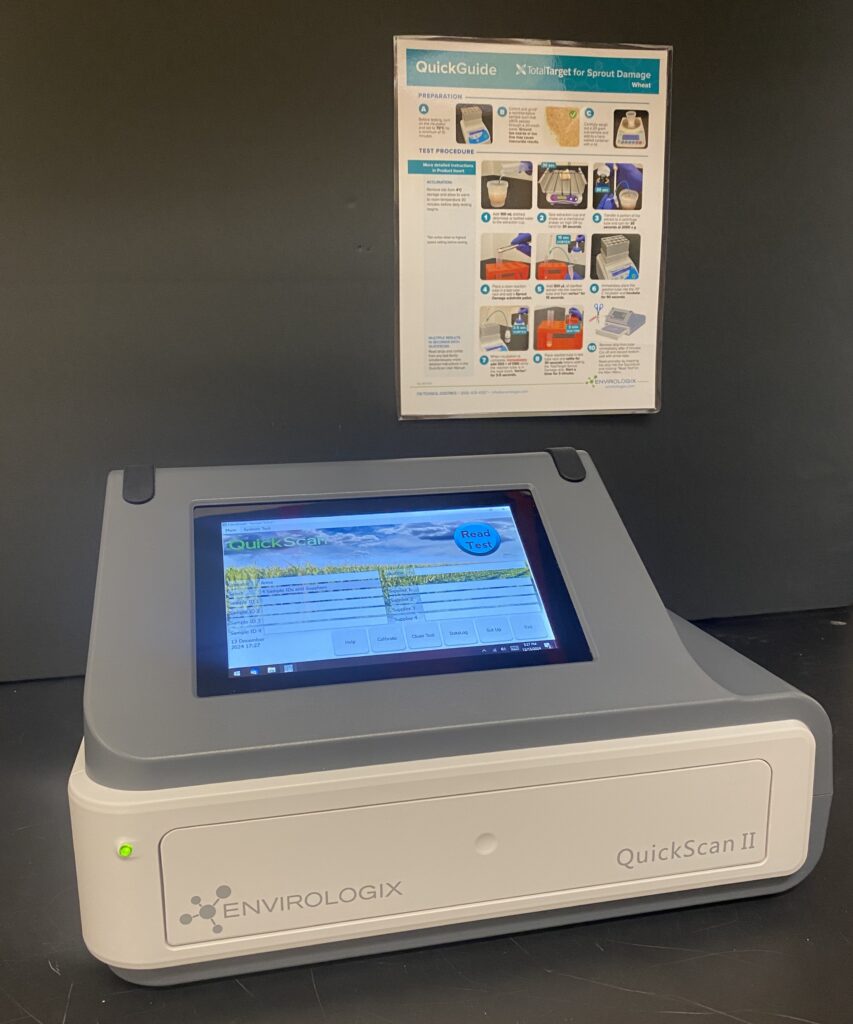
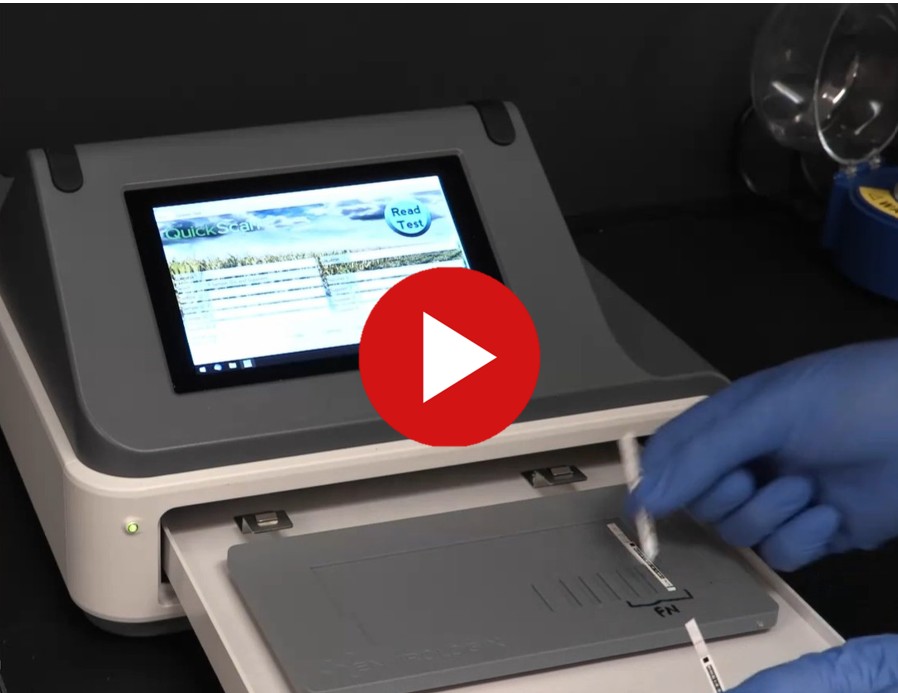
Develop rapid tests such as immunoassays (visualize a COVID test or pregnancy test) that will accurately measure alpha-amylase activity and other targets that more accurately predict falling number.
Validate the performance of these assays across a variety of market classes, growing environments, and testing environments.
Use proteomics studies to discover distinct protein markers between late-maturity alpha-amylase (LMA) and preharvest sprouting (PHS), and use these for development of next generation tests that distinguish between the two. This is important because LMA may have less of an impact on end-use quality than PHS. Our long-term goals are to provide the industry with tools that:
Breeders will use to breed more effectively for LMA and PHS tolerance.
Facilitate separation of LMA-impacted grain from PHS-impacted grain earlier in the grain chain.
Allow for a deeper understanding of LMA and PHS causes and physiology.
Develop weather models to predict periods of high risk for LMA or PHS events.
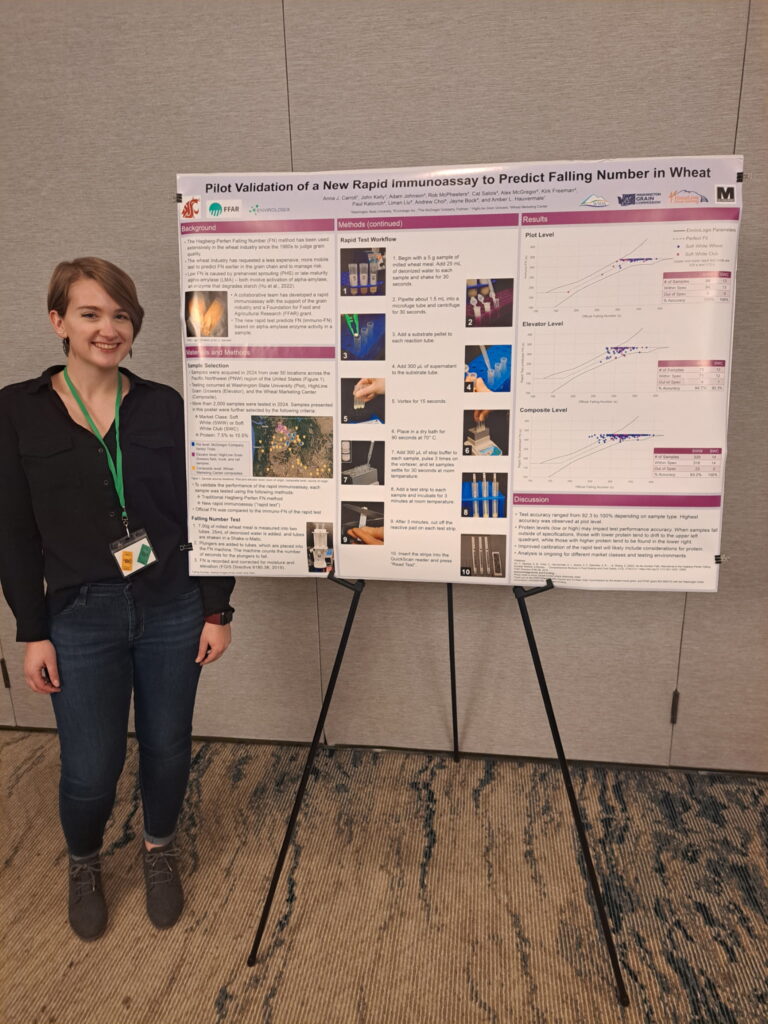
Overview: A rapid immunoassay for predicting falling number in wheat has been developed and is undergoing validation after testing has been run on over 2,000 samples across the Pacific Northwest.
Overview: The conclusion of the three-part series: addresses improvements in management, provides updates about the development of new tools for low falling number detection, and emphasizes the importance of variety selection.
Overview: This article describes the logistics of managing sound and low falling number grain at elevators and provides an overview of how wheat moves through the grain chain through to export.
Overview: Three antibodies were developed that can detect alpha-amylase; this may be useful in the development of immunoassays that differentiate between preharvest sprouting and late-maturity alpha-amylase.
Overview: A 96-well Phadebas assay was shown to be effective at detecting alpha-amylase in wheat; various grinding methods were compared and found to be equally effective.
Overview: This is a current review of what’s known about LMA and identifies several key gaps in knowledge for future research.
Contact
Share the news and provide us with your feedback! We aim to foster reciprocal relationships with people from all links of the grain chain (growers, warehousemen, elevator operators, seed sellers, and other industry stakeholders) through education, outreach, and receiving feedback on what is most important to our end users. Education efforts will include information about the differing impacts of LMA and PHS on grain quality and providing training for the next generation of wheat professionals.