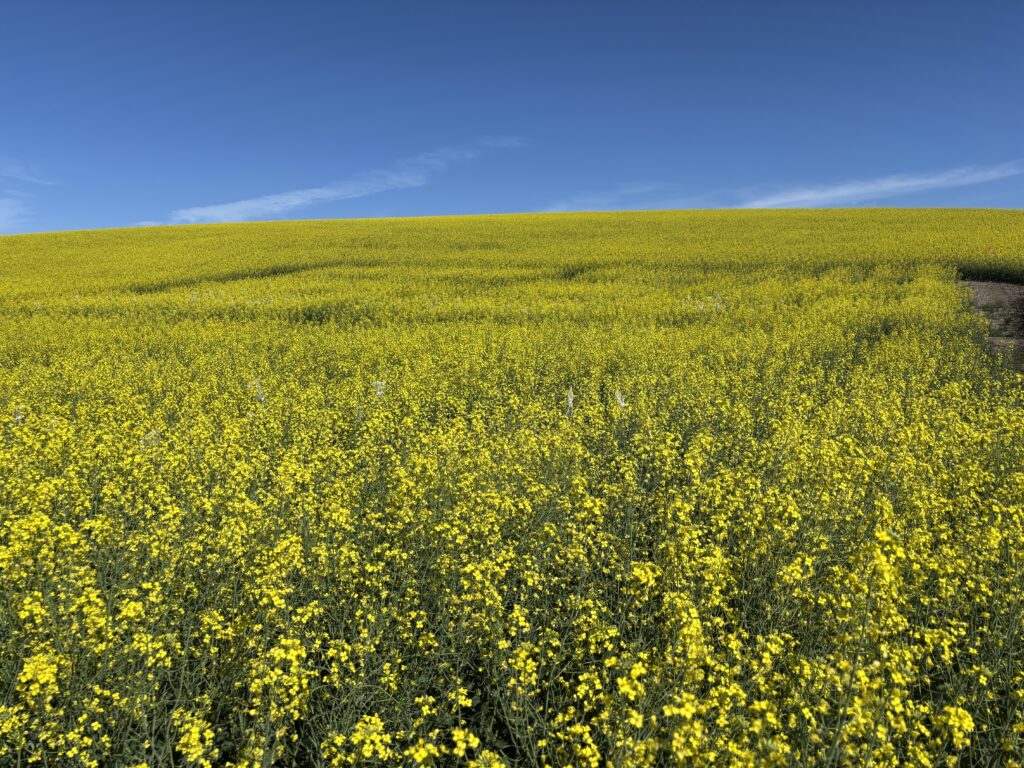
The Washington State University Canola Variety Testing data from the 2025 spring and winter canola harvest are now available on the WSU Washington Oilseed Cropping Systems Variety Testing page. To improve accessibility, the 2025 WSU canola variety testing data are now embedded in the website rather than posted as individual PDFs for each location. Single-year and two-year averages are provided for spring canola varieties. Varieties with differences smaller than the least significant difference (LSD) are not statistically different. When coefficient of variation (CV) values approach 20% or greater, caution should be used when interpreting the results due to increased variability.
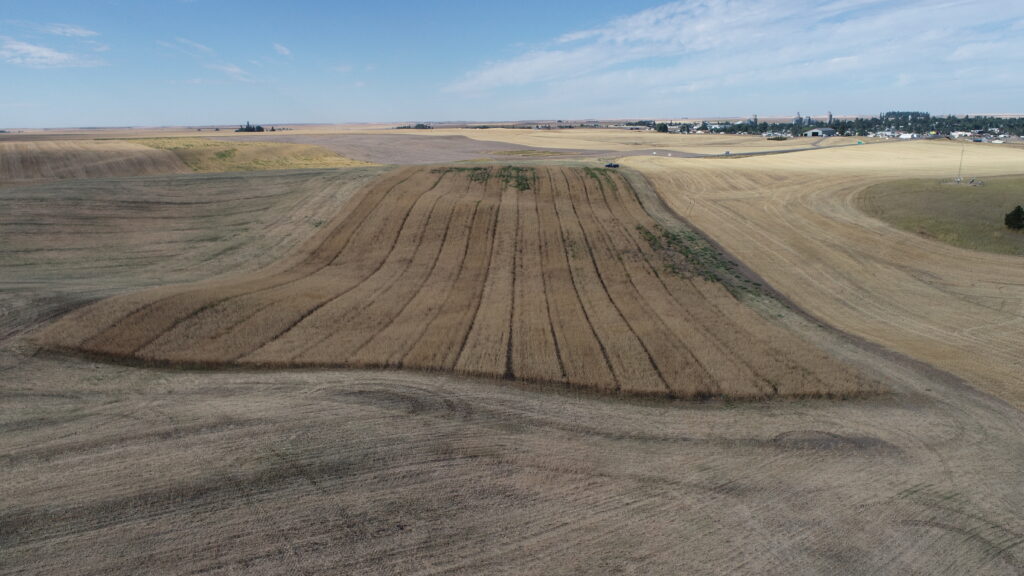
Seeding and fertility rates as well as soil test data for small plot sites can be found in the site-specific attribute tables. Glyphosate (RoundUp) and glufosinate (Liberty) were applied to traited varieties with corresponding tolerances. Conventional (non-GMO) and Clearfield® varieties received quizalofop-P-ethyl (Assure II) and clopyralid (Stinger). Soil moisture was promising at seeding, but a record dry summer limited overall yields. Walla Walla had variable emergence due to seed boot plugging, so its yield results should be interpreted with caution. The Pullman site was in a historically wet drainage area which contributed to the unusually high yields. This was the first year of variety testing at Mayview while Reardan experienced slightly below average yields.
Spring canola varieties have demonstrated the ability to adapt across the wide variety of climates in dryland eastern Washington. Eastern Washington growers benefit from an excellent selection of varieties from several companies. For non-GMO spring canola, NCC101S has been a top performer in WSU trials for five years. Growers utilizing the Clearfield® production system should look at varieties such as Chip CL or DG280CLC. For those seeking a RoundUp Ready® variety, CS3300TF, CP9221TF, and LR354PC have demonstrated consistently high yields over the past 2 years, while newcomers such as DG783TCN and CP9551TF show promising results in their first year. LibertyLink® varieties such as L345PC and DG661LCM have been reliable performers across locations over the past 2 years and BY7204LL appears capable of delivering competitive yields. Glufosinate, the active ingredient in Liberty®, provides a group 10 option for controlling grassy and broadleaf weeds.
Winter canola benefited from mild temperatures and above average precipitation over the 2024-2025 winter, and yields were generally high across the region. Similar to spring canola, winter canola growers have options to choose from when looking for a high-yielding variety that suits their production needs. CP1077WC and Akilah were at the top of the hybrid trial near Wilbur, while Clearfield varieties such as Phoenix CL and Clavier CL were also near the top of the trial. Although not yet available commercially, Bayer’s TruFlex™ RoundUp Ready® varieties were also at the top of the trial. Most of the entries in the open-pollinated trial near Wilbur were not statistically different from the highest yielding entry Claremore. Whether growers are looking for sulfonylurea (SU) tolerance or the ability to control weeds in season with glyphosate, there are several options available. When seeding an open-pollinated variety, increasing the seeding rate can be a good idea to compensate for the lower yields of open-pollinated canola.
Small plots allow testing many treatments at once but don’t capture the full variability of field-scale agriculture. Our large-scale variety strip trials complement small plot trials by providing field scale environments for replication and testing.
Large scale spring canola variety trials were conducted near Cloverland and Davenport, WA. Four top-yielding 2024 varieties were entered in the 2025 large-scale trials. Cloverland yielded poorly due to dry conditions post-seeding and being located on re-crop wheat ground. At both Cloverland and Davenport, no statistical differences were found between any of the varieties. At large scale winter canola variety trials near Ritzville and Mansfield, WA, varieties Akilah and PSTYSD1410 had top yields at both sites. CP1077WC also demonstrated its ability to produce in tough growing conditions at Ritzville.

For questions or comments, contact Jesse Ford via email at jesse.ford@wsu.edu.