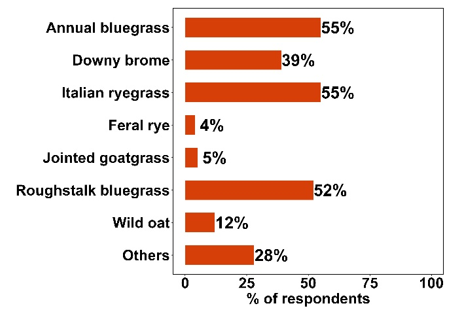
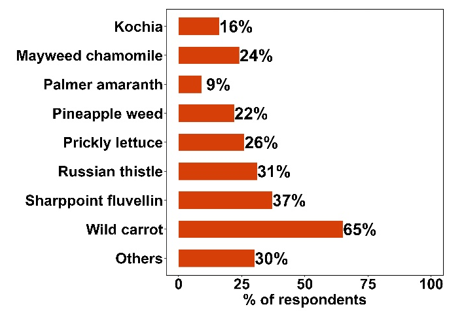
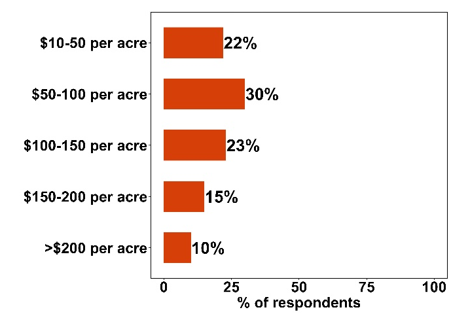
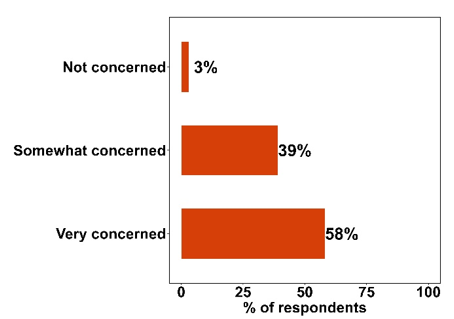
Contributed by Judit Barroso, Oregon State University
This year’s weather has been anything but typical. At the CBARC station (Adams, Oregon), September and October brought 153% and 122% more precipitation than normal, but the trend reversed in November, December, and January that were 96%, 99%, and 23% drier than average. With these kinds of unusual shifts, we launched a study this fall to better understand how grass weeds germinate under varying conditions. Our long-term goal is to develop predictive germination models using multi-year data. These models could help growers anticipate weed emergence based on seasonal weather patterns, ultimately improving herbicide timing and reducing the soil seedbank.
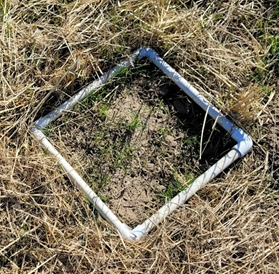
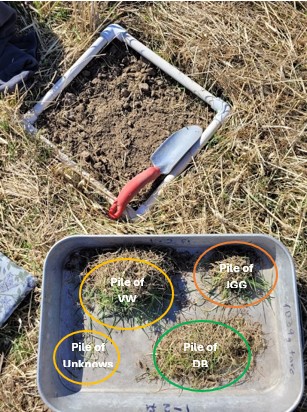
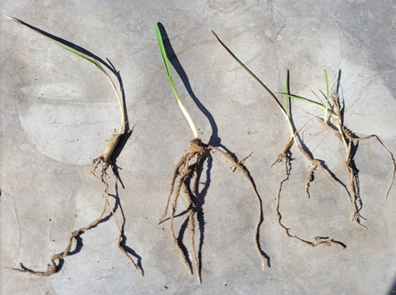
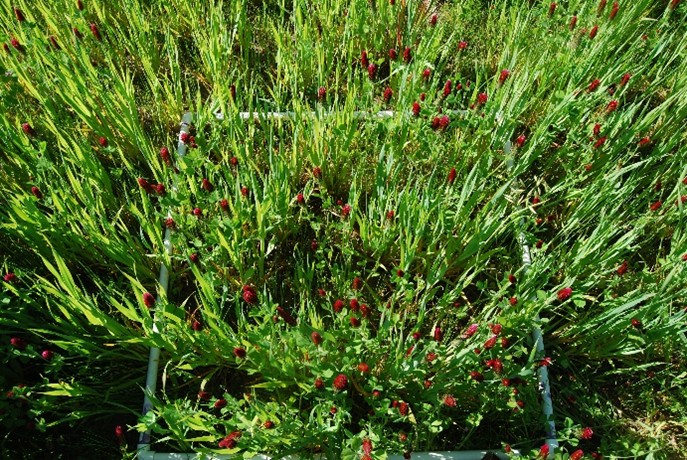
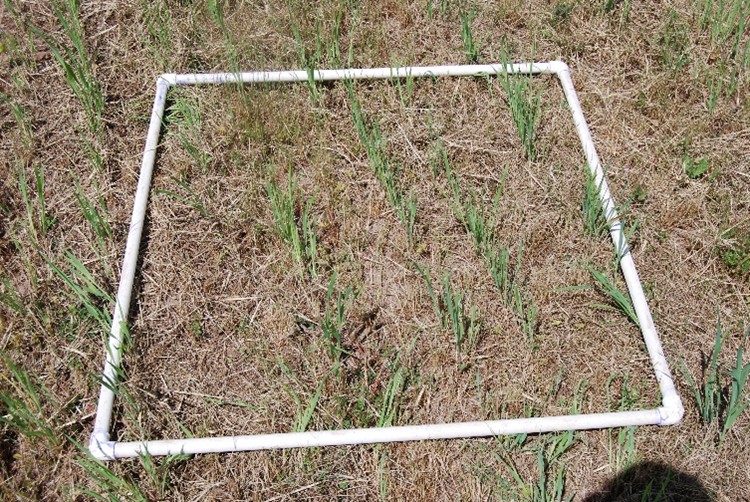
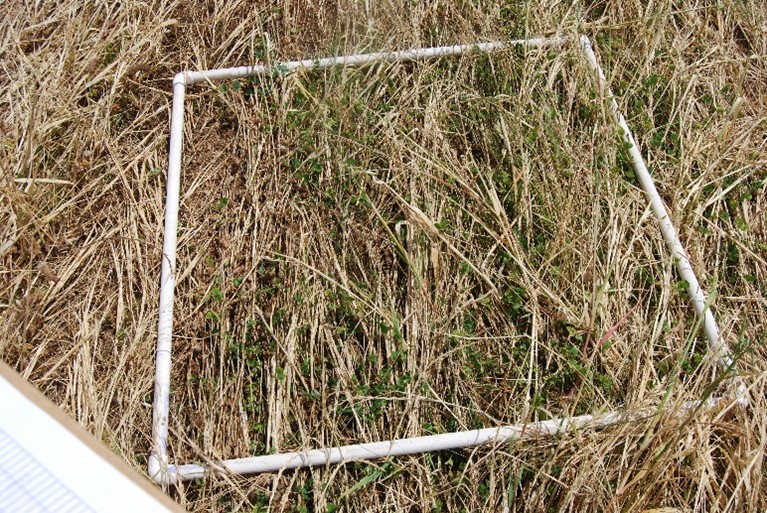
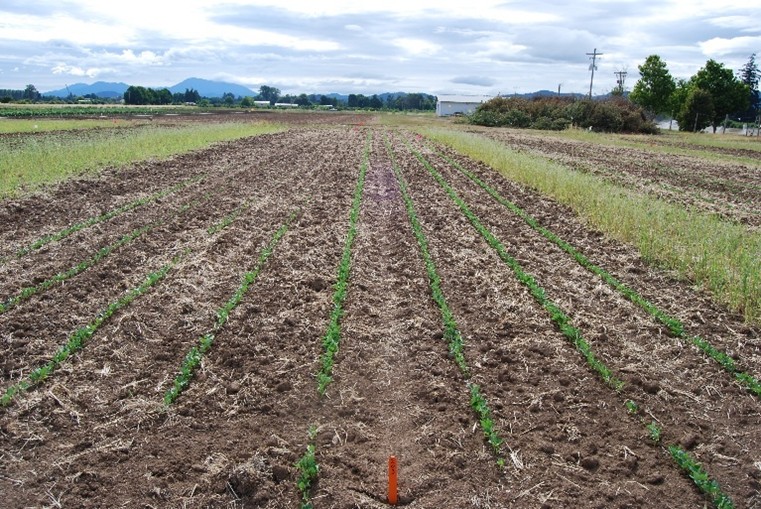
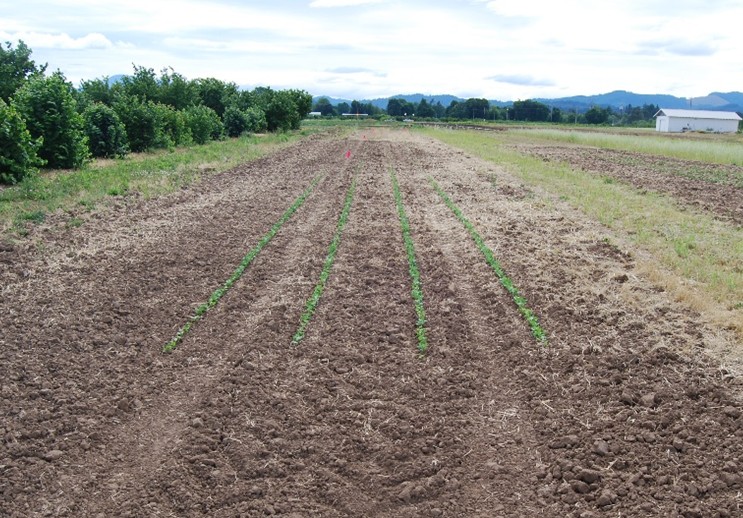
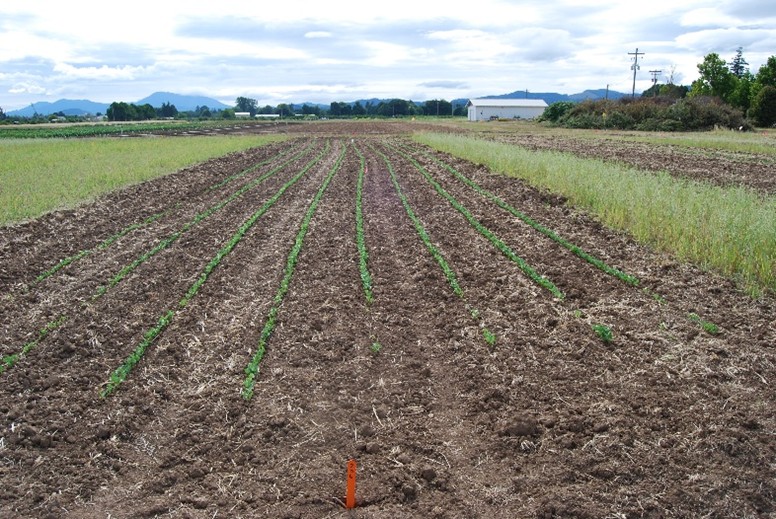
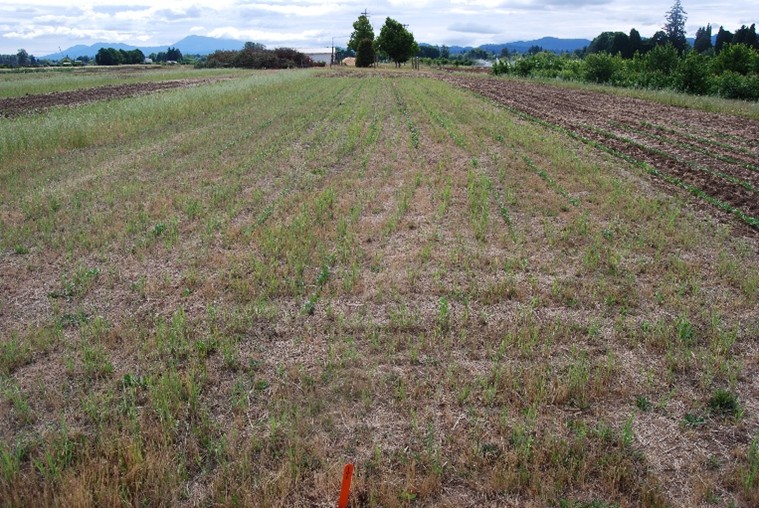
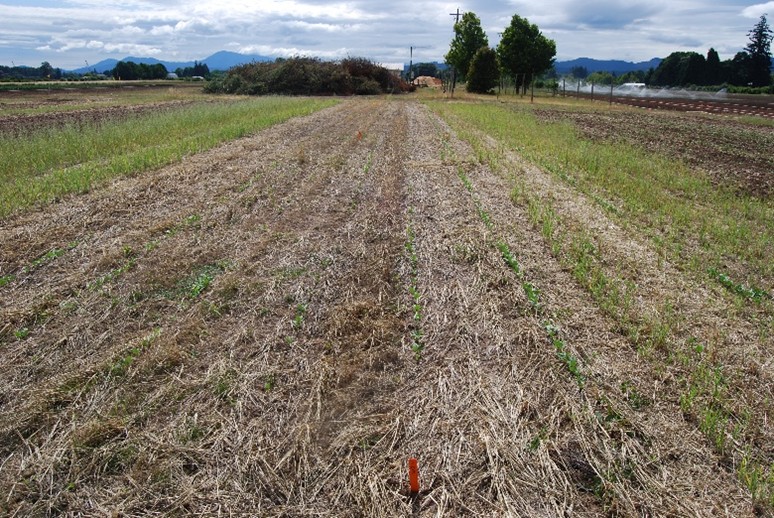
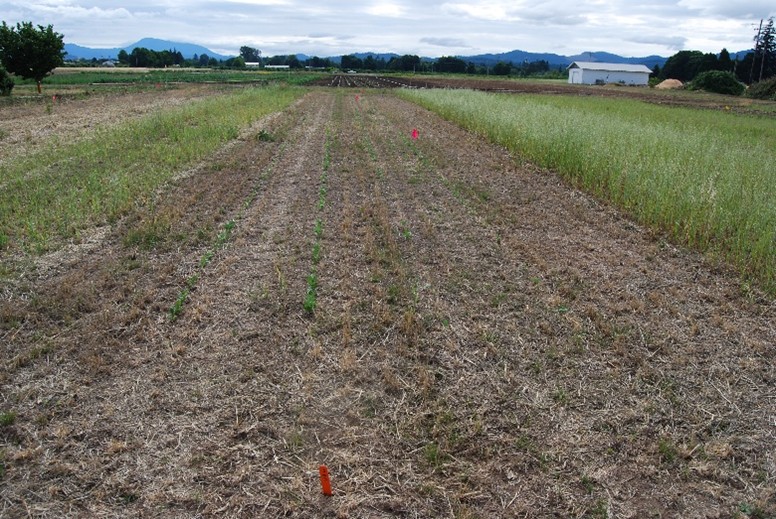
For this first year, we worked in a fallow field at CBARC. We set up four plots and placed three permanent sampling frames (13 × 12 inches) in each one (Image 1). In total, we monitored 12 frames every other week from September 23 through December 23, which is when colder temperatures led to a clear decline in germination and resumed sampling on February 16, 2026. During each sampling event, we removed, identified, and counted all grass seedlings. The species we documented included downy brome (Bromus tectorum), jointed goatgrass (Aegilops cylindrica), feral rye (Secale cereale), and volunteer wheat (Triticum aestivum) (Image 2).
Image 2. Detail of the germination of jointed goatgrass (left seed), wheat (central seed), and downy brome (several seeds on the right).
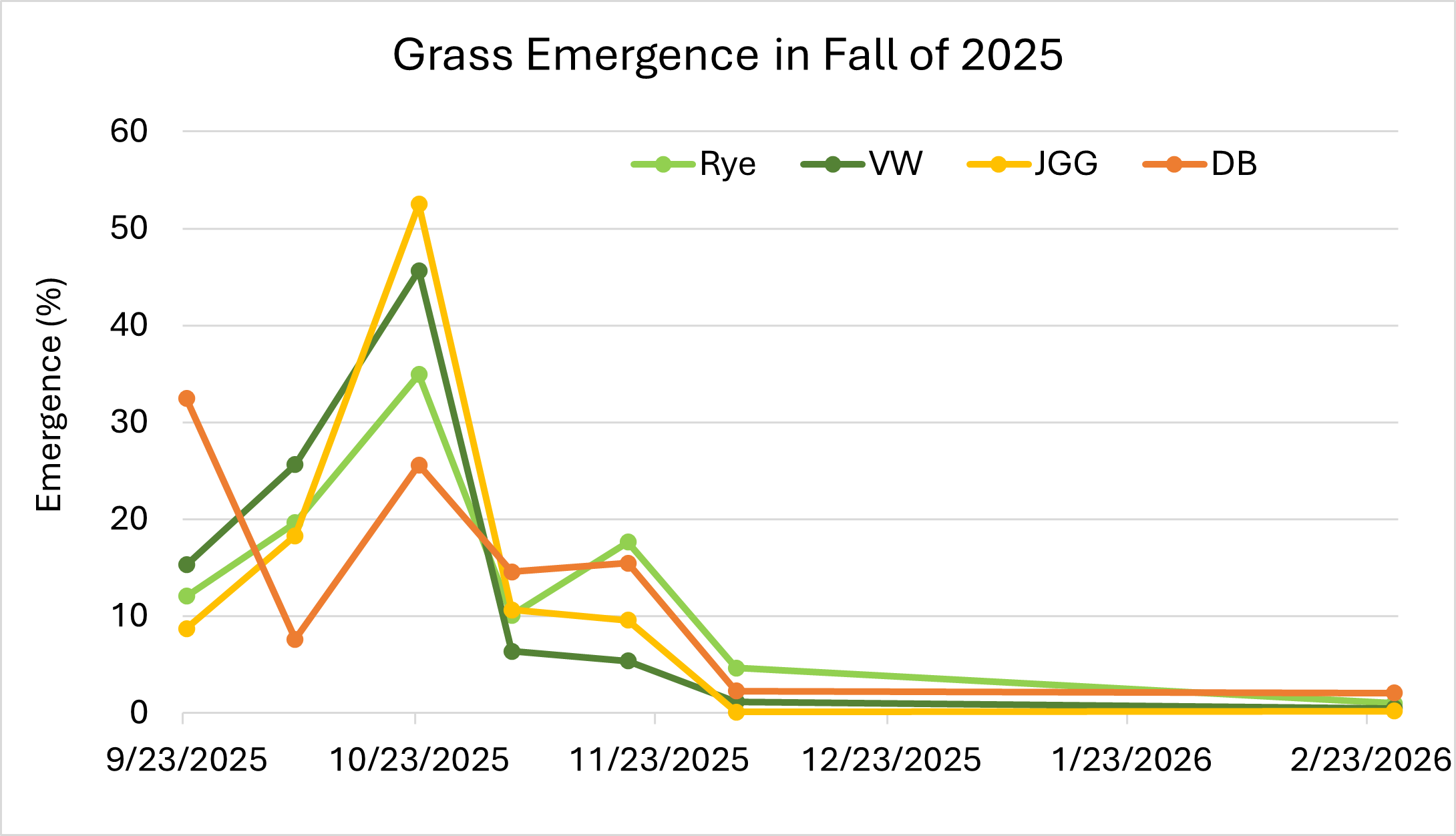
The numbers we’ve collected so far are striking. Altogether, we counted 9,767 grass seedlings—an average of 2,442 per plot and 814 per square foot. Of these, 71% were downy brome, 22% volunteer wheat, 3.5% jointed goatgrass, and 1.8% feral rye. When we look at relative emergence patterns (Figure 1), downy brome stands out. While jointed goatgrass, feral rye, and volunteer wheat showed peak emergence on our third sampling dates (10/21/2025), downy brome peaked much earlier, on our very first sampling date (9/23/2025). This early flush is likely tied to its small seed size and its ability to germinate right on the soil surface, especially when residue helps conserve moisture.
Figure 1. Relative emergence (%) of downy brome (DB; Bromus tectorum), jointed goatgrass (JGG; Aegilops cylindrica), volunteer wheat (VW; Triticum aestivum) and feral rye (Rye; Secale cereale) in fallow of 2025 at the Columbia Basin Agricultural Research Center, Adams, Oregon.
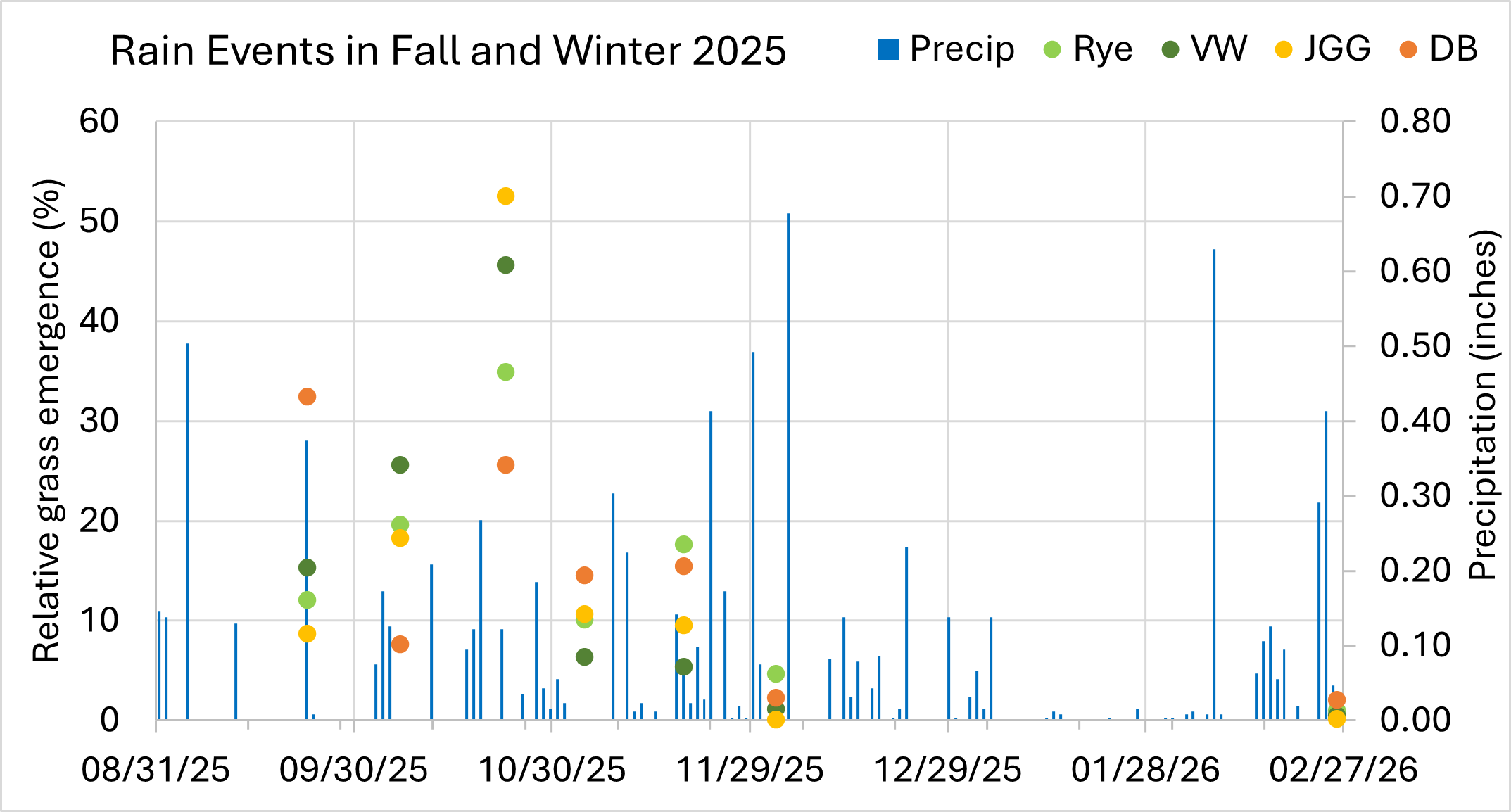
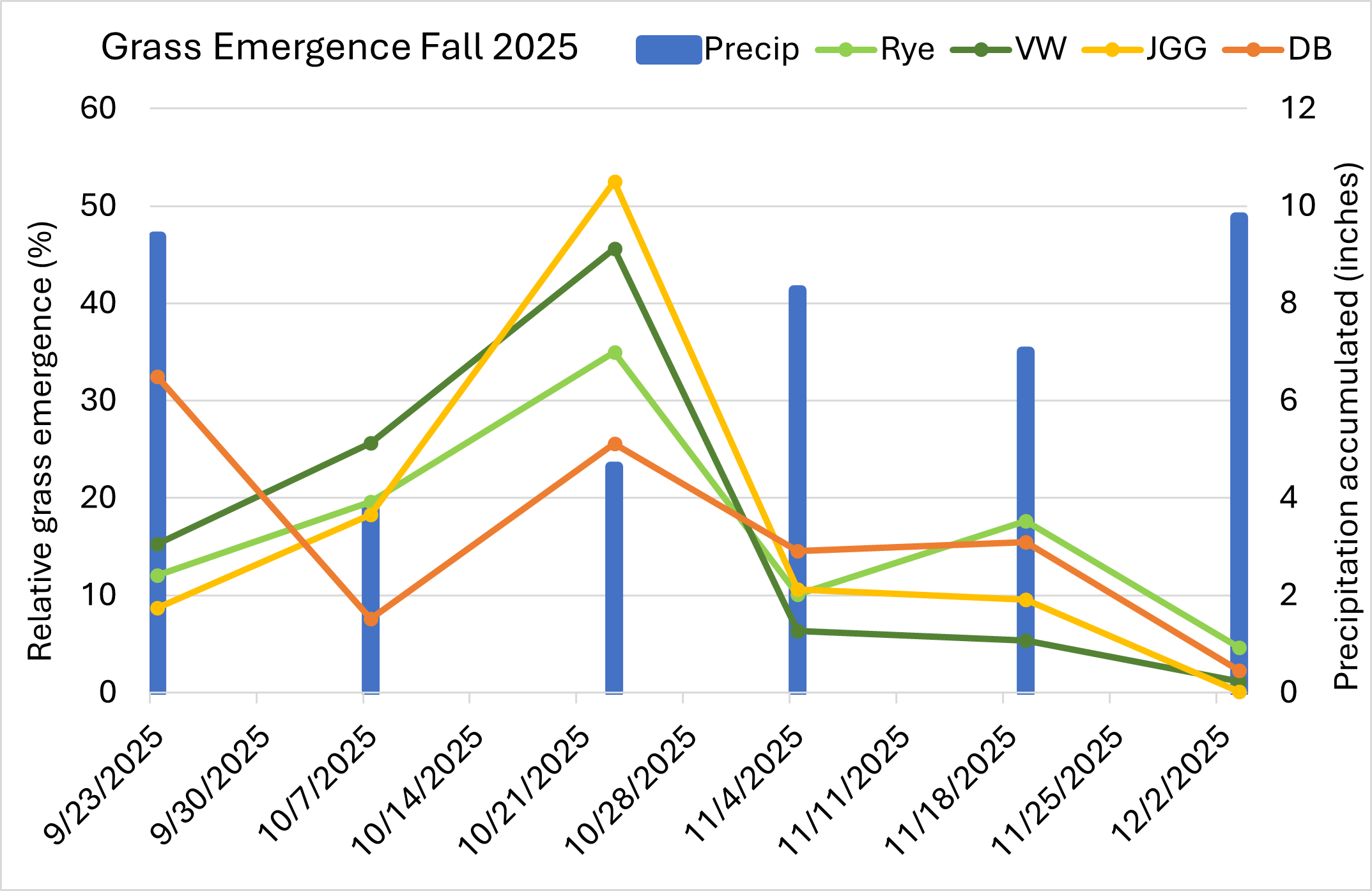
We also examined how precipitation patterns might relate to emergence (Figure 2). In this first season, we did not find a correlation—soil moisture simply didn’t seem to limit germination last fall. Looking ahead, we hope to expand the study by adding a second site in northeastern Oregon and sites in Idaho and Washington. The goal is to build a regional, multi-state collaboration across the Pacific Northwest that will strengthen the accuracy and usefulness of future weed germination models, which we envision to include some broadleaf weeds as well. Your feedback helps guide our work. Please, let us know which weed species you are most interested in learning about and the region you farm, so we can direct our efforts more effectively.
Figure 2a. Rain events in the fall and winter of 2025 (Precip; blue bars) and relative grass emergence sampled in the fall and on February 26, 2026 (color dots).Figure 2b. Precipitation accumulated 15 days before each weed sampling (blue bars) and relative grass emergence in fallow in the fall of 2025 (dots and color lines).
Flazasulfuron Resistance in Wild Carrot: What It Means for Pacific Northwest Hazelnut Growers
Contributed by Davi Fiedler and Marcelo L. Moretti, Department of Horticulture, Oregon State University
Wild carrot (Queen Anne’s lace) has become an increasingly common and persistent weed in hazelnut orchards throughout western Oregon. While it is often associated with roadsides and non-crop areas, this biennial species has established itself firmly in perennial production systems. Its deep taproot, competitive growth habit, and strong seed production make it particularly difficult to manage once established.
For many years, flazasulfuron has been one of the most reliable herbicides for controlling wild carrot in perennial systems. In some orchards, it has served as the backbone of weed management programs targeting this species. However, recent research conducted at Oregon State University confirms that certain wild carrot populations in Oregon are now resistant to flazasulfuron. This is the first confirmed case of flazasulfuron resistance in wild carrot, and it carries important implications for hazelnut growers across the Pacific Northwest.
How resistance was confirmed
Growers began reporting patches where flazasulfuron no longer delivered the level of control they had previously observed. In some cases, plants survived labeled field rates and continued normal growth. To investigate, we collected seed from multiple orchard sites with a history of repeated flazasulfuron use.
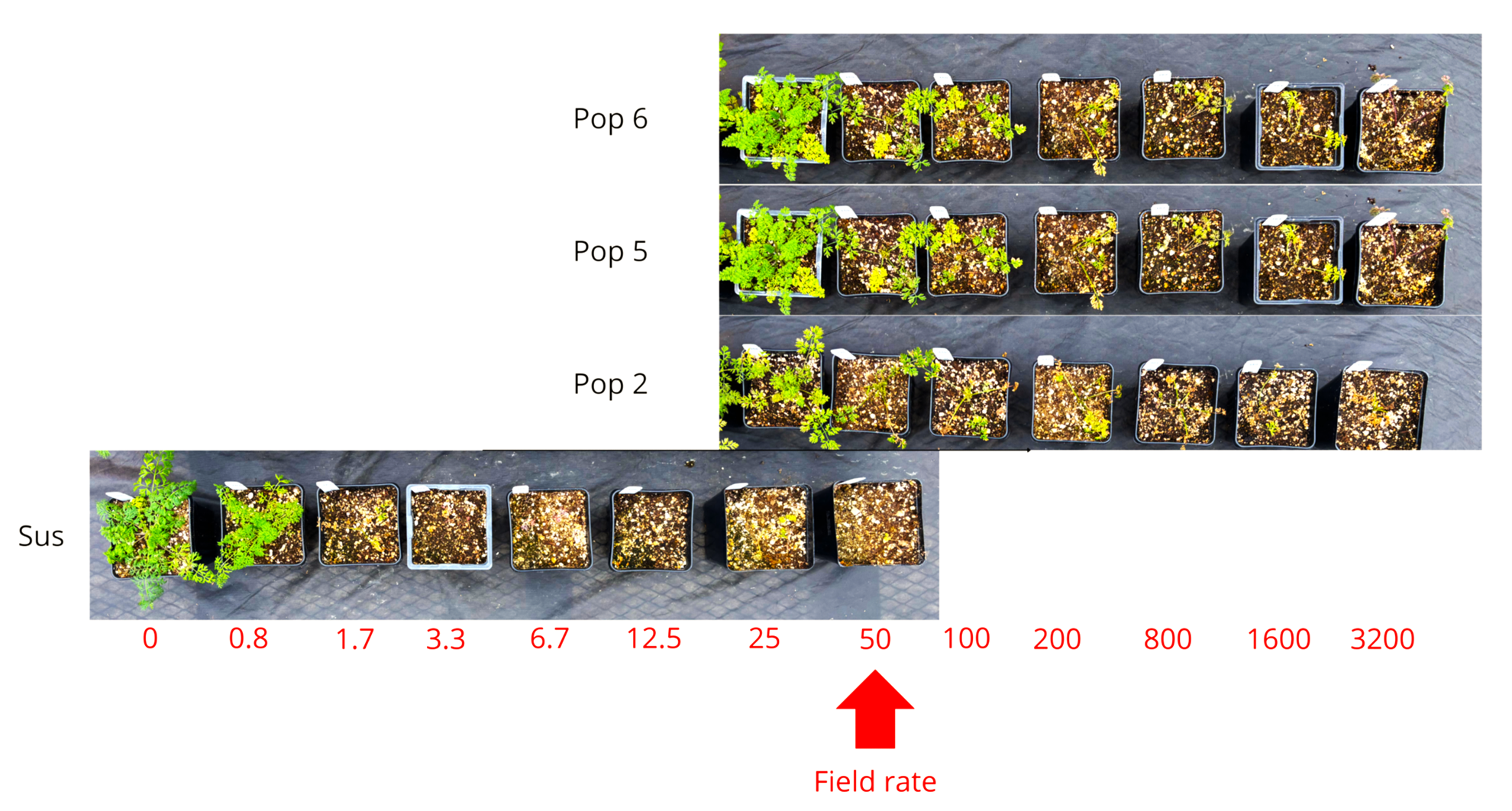
Under controlled greenhouse conditions, we compared these populations to a known susceptible population. The differences were clear and consistent. While susceptible plants were largely controlled at labeled rates, resistant populations survived and maintained significant biomass. These findings confirmed that resistance had evolved under field conditions.
Figure 1. Greenhouse comparison of wild carrot populations treated with increasing rates of flazasulfuron (Mission®). The susceptible (Sus) population was controlled at rates below the labeled field rate (50 g ai/ha), while resistant populations (Pop 2, 5, and 6) survived even at rates up to 64 times higher. This level of survival confirms true herbicide resistance rather than application failure. Rates higher than the labeled field rate were applied for experimental research purposes under controlled greenhouse conditions.
Importantly, resistance was observed at both pre-emergence and post-emergence application timings. This means the issue is not related solely to application timing or environmental conditions. It reflects a biological shift in the weed population.
A quick overview of wild carrot biology
Wild carrot possesses several biological traits that favor rapid adaptation. It is a biennial weed, growing the first year, and flowering on the second year. It is predominantly cross-pollinated, which promotes high genetic diversity within populations. Greater diversity increases the probability that naturally resistant individuals are present before herbicide selection occurs.
Additionally, wild carrot produces abundant seed and can persist in orchards for multiple seasons before flowering. In perennial systems such as hazelnut orchards, where soil disturbance is minimal, plants that survive herbicide treatments are more likely to mature and replenish the seedbank.
When a single herbicide mode of action is used repeatedly over multiple years, selection pressure increases substantially. Several plants with natural tolerance survive and pass the resistant traits to the next generation. Over time, the population shifts toward resistant biotypes.
What does this mean for hazelnut growers?
Resistance does not mean flazasulfuron is ineffective everywhere. It does mean that in certain orchards, reliance on flazasulfuron alone is no longer a sustainable strategy.
If resistant plants are allowed to survive and produce seed, patches will expand. As seed disperses and germinates, resistant individuals become more common. Eventually, growers may experience widespread control failures rather than isolated escapes.
The economic implications can be significant. For example, reduced herbicide performance increases labor costs, may require additional applications, and can lead to greater weed competition with young trees. Left unmanaged, resistant wild carrot can compromise orchard floor uniformity and overall management efficiency.
Alternative postemergence options
To identify practical solutions, we evaluated several alternative herbicides applied alone and in tank mixtures in both container and field studies across Oregon.
Florpyrauxifen-benzyl (Hulk) consistently provided strong control of both susceptible and resistant populations. As a Group 4 herbicide, it offers a different mode of action and represents a viable rotational option in orchards where it is labeled.
Glufosinate (Rely 280) also performed well when applied alone, providing substantial biomass reduction in resistant populations. However, wild carrot regrowth was observed making this herbicide an option for preharvest clean up, but with short term results.
However, as with all contact herbicides, thorough coverage and appropriate timing remain critical.
Tolpyralate (not registered for use in hazelnuts and used experimentally for this research), tiafenacil (Gamma special local needs label for nonbearing hazelnuts in Oregon), and glyphosate (various formulations, including Roundup) did not provide satisfactory control when applied alone. However, their performance improved significantly when used in tank mixtures with stronger partners.
The role of tank mixtures
One of the most consistent findings across field sites was the benefit of combining herbicides with different modes of action. Mixtures that included florpyrauxifen-benzyl resulted in the lowest biomass levels across sites. In some cases, combinations reduced biomass to negligible levels 42 days after treatment.
These results support a central principle of resistance management: using multiple effective modes of action in the same application can improve control and reduce selection pressure on any single chemistry.
However, mixtures must include products that are each active on the target species. Mixing a strong herbicide with a weak partner does not provide meaningful resistance protection. Effective mixture design requires understanding product performance and label restrictions.
Practical recommendations
Based on our findings, we suggest the following steps for hazelnut growers managing wild carrot:
Avoid continuous use of flazasulfuron (Mission) as the primary control tool.
Incorporate florpyrauxifen-benzyl (Hulk) where labeled.
Use tank mixtures that contain multiple effective modes of action.
Scout orchards regularly to detect early resistance patches.
Remove surviving plants before seed set to limit spread.
Early detection is critical. Resistance often begins in small areas. Addressing those patches quickly can prevent broader orchard-wide problems.
Looking ahead
We are continuing molecular work to identify the specific resistance mechanism involved. Understanding whether resistance is limited to flazasulfuron or extends to other ALS-inhibiting herbicides will help refine future recommendations.
In the meantime, the most important takeaway for Pacific Northwest hazelnut growers is the need for diversification. No single herbicide should serve as the sole foundation of a weed management program. Integrated approaches—combining chemical rotation, effective mixtures, and cultural practices—provide the best defense against further resistance development.
Resistance evolution is not a sudden event; it is a gradual shift driven by repeated selection. By adjusting management strategies now, growers can slow that shift and preserve the tools that remain effective.
Acknowledgment
This work was funded by the Oregon Hazelnut Commission and the Ferrero Hazelnut Company.
What to do about this warm, weedy weather?
Contributed by Doug Finkelnburg, University of Idaho
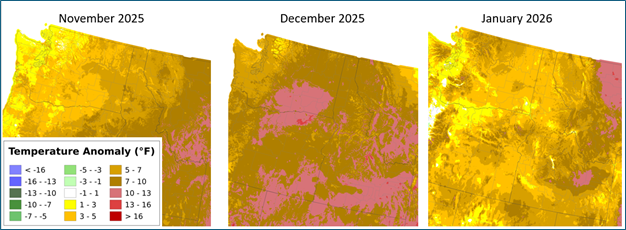
If anyone hasn’t noticed yet, we have not had much of a winter in the northwest. In fact, it’s been almost tropical in many parts of the region with reports of trees budding early, insects pressuring crops when they have no right to be out and about, and a downright dreary ski season for those inclined to inclined thrills. There’s just no way to argue it, the weather has been warmer than usual. According to PRISM, the inland Pacific Northwest has been roughly 3-10 degrees Fahrenheit above the 30-year normal for November through January.
Above average Pacific Northwest temperature anomaly from November 2025 through January 2026. From PRISM, Northwest Alliance for Computational Science and Engineering at Oregon State University.
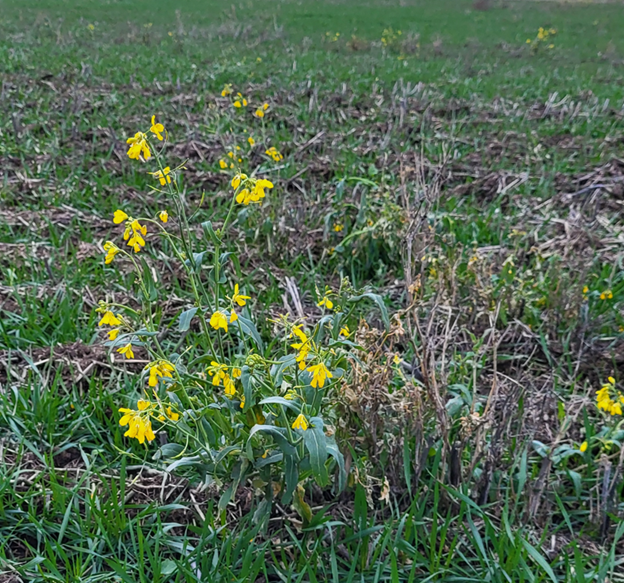
Of specific concern to me are the plants misbehaving in spectacular fashion. We have had multiple reports of volunteers that would normally be long dead happily thriving in these abnormal conditions. Catchweed bedstraw and common groundsel are green and growing just outside my office in Lewiston, Idaho. However, Lewiston, Idaho is known for being a low elevation location (750 ft elevation at the Snake River) and reliably the warmest point in the immediate area. So, earlier this week I drove around the cropped fields between 1100-1400 feet elevation outside of town and was surprised (horrified?) to see volunteer canola in bloom–in late January!
Volunteer canola in bloom near Lewiston, Idaho on 1/21/26. Photo Credit: Doug Finkelnburg.
Whether this year’s weather is a harbinger of future years’ new-normals or just an anomalous blip on the long-term climate pendulum is of course yet to be seen. However, if we don’t get normal average temperatures soon, we will have some abnormal weed control issues come spring. So much of our weed control relies on multiple factors syncing up just right. The optimal growth stage of a target plant to kill, the right crop growth stage to withstand the application without injury, and the right temperatures at chemical application timing all need to be within specific windows to get it right. Sitting in the heart of fall wheat production country and seeing weeds and crops so far along make me understandably nervous but it also suggests a few other potential effects of the warmer than usual weather. Soil biology, specifically soil microbes, significantly ramp down their activity as soils cool to near freezing or frozen temps. Coupled with our predictably dry summer conditions and unfortunately acidified topsoil conditions in many places, microbes don’t have a wide window of opportunity to break things down in these soils, resulting in some notable herbicide label exceptions for this region concerning microbially driven herbicide degradation. I must wonder if those degradation processes have not been extended more than usual. And, what other soil microbe-mitigated processes are similarly affected due to the warmer conditions?
One way or another we will find out the effects of this year’s weather on crops in 2026 soon enough. I do think it is worth pausing and considering how we might learn from this season’s weather oddities and plan how to make changes to our weed control programs if we see conditions like this coming again in areas where a moderate uptick from normal temps can result in growing degrees days being present rather than absent.
Could Adjuvants Improve the Weed Control Spectrum of HPPD-Inhibitors Applied POST in Sweet Corn?
Contributed by Aaron Becerra-Alvarez, Department of Horticulture, Oregon State University
Sweet corn (Zea mays L.) is an important vegetable crop in Oregon and Washington grown for processing and fresh market. While there are various effective herbicides available in sweet corn and different mixtures of pre-emergence herbicides can be used for effective programs, I noticed one area with poor grass control in post emergent options.
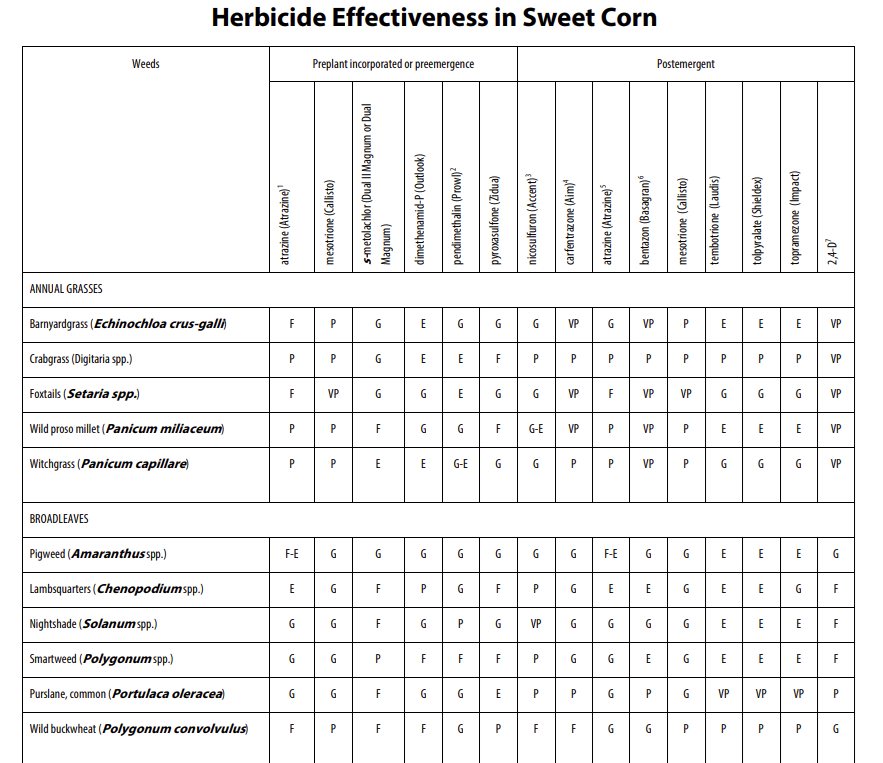
Mesotrione (Callisto) and atrazine (various trade names) can be both applied preemergence (PRE) and postemergence (POST). However, they have similar weak points in grass control, in particular crabgrass (Digitaria spp.), wild proso millet (Panicum miliaceum), and witchgrass (Panicum capillare) (Figure 1). Crabgrass is a species with poor control from all available POST options (Figure 1).
The POST HPPD-inhibitors, tembotrione, tolpyralate, and tropramezone are effective on grasses like wild proso millet and witchgrass but not crabgrass (Figure 1). These herbicides also have reduced soil persistence compared to other available options (Peachey and Donaldson, 2018). Therefore, I was interested in seeing if different adjuvants could improve the spectrum of control of these HPPD-inhibitors when applied in POST. This could give producers flexibility for fall cover crop planting or crop rotations by avoiding use of other herbicides with longer soil carryover.
I conducted a study in 2024 and 2025 at the OSU Vegetable Research Farm. The objective of this study was to evaluate weed control efficacy of tembotrione (Laudis, Bayer), topramezone (Armezon, BASF), and tolpyralate (Shieldex 400SC, ISK BioSciences) alone and in mixture with urea ammonium nitrate (UAN), methylated seed oil (MSO) and crop oil concentrate (COC) adjuvants.
Procedures: Sweet corn cultivars ‘Coronado’, ‘Placer’, ‘Natalie’ and ‘Nicole’ were planted on 30-inch rows in July 2024 and May 2025 (Table 1). The rows each had an individual variety, and plots included all the varieties. The herbicides used were Laudis at 3 fl oz/A, Armezon at 1 fl oz/A, and Shieldex 400SC at 1.35 fl oz/A. The adjuvants used were UAN 32% (Simplot), MSO (Renegade-EA, Wilbur Ellis), and COC (Navigator, Innvictus Crop Care LLC). Nonionic surfactant (NIS) (Voyager 90/10, Innvictus Crop Care LLC) was also included only with Shieldexx based on label suggestions. These adjuvant products were chosen based on label suggestion and because these products were available at the research farm. A treatment with atrazine (Atrazine 4L) at 4 pt/A with COC was applied POST for comparison. Plots were arranged in a randomized complete block design with four replications.
Table 1. Application details of POST HPPD-inhibitors on sweet corn study conducted at the Vegetable Research Farm in Corvallis, OR in 2024 and 2025.
Date
2024 July 30
2025 July 8
Crop stage
V4
V4
Start/end time
7:30/8:45 am
10:00/11:30 am
Air temp
69 F
82 F
Rel humidity (%)
69
39
Wind direction
2.3 mph SW
1.2 mph N
Cloud cover (%)
90
0
Soil moisture
moist
Dry to moist
Plant moisture
some dew
Dry
Mix size
2-L
2-L
GPA
20
20
Nozzle type
6-XR8002
6-XR8002
Nozzle spacing and height
20/20
20/20
The plots had no pre-emergence herbicide application, and the treatments were applied at V4 sweet corn stage and when crabgrass was at 2-leaf. In our fields, we were able to test efficacy on weeds we had previous suggestions of poor control including crabgrass both years, horsetail (Equisetum arvense) and bindweed (Convolvulus arvensis) in 2024 and purslane (Portulaca oleracea) in 2025. Visual weed control compared to the nontreated on a 0 to 100 scale was collected at 7 and 14 DAT. Data were analyzed with ANOVA and Tukey’s HSD α=0.05.
Figure 1. A screenshot of the herbicide effectiveness in sweet corn table from the PNW Weed Handbook. E= excellent, G=good, F=fair, P=poor, and VP=very poor or no effect (Becerra-Alvarez, 2025).
Results and Discussion: No differences in sweet corn variety response across treatments besides the nontreated were observed both years. Yield was not collected for both years.
In 2024, the field was largely infested with field horsetail and bindweed. Some areas did have crabgrass, pigweed, and lambsquarters. Originally, we had an additional 14 treatments applied at the V8 stage with 8-leaf crabgrass; however, minimal to no crabgrass injury was observed at this stage and is not shown here. The additional application involved timings not permitted by the product labels and were conducted for research purposes only. The timing was not repeated in 2025.
Pigweed and lambsquarters control were relatively adequate both years from all treatments with adjuvants and no clear differences were observed across adjuvants. These results won’t be discussed here as I am interested in discussing the weeds not typically controlled. The full report of this study can be found on my lab website.
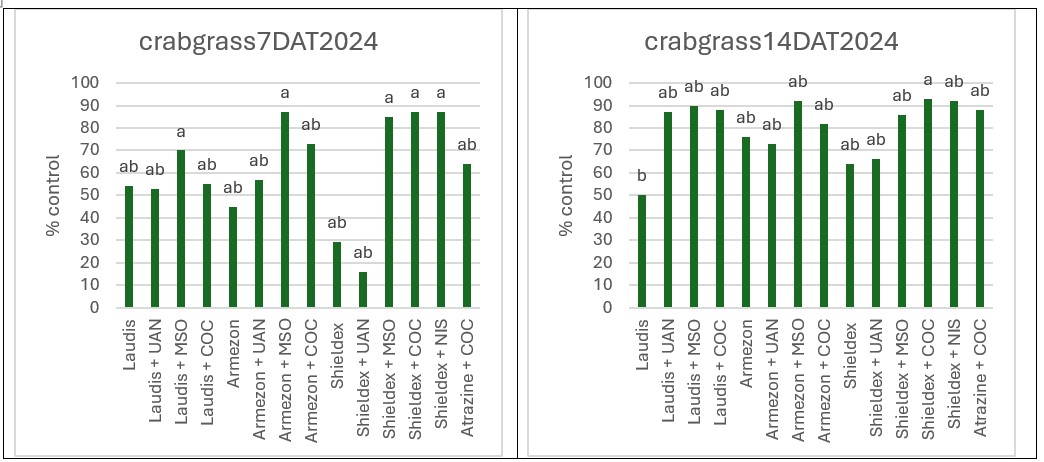
The crabgrass population was sparse in 2024, and the sweet corn established faster outcompeting various weeds. Even atrazine appeared to show improved control of crabgrass. Control was improved when an adjuvant mixture was used most noticeably with Laudis (Figure 2).
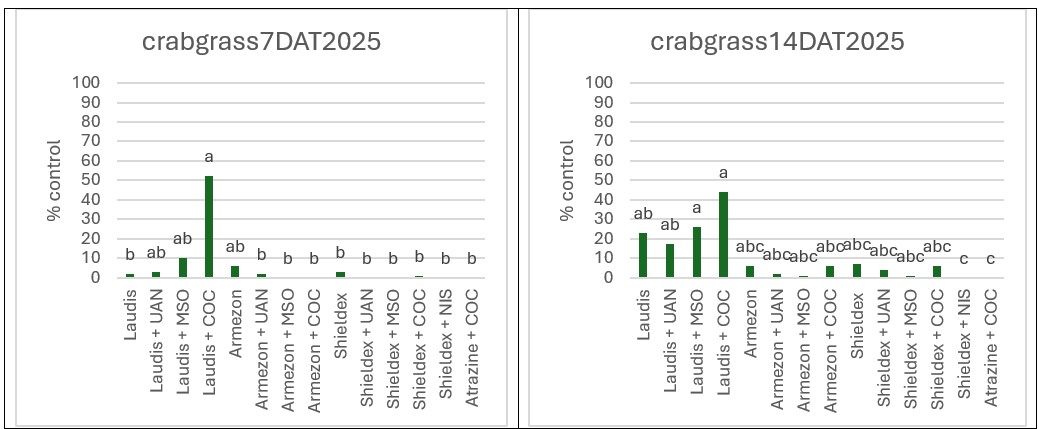
Figure 2. Laudis at 3 fl oz/A, Armezon at 1 fl oz/A, and Shieldex 400SC at 1.35 fl oz/A. Atrazine was applied at 4 pt/A. The adjuvants used were ammonium nitrate (UAN 32%), methylated seed oil (MSO), crop oil concentrate (COC), and nonionic surfactant (NIS). Means with the same letter within each graph do not differ with Tukey’s HSD α=0.05.
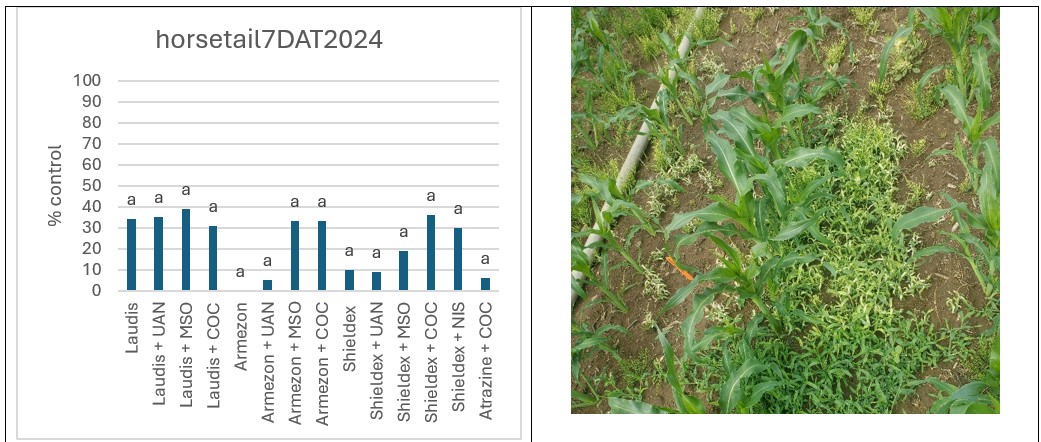
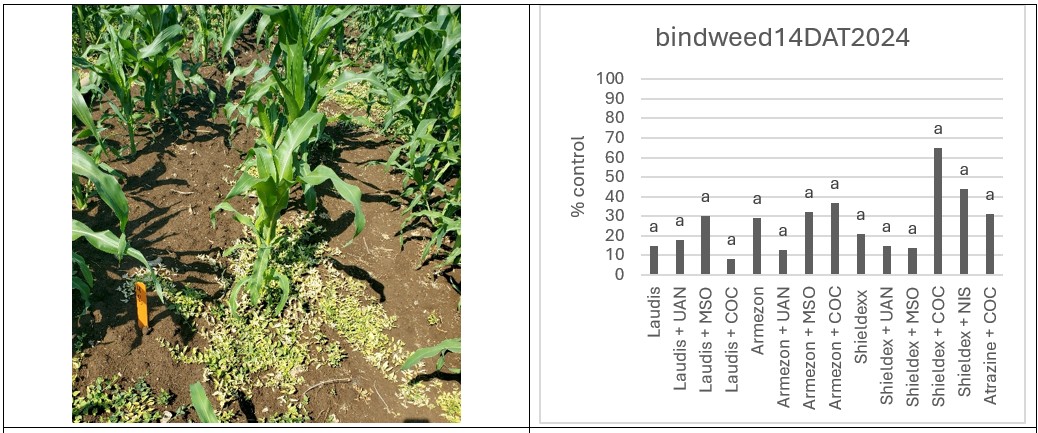
Horsetail was not controlled with any of treatments; however, at 7 DAT bleaching injury was nearly 40% with most treatments with COC and MSO mixtures except atrazine plus COC but it was not significantly different (Figure 3). By 14 DAT all treatments had below 10% control of field horsetail (Figure 3). Similarly, bindweed control was no different across treatments and ultimately recovered from injury; however, bleaching injury was observed (Figure 3).
Figure 3. Laudis at 3 fl oz/A, Armezon at 1 fl oz/A, and Shieldex 400SC at 1.35 fl oz/A. Atrazine was applied at 4 pt/A. The adjuvants used were ammonium nitrate (UAN 32%), methylated seed oil (MSO), crop oil concentrate (COC), and nonionic surfactant (NIS). Means with the same letter within each graph do not differ with Tukey’s HSD α=0.05.
In 2025, the study was moved to a different field on the research farm. The new field had a higher weed density of pigweed, lamsbquarters, crabgrass, and purslane in the field.
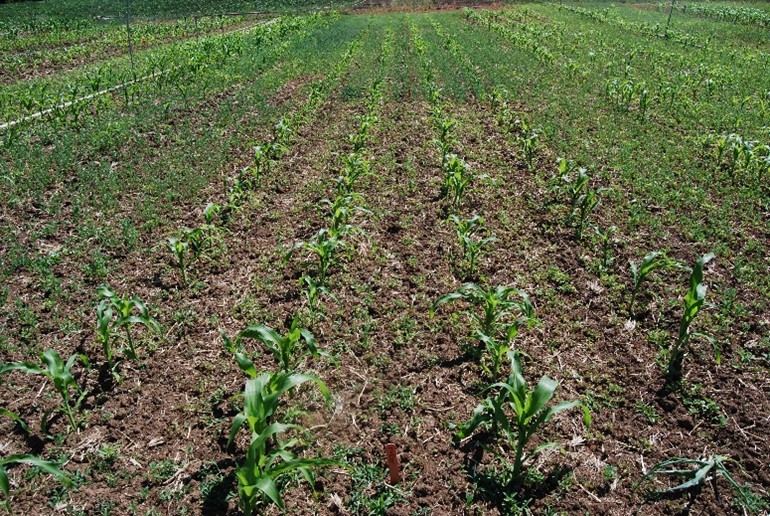
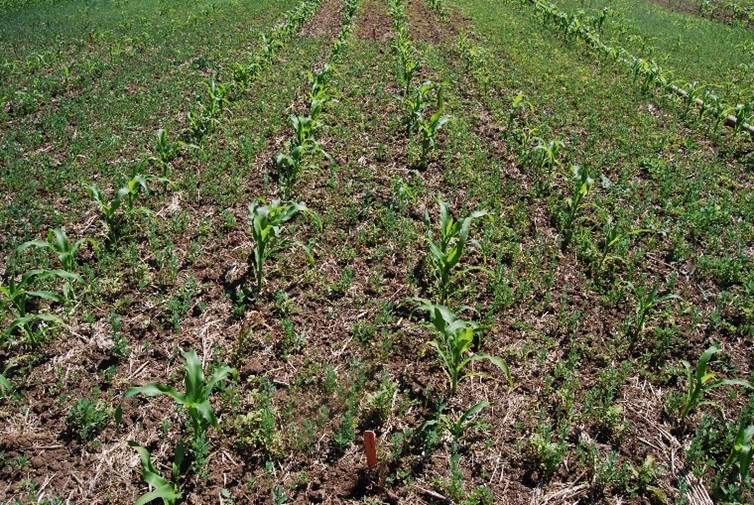
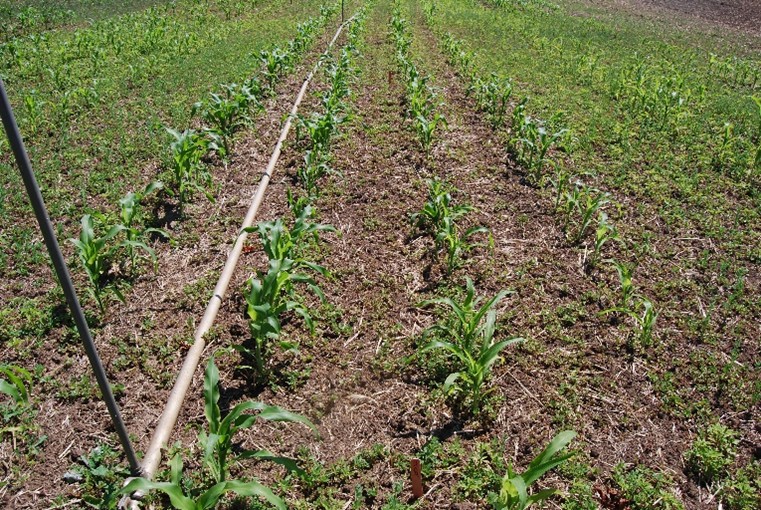
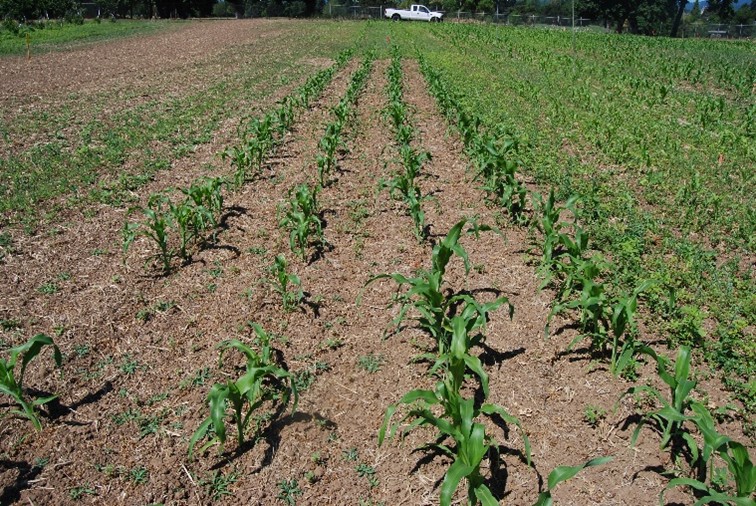
Crabgrass control in 2025 was not like 2024 and control appeared to be reduced (Figure 2). The Laudis + COC treatment was the only one that resulted in up to 50% control (Figure 2 and 4). The high weed density may have caused competition among the weeds themselves resulting in overall low control levels. The sweet corn was also stunted in this field because of the high weed pressure (Figure 4).
Figure 4a. Laudis + COC in 2025. Laudis at 3 fl oz/A.Figure 4c. Laudis alone in 2025. Laudis at 3 fl oz/A.
Figure 4b. Laudis + MSO in 2025. Laudis at 3 fl oz/A.Figure 4d. Atrazine + COC in 2025. Atrazine was applied at 4 pt/A.
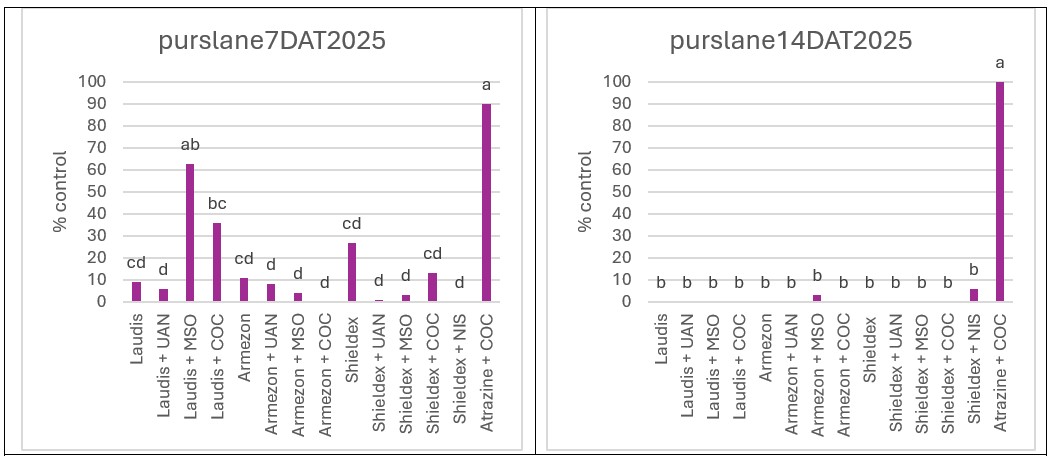
Purslane was present in the field which was another weed that previous research mentioned to be very poor control from the HPPD-inhibitors in POST (Figure 1). At 7 DAT various treatments caused significant injury; however, all plants appeared to recover by 14 DAT and only atrazine gave excellent control (Figure 5). Most noticeably, Laudis + MSO increase injury on purslane up to 60% compared to other treatments (Figure 5).
Figure 5. Laudis at 3 fl oz/A, Armezon at 1 fl oz/A, and Shieldex 400SC at 1.35 fl oz/A. Atrazine was applied at 4 pt/A. The adjuvants used were ammonium nitrate (UAN 32%), methylated seed oil (MSO), crop oil concentrate (COC), and nonionic surfactant (NIS). Means with the same letter within each graph do not differ with Tukey’s HSD α=0.05.
While my goal here was to see the extent of efficacy from the POST applications, an herbicide program with pre-emergence programs would be crucial to reduce the weed populations and improve overall control levels at the POST timing. The main objective here was to evaluate crabgrass control so a future research plan may be to apply Atrazine or Callisto PRE on all plots in a field we know has crabgrass populations to ensure an adequate population for the POST applications.
The weather characteristics at the application timings were relatively different and could have affected overall performance. This may be an area to explore in future research. Adjuvant research in our Pacific Northwest environment could improve efficacy of our available products in various crops.
In conclusion, the different adjuvant mixtures on Laudis, Armezon, and Shieldex did not improve the weed spectrum control; however, the adjuvants did increase injury on the different weed species which may still be useful for the sweet corn by providing an advantage to outcompete the weeds in certain scenarios.
References
Becerra-Alvarez, A. (2025). Sweet corn (Fresh, Processing, and Seed). (Becerra-Alvarez, A., Ed.) Pacific Northwest Weed Management Handbook [online]. Oregon State University Extension Communications. Accessed December 1, 2025.
Contributed by Albert Adjesiwor and Sushmita Sharma, University of Idaho
Introduction to a weed that needs no introduction
Wild oats (Avena fatua)–they’re fast, sneaky, and persistent. If you’re a small grain grower, you probably already know this grassy weed can rob you of yield, quality, and profits. Wild oats are one of the worst grassy weeds in small grains. A single wild oat plant can produce up to 250 seeds–and these seeds can survive in the soil for up to 8 years! Even a small patch can explode into a big problem if left unchecked. Wild oats compete hard with small grains, especially if they emerge with crops. Just ten wild oat plants per square foot can reduce barley yield by 18% and wheat yield by more than 24%. Aside from crop yield reduction, they increase production costs (e.g., herbicide and application, seed cleaning, etc.), delay harvest due to slowed crop maturity, increase harvest time, produce dockage due to seed contamination (especially in malt barley), act as host to other pests, decrease grain quality, and increase transportation fees for contaminated grain. Wild oat can host cereal cyst nematode, stem nematode, rhizoctonia, crown rot, and root lesion nematode. Plus, they complicate harvest, contaminate grain, and reduce wheat quality. Herbicide resistance is also a major factor influencing the spread and impact of wild oats in small grains. In the Pacific Northwest alone, wild oat has developed resistance to at least four herbicide modes of action, including ACCase inhibitors (group 1), ALS inhibitors (group 2), microtubule inhibitors (group 3), and inhibitors of very-long-chain fatty acid synthesis (group 15). Populations with resistance to more than one herbicide mode of action have also been reported.
Resistance screening updates
There was considerable variability in wild oat response to the 1X rate of the herbicides we tested. Wild oat survival to ethalfluralin and fenoxaprop was 68 and 52%, respectively (Table 1). Survival declined with quizalofop (28%), pinoxaden (26%), and triallate (22%), showing these herbicides may still provide better control of wild oat, but with a significant proportion of wild oat uncontrolled. Very low survival rates were observed with mesosulfuron (8%), glyphosate, and clethodim (4%), demonstrating that these herbicides provided the highest levels of wild oat control among the herbicides evaluated. Overall, the levels of wild oat survival to the herbicides tested were concerning, and continued monitoring would be essential to track changes in resistance levels.
Table 1. Summary of wild oat survey and resistance screening results
Farms surveyed: 130
Selected herbicide
Wild oat survival to 1X rate of selected herbicide
ethalfluralin
68%
fenoxaprop
52%
quizalofop
28%
pinoxaden
26%
triallate
22%
mesosulfuron
8%
glyphosate
6%
clethodim
4%
Wild oat and preemergence herbicides
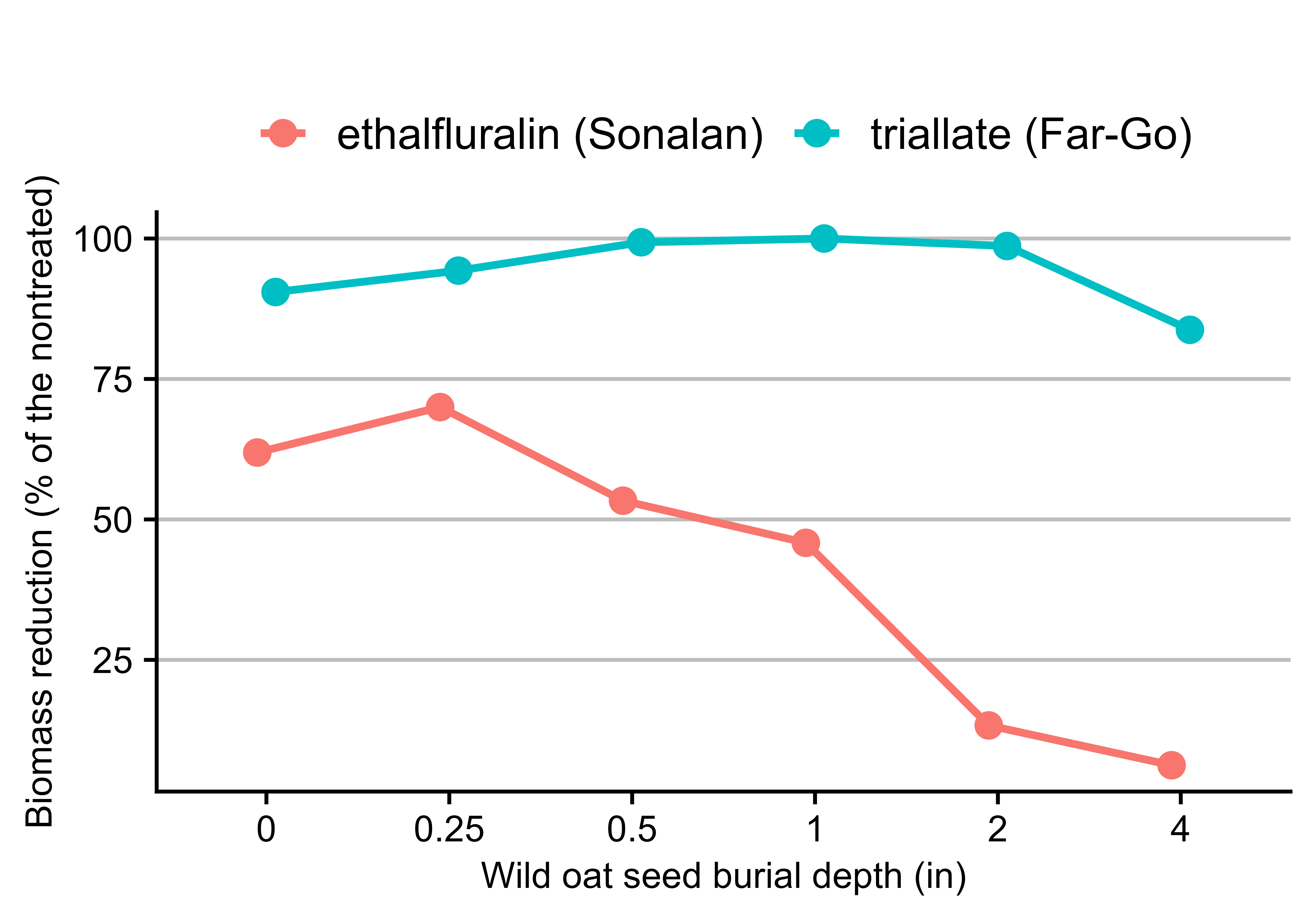
If you are surprised by the level of wild oat survival to ethalfluralin and triallate (Table 1), you are not alone. Growers have long suspected that wild oat seed placement depth (and by extension tillage) may have something to do with the efficacy of soil-applied herbicides. With this in mind, we wanted to test what role seed burial depth plays in wild oat response to herbicides such as ethalfluralin and triallate? To our surprise, ethalfluralin efficacy was very variable with wild oat seed burial depth (Figure 1). Although the seeds we used for the experiment were susceptible to ethalfluralin, the best control of wild oat was achieved when the seeds were 0.25 inches below the soil surface. Beyond 0.25 inches, ethalfluralin efficacy declined significantly. Although triallate was more effective, wild oat seeds on the soil surface, 0.25 or 4 inches deep, were not as effectively controlled (Figure 1). What this means is that in both tilled and no-till systems, it will be very difficult to rely solely on preemergence herbicides for wild oat control.
Figure 1. Wild oat control with ethalfluralin (Sonalan) and triallate (Far-GO) as influenced by seed burial depth in the soil.
There are still a number of herbicide options, but beware of resistance
Several herbicides are labeled for selective control or suppression of wild oat in small grains. However, wild oat with resistance to some of these herbicides is now commonly found in the PNW. Some of these options and what to be aware of are summarized in Table 2.
Effective if applied correctly, resistance is common in Idaho.
Group 2 (ALS)
imazamox (Beyond)
Clearfield varieties only; Good control if properly applied.
Resistance has been confirmed in Idaho, but it is not widespread.
Group 15 (VLCFA)
triallate (Far-GO, Avadex)
Good pre-emergence control; must be mechanically incorporated. Resistance has been confirmed in Idaho, but it is not widespread.
Group 15 (VLCFA)
pyroxasulfone (Zidua, Anthem Flex)
Suppression of wild oat if applied preemergence.
Does Talinor control Sharppoint fluvellin?
Contributed by Victor Ribeiro and David Maliszewski, Oregon State University
Talinor is a pre-mixed herbicide containing two active ingredients: bicycolopyrone (Group 27) and bromoxynil (Group 6). It is a post-emergence herbicide used to control broadleaf weeds in cereal crops, including wheat (Triticum aestivum L.) and barley (Hordeum vulgare L.). Our group recently began evaluating Talinor in grasses grown for seed, particularly tall fescue (Festuca arundinacea) and perennial ryegrass (Lolium perenne L.), with a focus on crop safety and weed control, especially for mayweed chamomile (Anthemis cotula L.).
At the 2025 Hyslop Farm Field Day at Oregon State University, I presented our trials assessing Talinor in tall fescue and perennial ryegrass. Although Talinor is not labeled for use in these crops, the data were generated from experimental trials conducted to assess its potential fit. After the presentation, a stakeholder approached me and asked whether Talinor is effective on Sharppoint fluvellin (Kickxia elatine (L.) Dumort.).
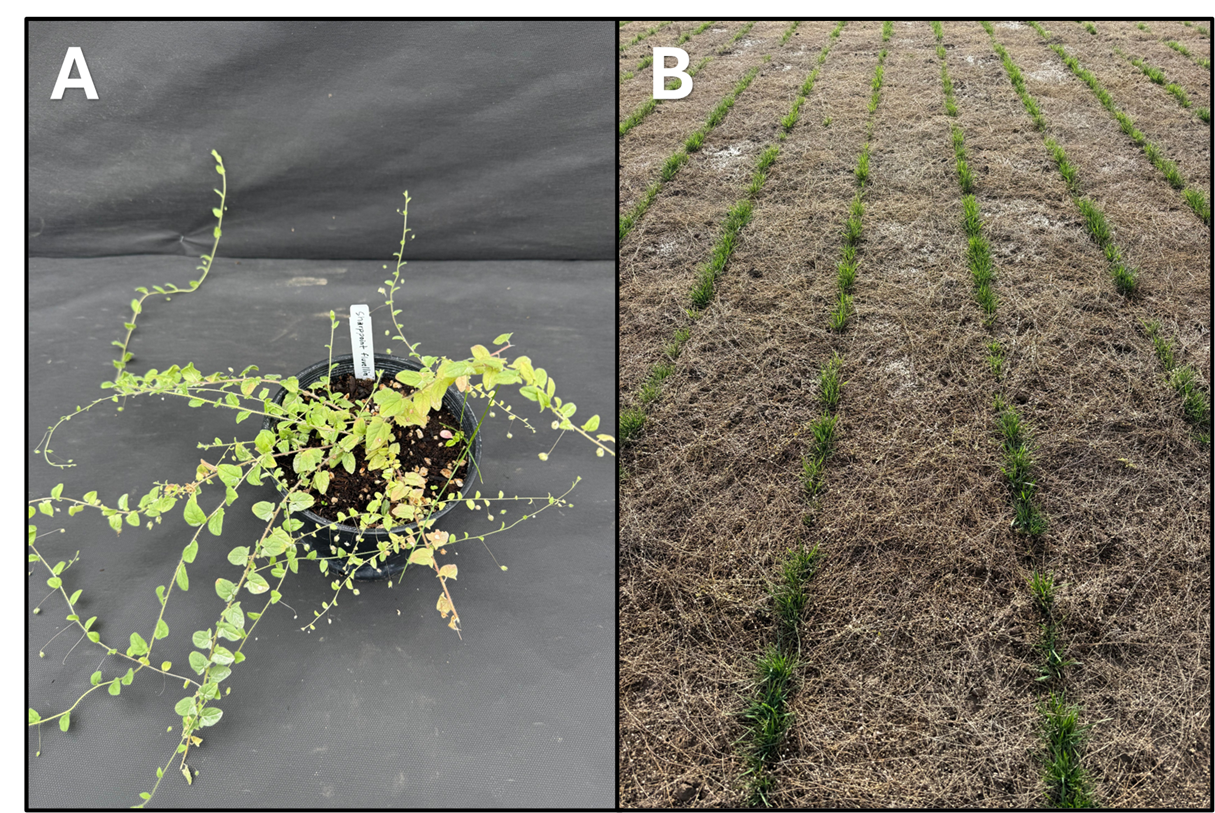
Sharppoint fluvellin is a problematic weed in spring-planted tall fescue in the Willamette Valley, Oregon. It is an annual plant that begins as an upright seedling but quickly develops prostrate, mat-forming stems as it matures (Figures 1A and B). The species has a taproot that is fibrous in young plants and becomes woody in older individuals, supporting its persistence under hot, dry conditions. It reproduces by seed and typically flowers from June through September, though flowering may extend later in the season in the Willamette Valley. Sharppoint fluvellin is tolerant to many herbicides, which makes it particularly difficult to control. Figure 1B shows an example where herbicides failed to control Sharppoint fluvellin in spring-planted tall fescue in 2025; the plants formed a dense mat between the crop rows. In this field, the crop survived, but the weed completed its life cycle and likely deposited seeds into the soil, creating a significant problem for the following season. Additionally, this dense barrier prevents herbicides from reaching the soil and may protect small weeds from being contacted by post-emergence herbicides, making the application ineffective.
Figure 1. A) Sharppoint fluvellin plant growing a pot in the greenhouse. B) Sharppoint fluvellin that failed to be controlled in a spring-planted tall fescue in 2025. Photo taken on November 14, 2025.
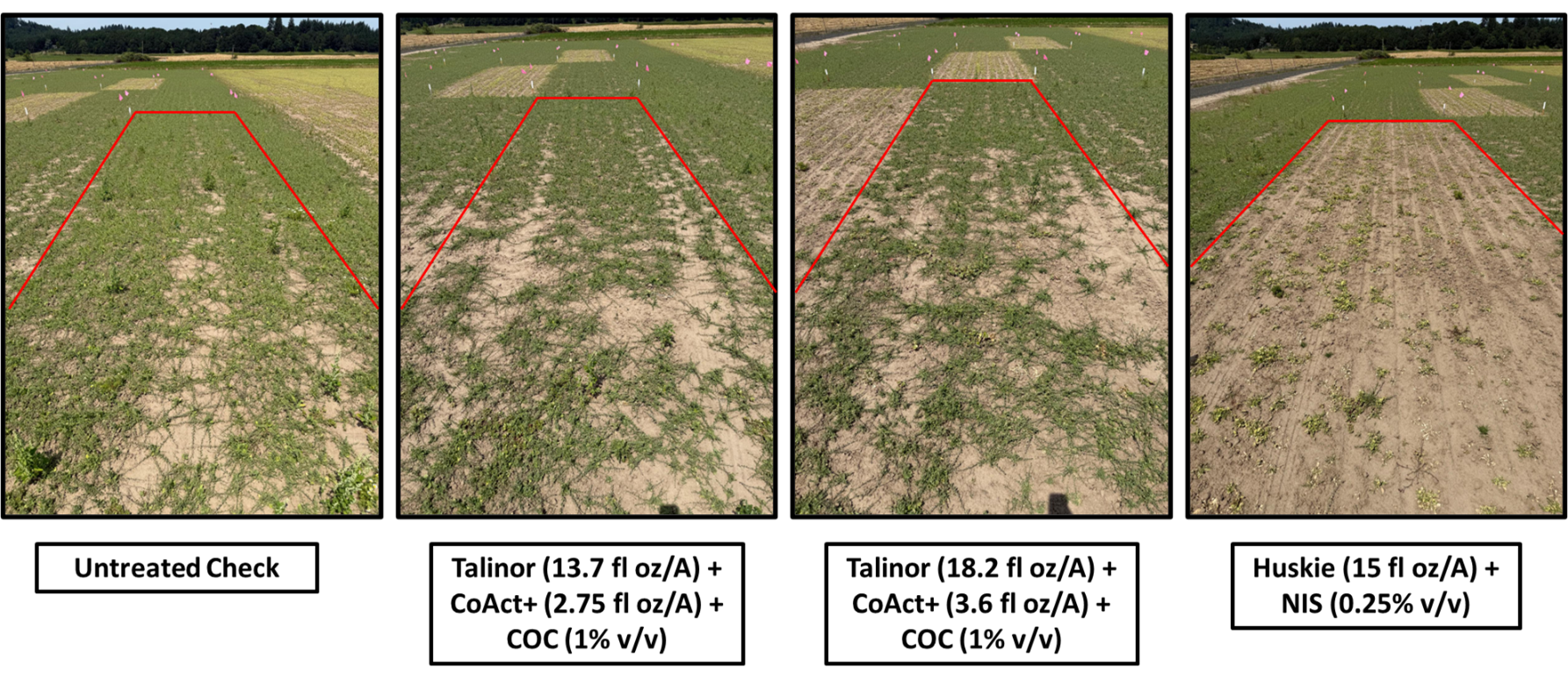
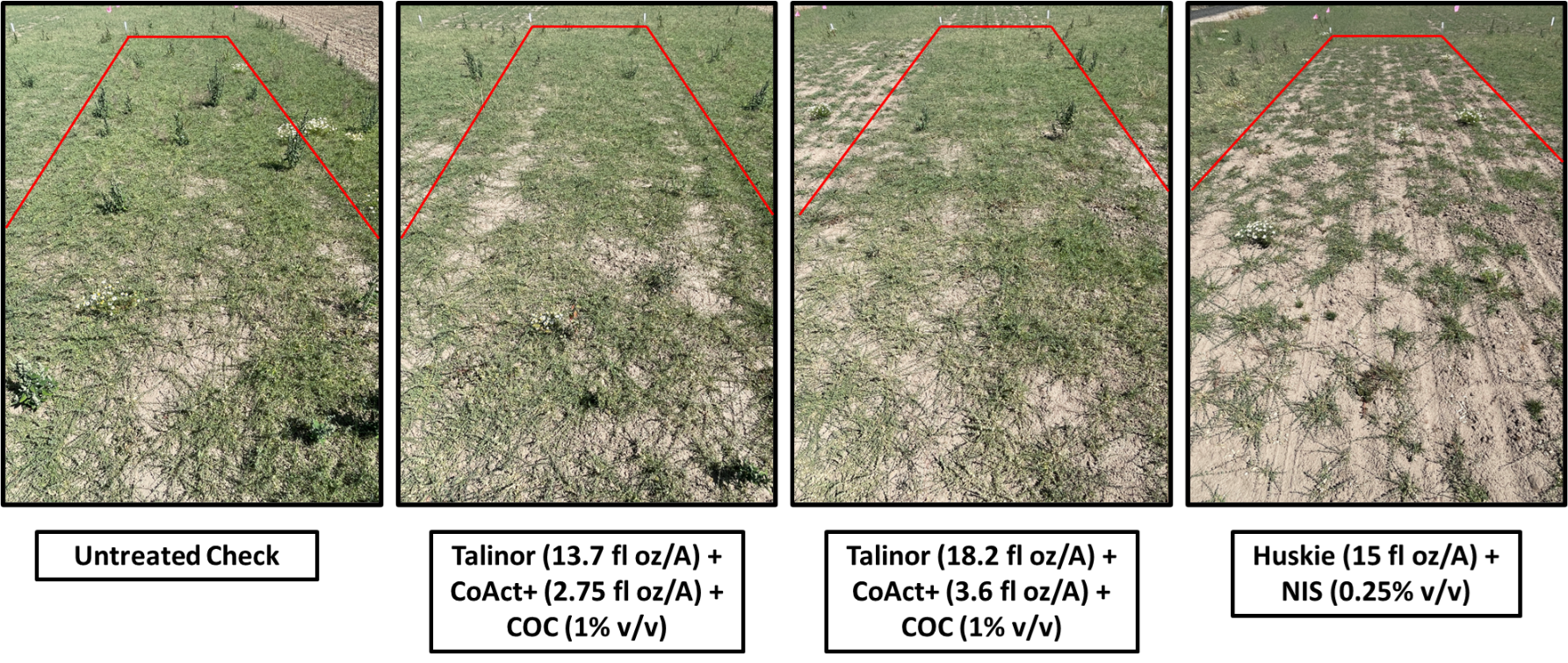
To address this question, we conducted a herbicide screening trial on a bare-ground site at Hyslop Farm with a Sharppoint fluvellin infestation in late spring. Treatments included Talinor applied at two rates (13.7 and 18.2 fl oz/A), each applied with the adjuvants CoAct+ (2.75 and 3.6 fl oz/A, respectively) and COC at 1% v/v, Huskie (15 fl oz/A) applied with NIS at 0.25% v/v, and an untreated check were included for comparison. The rates of Talinor and CoAct+ used in this trial corresponded to the lower and higher recommended label rates for wheat and barley. The Huskie rate was based on the recommendations for grass grown for seed. Treatments were applied on May 30 using a CO2-backpack sprayer calibrated to deliver 20 GPA, targeting Sharppoint fluvellin plants at the 4- to 6-leaf stage.
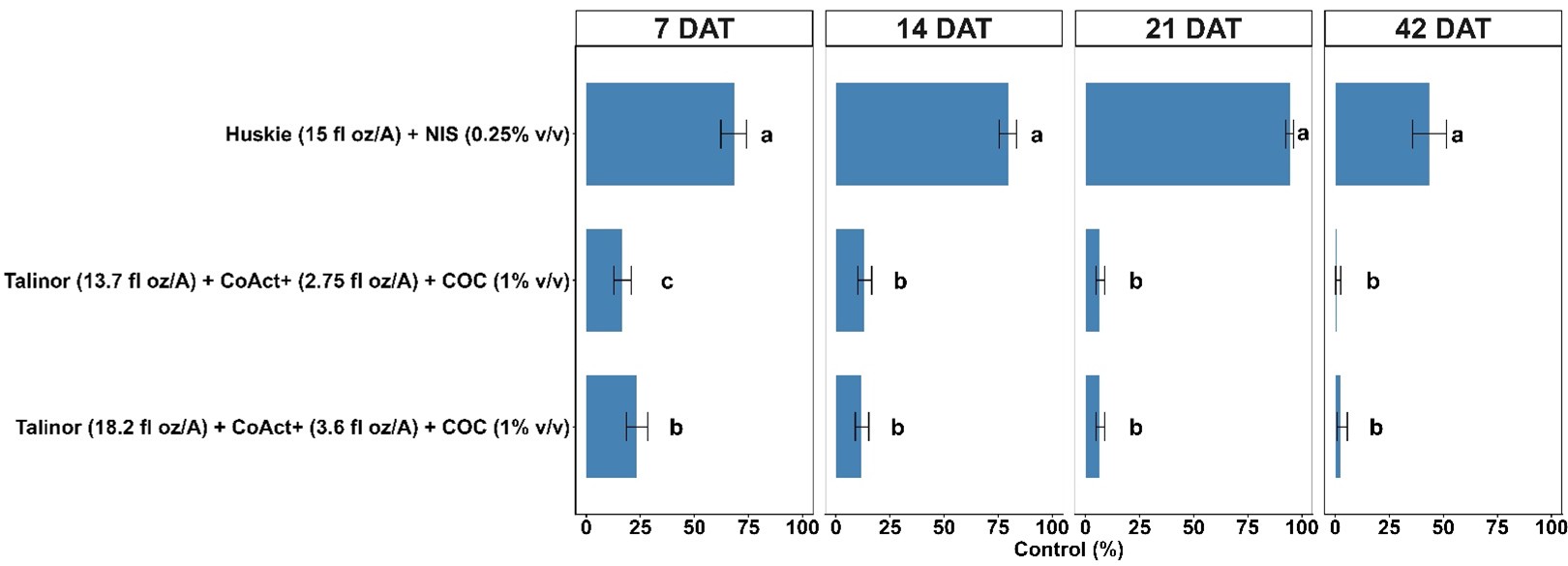
Talinor did not provide effective control of Sharppoint fluvellin at either of the rates tested (13.7 and 18.2 fl oz/A) (Figure 2). Control levels ranged from 6-16% for 13.7 fl oz/A and 6-23% for 18.2 fl oz/A between 7 and 42 days after treatment.
Figure 2. Sharppoint fluvellin control 7, 14, 21, and 42 days after treatment (DAT). Bars represent the mean control in percentage ± confidence interval. Bars sharing the same letter are not significantly different at α = 0.05 according to Fisher's least significant difference test.
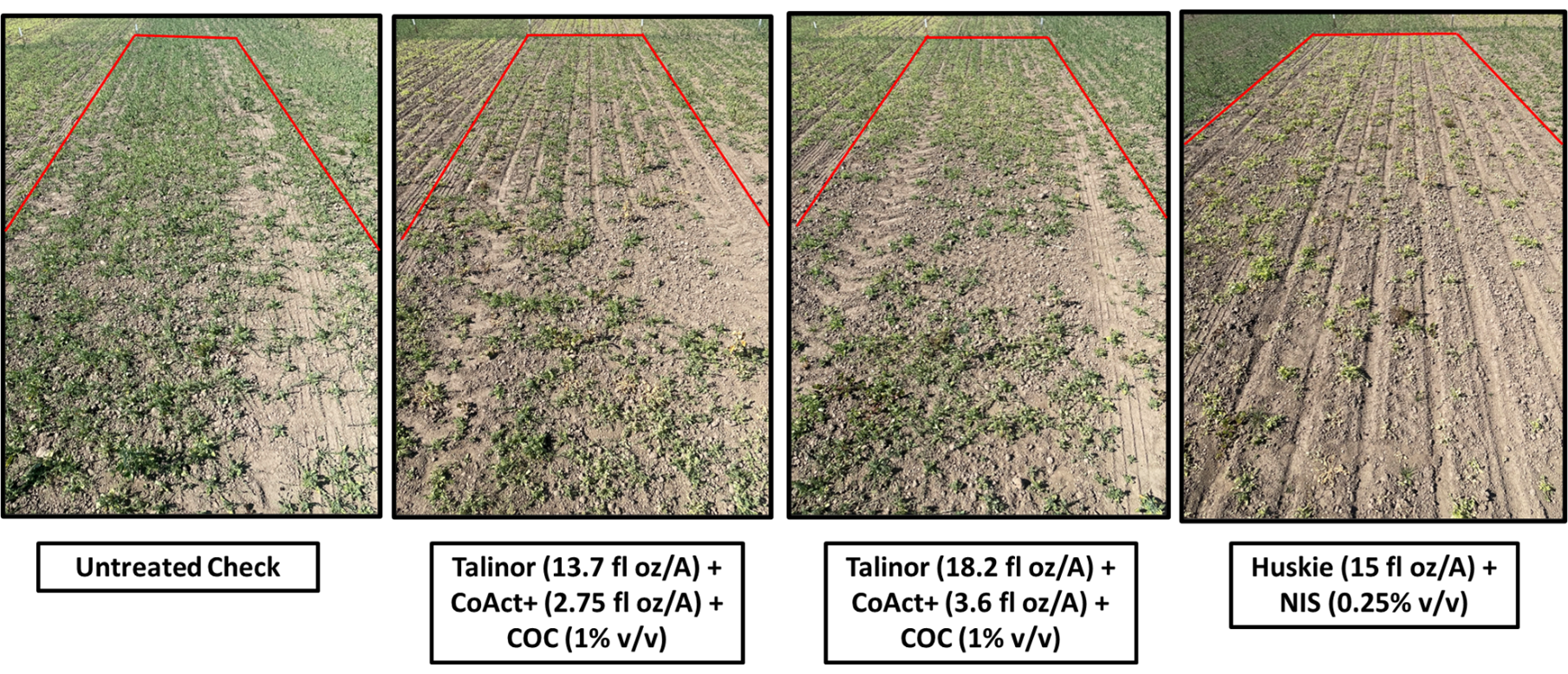
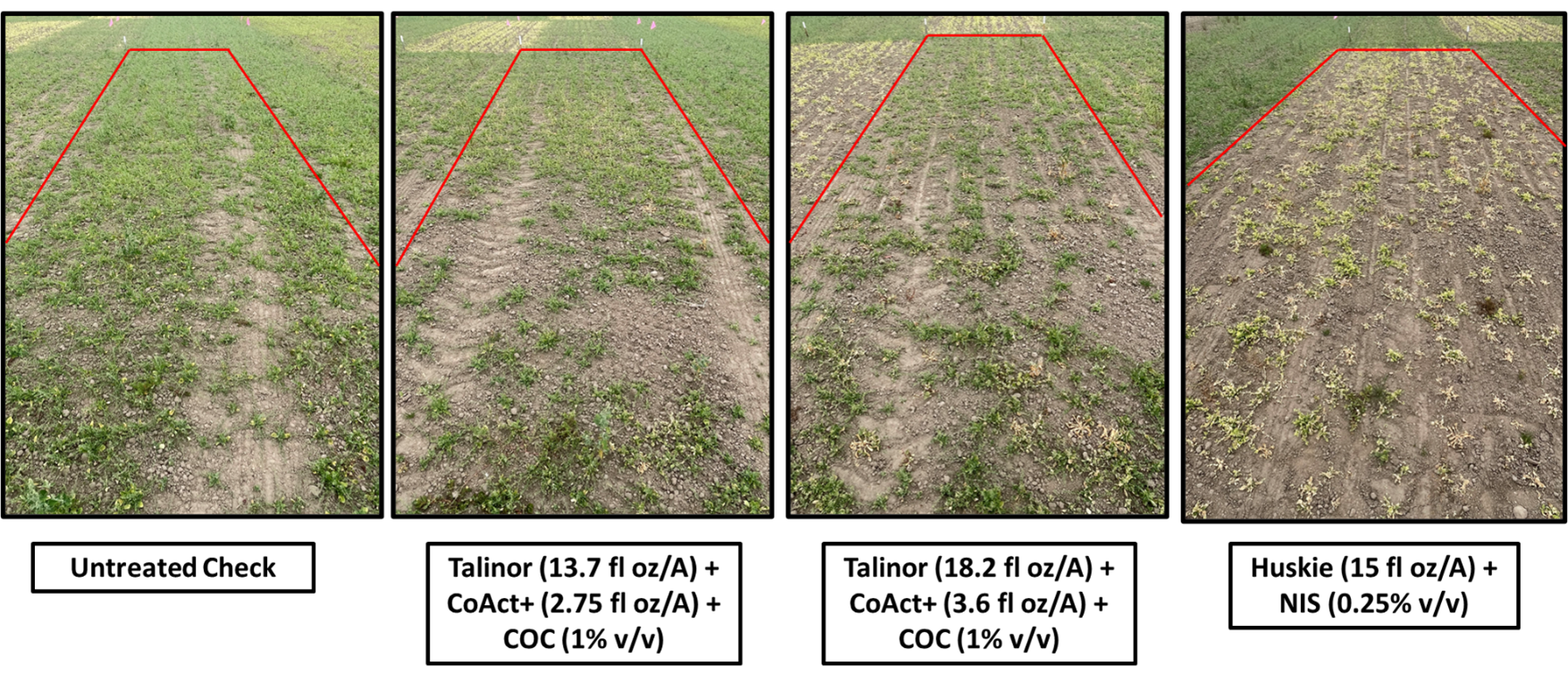
We observed some herbicide injury, including chlorosis and leaf necrosis at 7 and 14 days after treatment (Figures 3 and 4).
Figure 3. Sharppoint fluvellin control 7 days after treatment.Figure 4. Sharppoint fluvellin control 14 days after treatment.
However, by 21 days after treatment, the plants recovered and resumed growth, forming dense mats similar to the untreated check (Figure 5). In contrast, Huskie applied at 15 fl oz/A with NIS (0.25% v/v) showed substantial early-season control, with control levels ranging from 68-94% between 7 and 21 days after treatment (Figures 2, 3, 4, and 5).
Figure 5. Sharppoint fluvellin control 21 days after treatment.
Interestingly, during conversations with fieldmen and other stakeholders in the region, I learned that Huskie is not commonly used to control this species because it is generally considered ineffective, with plants often regrowing after application. In our plots, we also observed some regrowth, but the main challenge was the emergence of additional flushes of seedlings. Figure 6 illustrates this issue, showing an additional flush of established plants 42 days after treatment, which reduced control to 43% (Figure 2).
Figure 6. Sharppoint fluvellin control 42 days after treatment.
These observations suggest that while Huskie can offer some control shortly after application, additional management strategies, including follow-up treatments or herbicides with residual activity, may be necessary to achieve extended control of Sharppoint fluvellin.
Our group is currently researching the biology of Sharppoint fluvellin, focusing on its germination requirements, including temperature, light, and moisture conditions. In addition, we plan to evaluate additional herbicide treatments to identify effective options for controlling this challenging weed in grass seed crops in the Willamette Valley.
Optimizing the Use of Green-on-Brown Precision Sprayers
Contributed by Judit Barroso, Oregon State University
Even though you might be hearing more about the green-on-green precision sprayers these days, in my opinion, green-on-brown precision sprayers might be more useful in the region due to the number of fallow acres where these sprayers can be used. I do not know the percentage of wheat growers that already have a precision sprayer to control weeds in fallow, but I think this percentage will increase this year and the following years due to the increasing problem of herbicide resistance and the government programs [e.g. Conservation Stewardship Program (CSP) Enhancements] that can help growers with the initial investment. The use of real-time precision sprayers—where weed detection and spraying occur simultaneously—offers several advantages, the most important being the reduction in herbicide use, which consequently lowers application costs. However, this technology also has some disadvantages, such as the risk of missing some weeds and the possible need for increased spraying frequency.
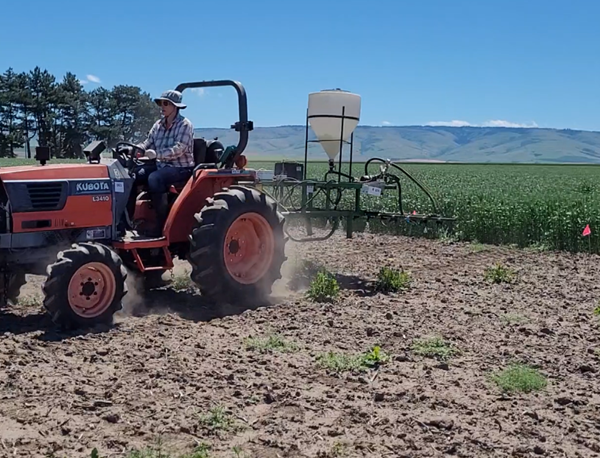
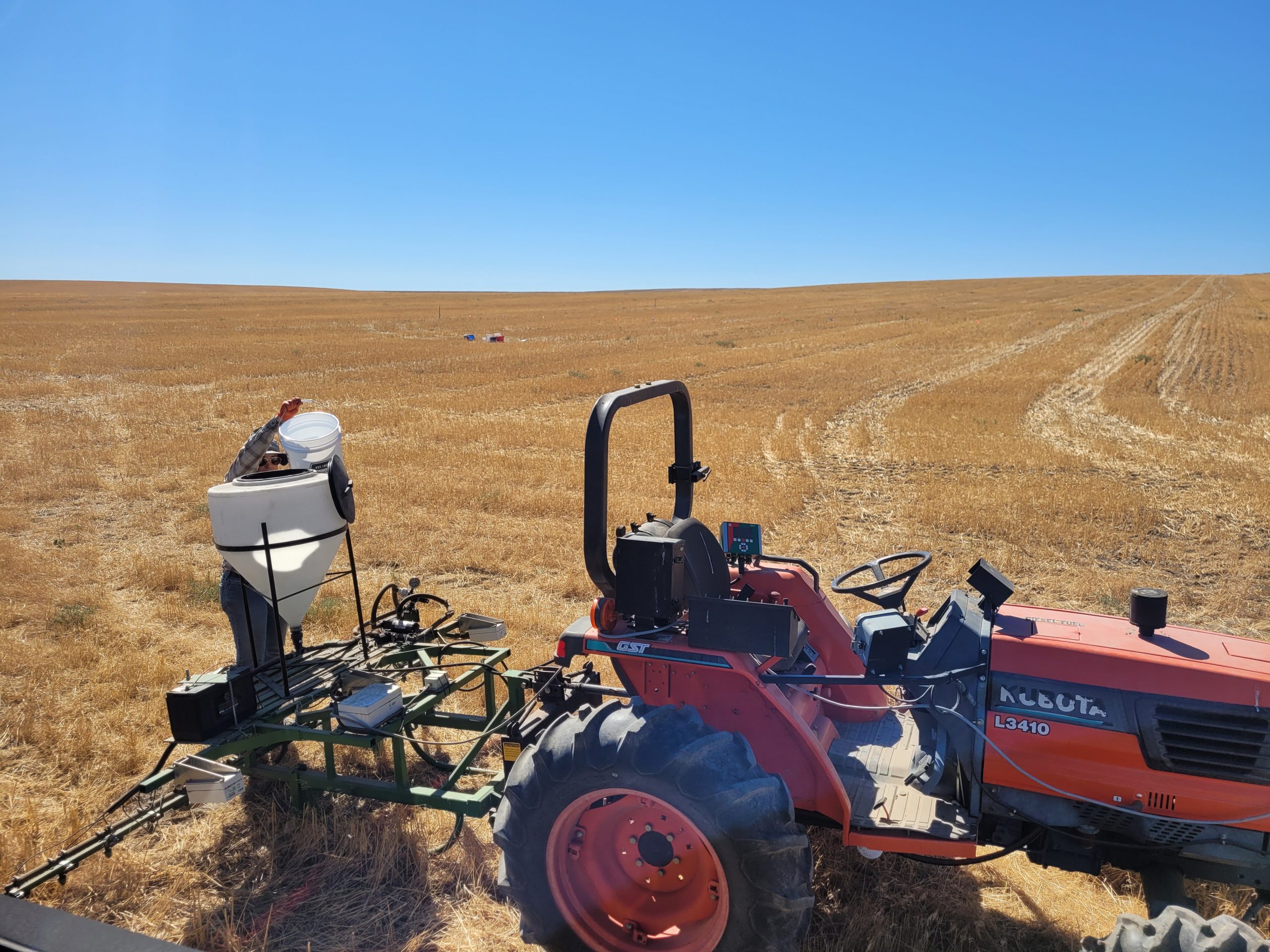
To try to learn how to optimize the use of green-on-brown precision sprayers, I conducted a couple of experiments this postharvest season (August 2025) to understand the importance of different equipment settings. The study was conducted with a Weed-IT sprayer bought in 2017 (Image 1) that requires the user to indicate the margin (or buffer) that refers to the distance before and after a detected weed that the system will spray (it can be set between 8 to 12 inches) and the sensitivity that refers to the system’s ability to detect weeds. My hypothesis was that the ideal sensitivity setting to balance herbicide savings and efficacy was going to depend on the specific field conditions. In both trials, I compared broadcast application with spot spraying by running the Weed-IT sensors at low and high sensitivity. The margin was always set up with the highest value to compensate for wind and uneven terrain.
Image 1. Weed-IT sprayer applying herbicide in a fallow trial at OSU-Columbia Basin Agriculture Research Center, Adams, Oregon in early June of 2024.
High sensitivity indicates that the sensor is able to detect smaller weeds but can be triggered by false positives (e.g. reflections) and low sensitivity indicates that the sensor will detect bigger weeds and can lead to greater herbicide savings. In a weed-free fallow field with low residue cover (20-30%) due to minimum tillage conducted earlier in the summer, the sensors were not triggered at the high or low sensitivity. However, when the weed-free field had standing up wheat stubble, the high sensitivity setting triggered the Weed-IT sensor at least 10% more times than the low sensitivity setting with some variable results depending on running the sprayer parallel or perpendicular to the stubble and also depending on the solar radiation at the time of application.
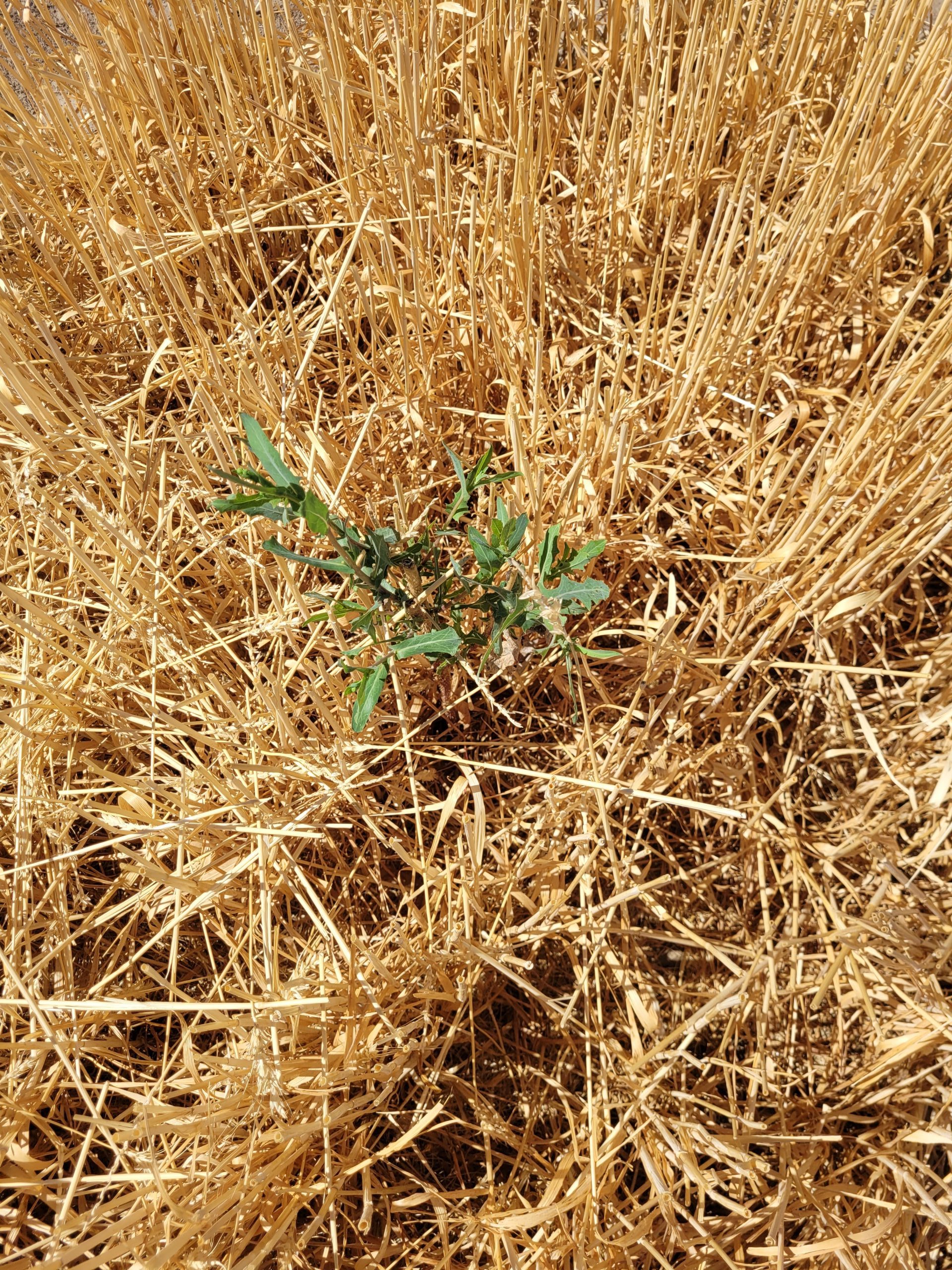
In a no-till fallow field with big weeds in general, herbicide savings were similar between the low and high sensitivity settings. Likewise, in one of the postharvest trials where weeds were generally big (Image 2 shows a relatively small weed compared to the majority in that field) both sensitivities provided weed control equivalent to the broadcast application. However, this trial had a tall, thick winter wheat stubble and the spray volume used by the precision sprayer when it was set up with high sensitivity was much higher than when it was set up with low sensitivity. So, despite getting similar weed control, the herbicide savings with high and low sensitivity compared to the broadcast application were 45% and 98% respectively.
In the other postharvest trial that we conducted this year, the circumstances were different and so were the results. This second trial was established in a spring wheat stubble and it was sprayed six days after harvest (Image 3). Weeds had germinated in spring and did not have much time to regrow between harvest and the herbicide application. Consequently, many were practically a stick, particularly the prickly lettuce (Lactuca serriola) which was the most predominant weed in that trial. Under those circumstances, we found that only the high sensitivity produced results that were not significantly different from the broadcast application (50-75% control) and that the low sensitivity, even though it saved the most amount of herbicide, the control was significantly lower (25%).
Image 2. Prickly lettuce regrowing after the crop harvest in a thick winter wheat stubble in August 2025 at the OSU-Columbia Basin Agricultural Research Center, Adams, Oregon.
Image 3. Working with the precision sprayer in a postharvest trial located in a commercial field in Morrow County in August 2025.
Precision weed control with optical chlorophyll-detection sensors (green-on-brown), as the one described, can provide a great opportunity to manage weeds during fallow periods by saving herbicide and costs. However, as we found in this study to optimize its use (saving the most amount of herbicide without compromising weed control), attention should be given to the setup of the equipment before spraying.
It is possible that these settings that I have to manually adjust might be somehow automatically adjusted in the new generation of Weed-IT, I am not sure. Nonetheless, learning the performance of the different settings might be beneficial if you need to prioritize your balance towards the most savings possible or towards the best control possible. If any of you have experience with your own precision sprayers and are willing to share your observations, please do not hesitate to do so, it could be very helpful to others. My plan is to conduct additional trials this coming season. If you are interested in collaborating on a field trial (fallow or postharvest) to target a specific challenging weed, please contact me.
Note: Mention of trade names in this article is solely for the purpose of providing specific information and does not imply recommendation or endorsement by Oregon State University.
It’s Getting Exciting Again!
Contributed by Drew Lyon, Washington State University
I will be retiring from Washington State University in December, 37 years after receiving my Ph.D. in agronomy/weed science from the University of Nebraska-Lincoln. The 1980s were an exciting time to be a graduate student studying weed science. New herbicides were entering the marketplace with dizzying frequency. The ALS-inhibiting herbicides (Group 2), specifically the sulfonylureas and imidazolinones, were introduced in the 1980s. I’m sure some of you remember how transformational Glean herbicide was for weed control in wheat when it was released in the early 1980s.
The 1980s were also an exciting time for weed scientists and their graduate students because herbicide resistance was beginning to become a major topic of interest. In Nebraska and the U.S. corn belt, weeds were developing resistance to atrazine. Many of my graduate student buddies were studying the phenomenon. Atrazine at that time was a low cost, highly effective herbicide for the control of a wide range of weeds in many grass crops. It was also the herbicide that supported the early adoption of many no-till cropping systems. Of course, when an herbicide is affordable and effective, it gets used on many acres and many weeds are exposed to the selection pressure that results in the evolution of herbicide resistance. I have watched this same process repeat itself after glyphosate went generic in 2000.
To me, the 2020s look to be another exciting time for weed science. However, unlike the 1980s, herbicides are not what is making this an exciting time to be a weed scientist. The introduction of new herbicide active ingredients has slowed to a trickle, and this trend does not look like it will change anytime soon. What makes the 2020s exciting is the convergence of new technologies like drones, robotics, machine learning, and AI with weed science and production agriculture.
A case in point, I was recently serving as a local host for a group of Australian farmers and their spouses as they traveled across Washington on the tail end of their U.S. tour. One of the farmers showed me a video of his recently purchased robot pulling his spot sprayer through a fallow field. The robot was controlled by an app on his phone. When the spraying was completed, the spray tank was empty, or the robot needed fuel, it returned “home”. He seemed very pleased with his new piece of equipment. I was impressed! When I returned home, I did a browser search for more information on these robots. You can see a video here or do your own web search.
And the above example is just a marriage between new technology, robotics, and old technology, pesticide sprayers. Now think about combining two or more new technologies such as drones, robots, and lasers. Combine these technologies with machine learning and AI, and these technologies can learn what weeds you have, where they grow in each field each year and concentrate their time and effort where needed. The possibilities for research and practical solutions are seemingly endless.
Oh, to be young again! But alas, I had my opportunity for excitement. Now it is time for a new generation of weed scientists and farmers to work together to map the path forward. My advice after nearly four decades of work is to remain open to new possibilities but realize that no single technology is likely to provide enduring benefits. Weeds have proven themselves to be highly adaptive to the practices of man, which makes the study of weed science all the more interesting.
Annual Bluegrass Breaks Another Barrier: First Case of Indaziflam Resistance in Oregon
Contributed by Marcelo Moretti, Oregon State University; Joshua Miranda, Michigan State University; Todd Gaines, Colorado State University
Herbicide resistance has long been a moving target in agriculture. Our recent research, published in Pest Management Science, reveals that annual bluegrass (Poa annua) has become the first weed in the world to evolve resistance to indaziflam, an herbicide once considered a cornerstone for residual control. This finding has major implications for orchard, vineyard, and grass grown for seeds where growers rely on indaziflam for long-lasting weed control.
Why annual bluegrass?
Poa annua is no ordinary weed. It is:
Cosmopolitan – found worldwide, from golf greens to hazelnut orchards.
Flexible – grows as an annual or short-lived perennial, depending on conditions.
Prolific – produces abundant seeds with little dormancy, ensuring constant emergence.
Genetically diverse – capable of adapting quickly to repeated management practices.
These traits make it the “perfect storm” species for herbicide resistance evolution.
The findings
Our research team collected P. annua plants from Oregon hazelnut orchards where growers reported failures of indaziflam. In greenhouse and field experiments, we confirmed:
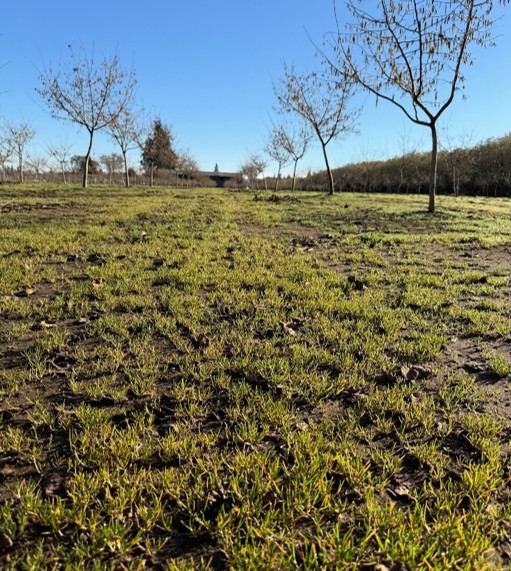
Figure 1. Annual bluegrass infested hazelnut orchard after treatment with indaziflam.
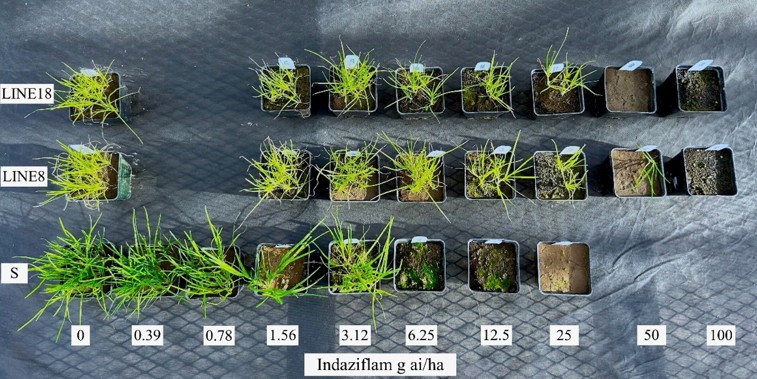
Resistance at multiple timings: Plants survived indaziflam applied both preemergence (before weeds emerge) and early-postemergence (to young seedlings). Some populations withstood up to four times the labeled rate.
Lower temperature makes it worse: At cooler temperatures (common in Oregon winters), indaziflam efficacy dropped sharply and resistant plants were unharmed.
Likely not metabolism-based: Enzyme inhibitors that usually reverse metabolic resistance did not restore sensitivity, pointing to a novel mechanism.
Multiple resistance is common: Several populations also showed reduced response to other herbicides, shrinking the list of effective chemical options.
Why it matters for growers
Indaziflam has been widely used in perennial systems because of its long soil residual activity, sometimes providing season-long weed control. But this same feature creates strong selection pressure: every year, seedlings that survive continue to set seed, gradually shifting populations toward resistance.
For growers, the consequences are clear:
Overreliance on indaziflam will accelerate resistance spread.
Once established, resistant Poa annua can dominate orchard floors.
Chemical options are narrowing, especially with new regulatory restrictions.
What can be done
Resistance doesn’t mean defeat, but instead it means adaptation. Our findings reinforce several key strategies:
Rotate herbicide modes of action: Avoid repeated use of indaziflam or any single product.
Tank-mix or sequence residuals: Zidua, Chateau, Brake-On!, and others may be used in strategic combinations.
Scout and test early: Catch resistance before it spreads. Resistant patches often start small.
Avoid winter-only reliance: Since cold temperatures worsen resistance expression, consider adjusting timing to periods of higher herbicide efficacy.
This is not just about one herbicide or one weed. The Poa annua–indaziflam case illustrates how long-lived, soil-active herbicides can select for resistance faster than expected. It also highlights the role of environmental factors (like temperature) in shaping how resistance is expressed in the field.
Ultimately, sustainable weed management will require integrated strategies, not silver bullets. By combining herbicides with cultural and mechanical practices growers can slow resistance and preserve the tools we still have.
Our research shows that herbicide-resistance is associated with the adaptability of weeds. But there is also a silver lining: early detection of resistance gives us the opportunity to act proactively. By diversifying our strategies now, we can protect the effectiveness of indaziflam and other herbicides for years to come.
Weed Management Challenges in the Pacific Northwest–Preliminary Producer Survey Results
Contributed by Doug Finkelnburg, University of Idaho
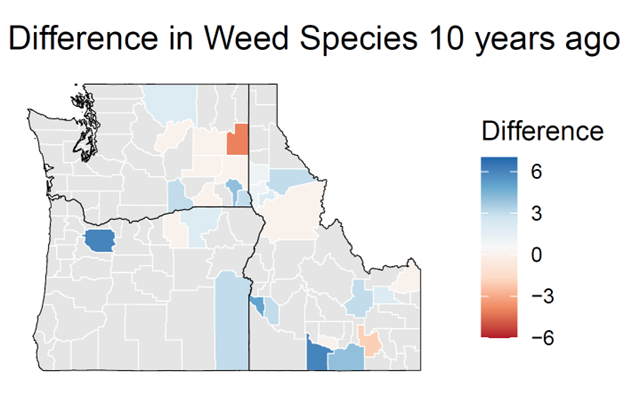
Recent survey results from the Pacific Northwest Herbicide Resistance Initiative (PNWHRI) highlight how much weed pressure and complexity have grown over the past decade from the perspective of producers. In winter 2024–2025, PNWHRI researchers launched an anonymous survey to learn how weed control challenges have shifted for producers in Idaho, Oregon, and Washington. The survey was distributed at grower meetings, through Extension and industry newsletters, and conservation district communications. Eighty-one responses from 29 counties provided a window into farm realities across a diverse range of crops—wheat, pulses, oilseeds, forages, potatoes, sugar beets—and rainfall zones spanning 7 to 40 inches annually. Most respondents farmed without irrigation, and the majority operated at a commercial scale, with nearly 60% managing more than 1,000 acres.
Map of Idaho, Oregon, and Washington Counties showing reported differences in the number of “problem weeds” observed on farms today compared to ten years ago. The survey shows that some counties saw decreases in weed species, others saw increases, and many counties had no data to analyze.
A Growing List of Weeds
More than half of producers (58%) reported an increase in the number of problem weed species compared to 10 years ago. Only 13% saw fewer problem weed species, while the remainder noted no change. The survey defined “problem weeds” as those that directly reduce yields, cause dockage, or interfere with farm activities such as harvest or haying.
The increase wasn’t just from new weeds. Many reported existing weeds becoming more prevalent (42%) or a combination of new and existing species (41%). Proximity to unmanaged areas such as roadsides, ditches, and neighboring fields was the most common reason cited for problem weed issues, followed closely by herbicide resistance.
Weed Budgets Keep Climbing
Nearly 9 out of 10 farmers reported higher weed management costs than a decade ago. Rising herbicide prices topped the list of reasons, but many also cited the need for more applications, higher use rates, or switching to more expensive products. In many cases, farmers are layering multiple strategies simply to maintain control.
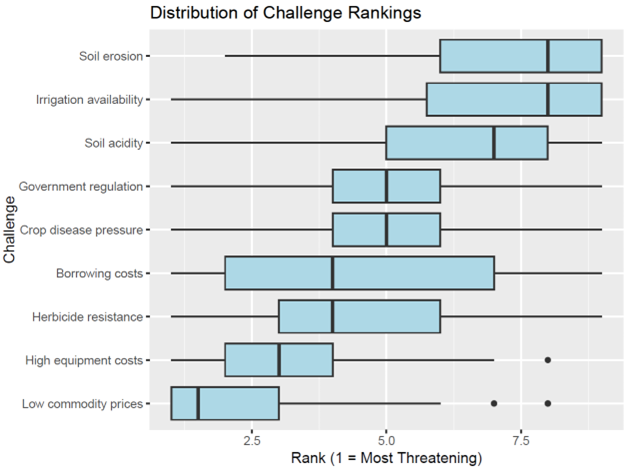
Table listing how producers ranked challenges to farm profitability among the listed options. (1) soil erosion; (2) irrigation availability; (3) soil acidity; (4) government regulation; (5) crop disease pressure; (6) borrowing costs; (7) herbicide resistance; (8) high equipment costs; (9) low commodity prices.
Herbicide Resistance Ranks High Among Challenges
When asked to rank threats to their operations, farmers placed herbicide resistance third overall—behind only low commodity prices and high equipment costs. Resistance was viewed as more concerning than crop disease, government regulation, or limited irrigation access.
For many, herbicide resistance has already changed day-to-day management. Farmers reported turning to:
More tillage and other mechanical weed control
Crop rotations that open up new timings and tools
Multiple herbicide modes of action in a single year
Increased reliance on herbicide-resistant crops
Yet barriers remain. Limited herbicide options, lack of effective non-chemical tools, and poor weed management by neighbors all complicate resistance management. Some farmers also pointed to gaps in knowledge and understanding of resistance as challenges to long-term success.
Takeaway
The PNWHRI survey indicates that weed management is becoming more difficult, more expensive, and more central to the sustainability of farming in the Pacific Northwest. Farmers are adapting with creativity and persistence—but they face rising costs and shrinking options. These early results underscore the importance of new research, better coordination, and practical tools to help growers stay ahead in the fight against weeds.
Exploring Electric Weed Control as a Cover Crop Termination Tool for No-Till Organic Systems
Contributed by Aaron Becerra-Alvarez and Marcelo Moretti, Department of Horticulture, Oregon State University
In recent years, researchers at Oregon State University (OSU) have been exploring the potential of Electric Weed Control (EWC) in perennial organic systems like blueberry and hazelnut production. EWC has proven to be a non-selective, soil-friendly method of eliminating both broadleaf and grass weeds—without disturbing the soil surface, an important benefit for organic producers focused on long-term soil health.
Building on this success, our labs (Becerra-Alvarez Lab and Moretti Lab) are now investigating whether EWC could also be used to terminate cover crops—a vital component in organic vegetable farming. Traditionally, cover crops are managed through mowing and tillage, but these practices can negatively impact soil structure and microbial health. Organic growers recognize the value of reducing tillage but face limited alternatives for effective vegetation control.
If EWC proves effective for terminating cover crops, it could unlock new potential for no-till organic systems, offering a scalable solution for farmers who rotate between different crops. This would enhance the value of investing in EWC technology by making it useful across multiple cropping systems, ultimately helping organic growers manage weeds and cover crops more sustainably.
Cover crop termination trial
We conducted a trial at the Oregon State University Vegetable Research Farm in Corvallis, OR to explore EWC as a cover crop termination tool for organic no-till systems. The field was planted with a cover crop mixture of oats and red clover in the fall of 2024. The cover crop termination treatments, shown in Table 1, were implemented starting on May 6, 2025.
Table 1. Treatment table to evaluate electric weed control as a cover termination tool in western Oregon.
TRT #
Cover crop termination method
Soil preparation
1
Mowing
No-tillage
2
Mowing
Tillage
3
EWC 15 MJ ha-1 (0.6 mph)
No-tillage
4
EWC 15 MJ ha-1 (0.6 mph)
Tillage
5
Mowing + EWC 15 MJ ha-1 (0.6 mph)
No-tillage
6
Mowing + EWC 15 MJ ha-1 (0.6 mph)
Tillage
EWC, electric weed control; MJ, megajoule of energy; mph, miles per hour.
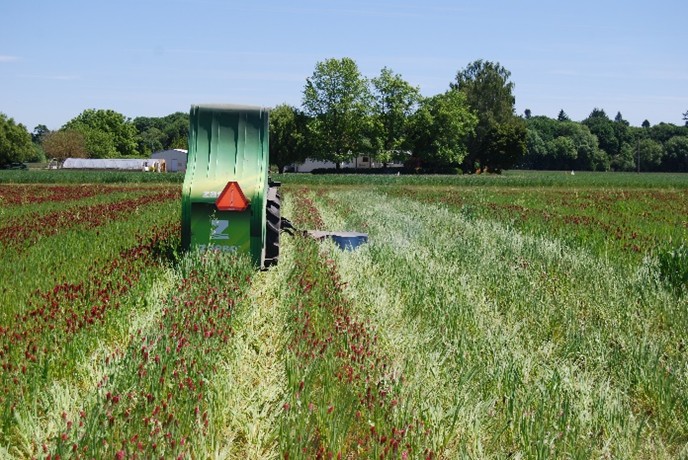
A tractor-driven, commercially available electric applicator unit (EH30 Thor, Zasso, Brazil) with a 4 ft wide applicator was used in this study to apply electricity on the cover crop (Figure 1). The mowing was performed with a Pak flail mower (IFA Flail, Rears Mfg. Co., Coburg, OR). Each plot area received five passes to treat the 25 ft by 300 ft treatment area. A 10 ft buffer was in between plots. The field was arranged as a split plot design where the main plots were the cover crop termination method, and the soil preparation was randomized within the main plot (Table 1). Each treatment was replicated three times. The soil tillage treatments were performed by doing three passes with a disc in each plot followed by a rototiller to level the upper soil surface. The no-till treatments were left untouched after terminating the cover crop. A few days after terminating the cover crop and preparing the soil, snap beans were planted with a John Deere 7000 conservation planter at 30 in row spacing and a plant population of 182,000 A-1.
Figure 1. Cover crop termination with electricity on a field planted with a mix of oats and red clover in western Oregon.
The EH30 Thor, Zasso, is applying electricity on a cover crop mixture of oats and red clover in western Oregon for termination before planting.
Cover crop biomass at the time of applications before treatments. The field was planted with a mix of oats and red clover. Dry biomass averaged 8.7 lbs ft2 on the day of the treatments.
Results
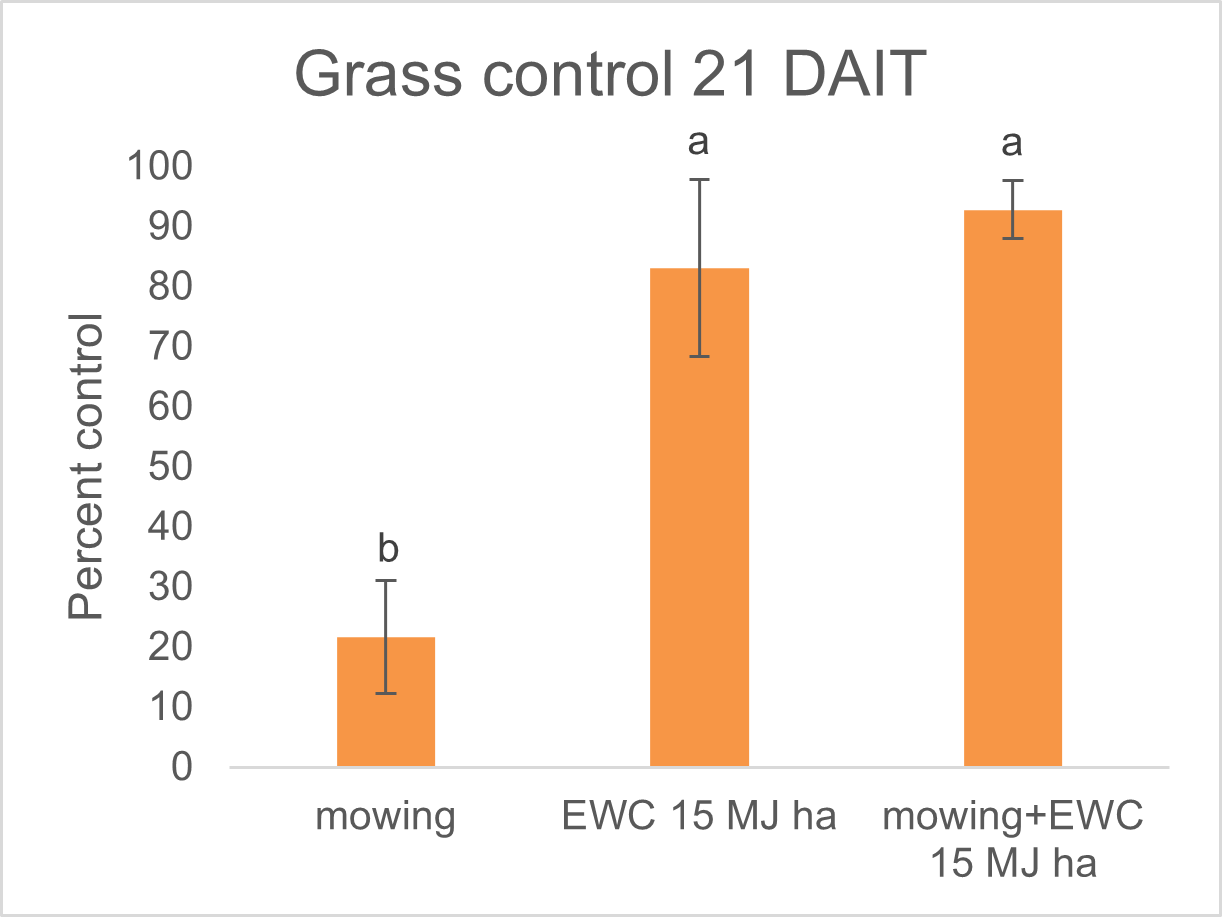
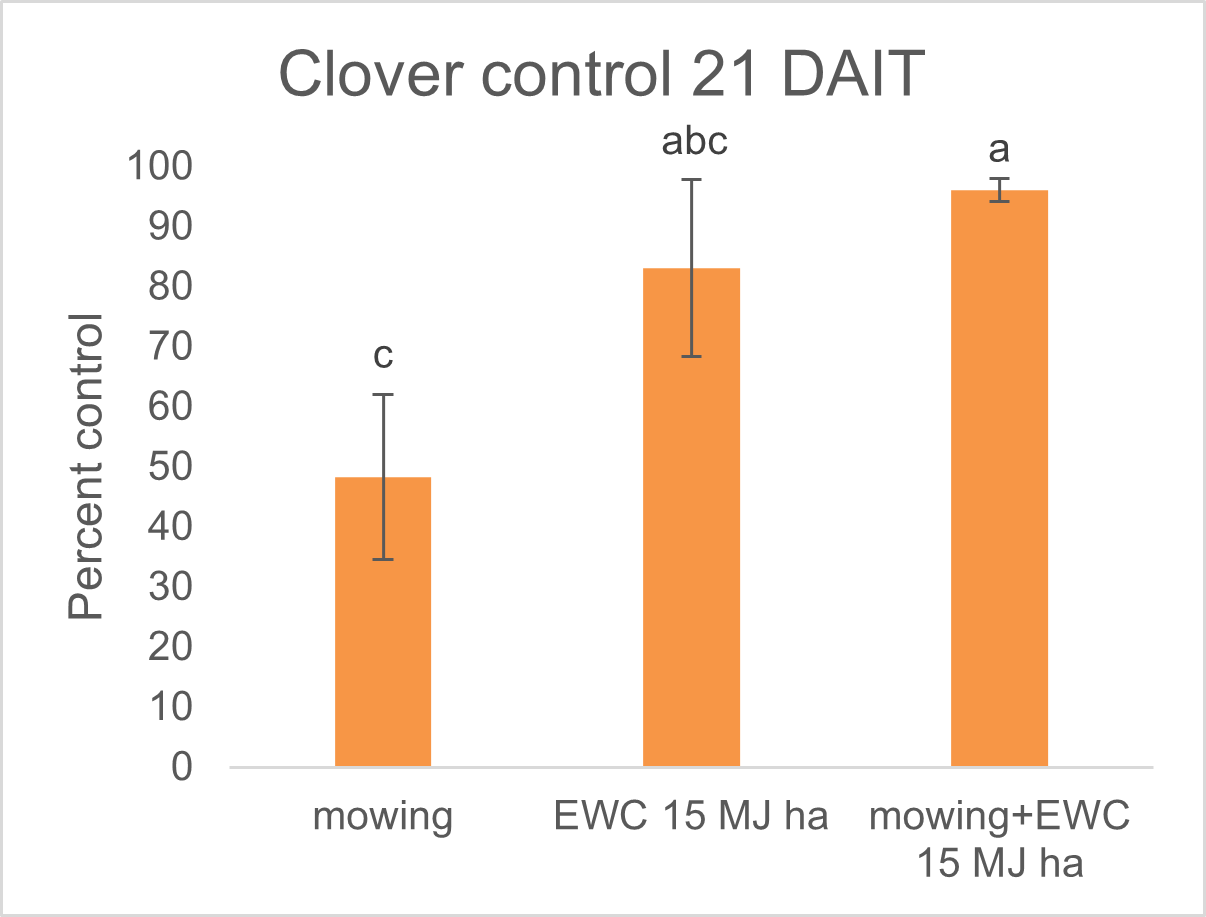
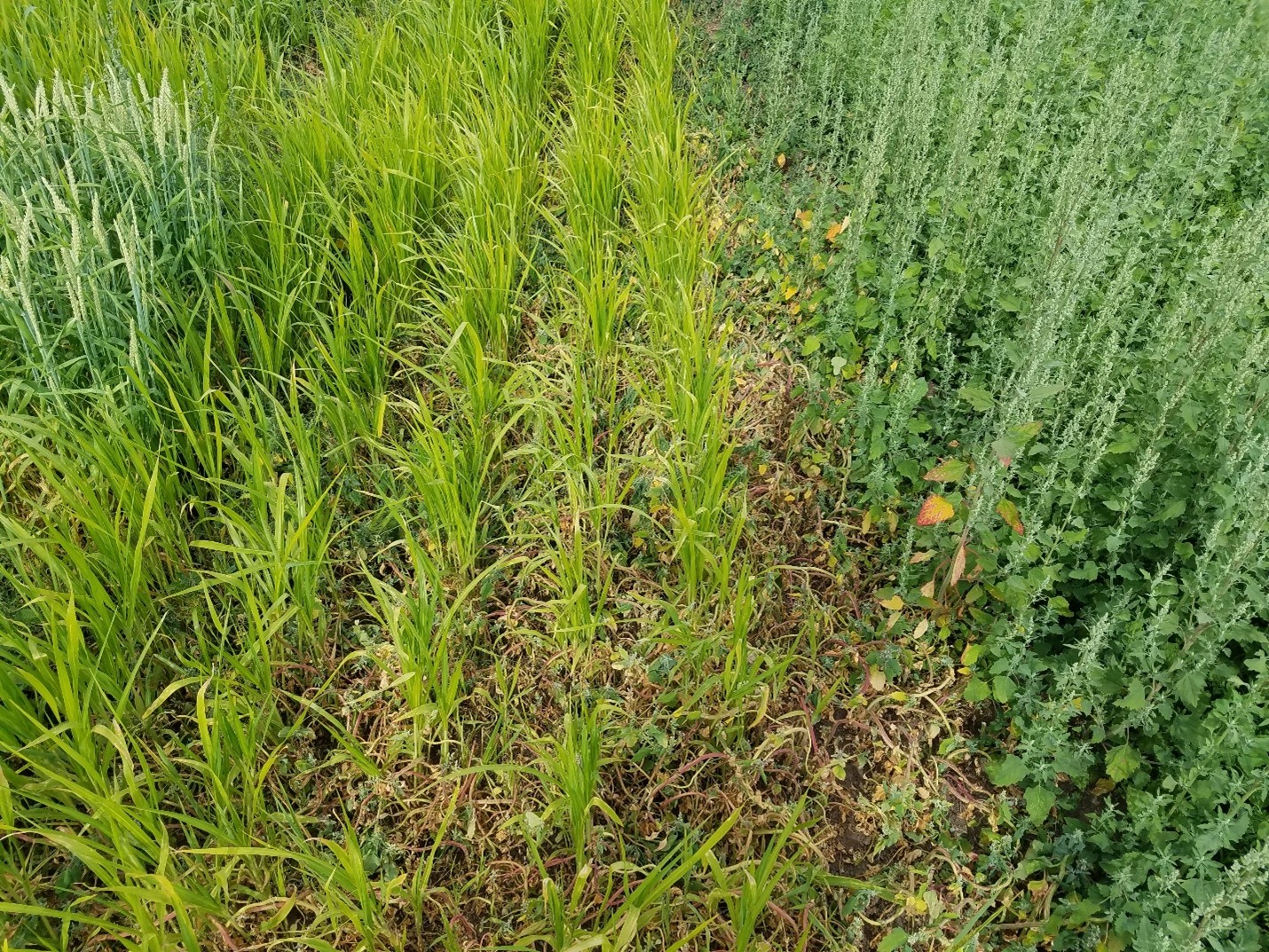
The EWC demonstrated good control of the cover crop when applied at 15 MJ ha-1 or 0.6 mph. Both grass and clover control were improved with the EWC compared to mowing alone (Figure 2). The EWC had improved control of weeds in the understory of the canopy and killed most of the vegetation in the field (Figure 2 and 3). However, the electric applicator had to have good contact with all the plants to result in an effective kill. Some areas with dense weedy grasses in the canopy understory showed reduced control (Figure 3). This brings up the question, how well can EWC perform in dense cover crops where the plants are larger than our field or different plant species? This is still unclear.
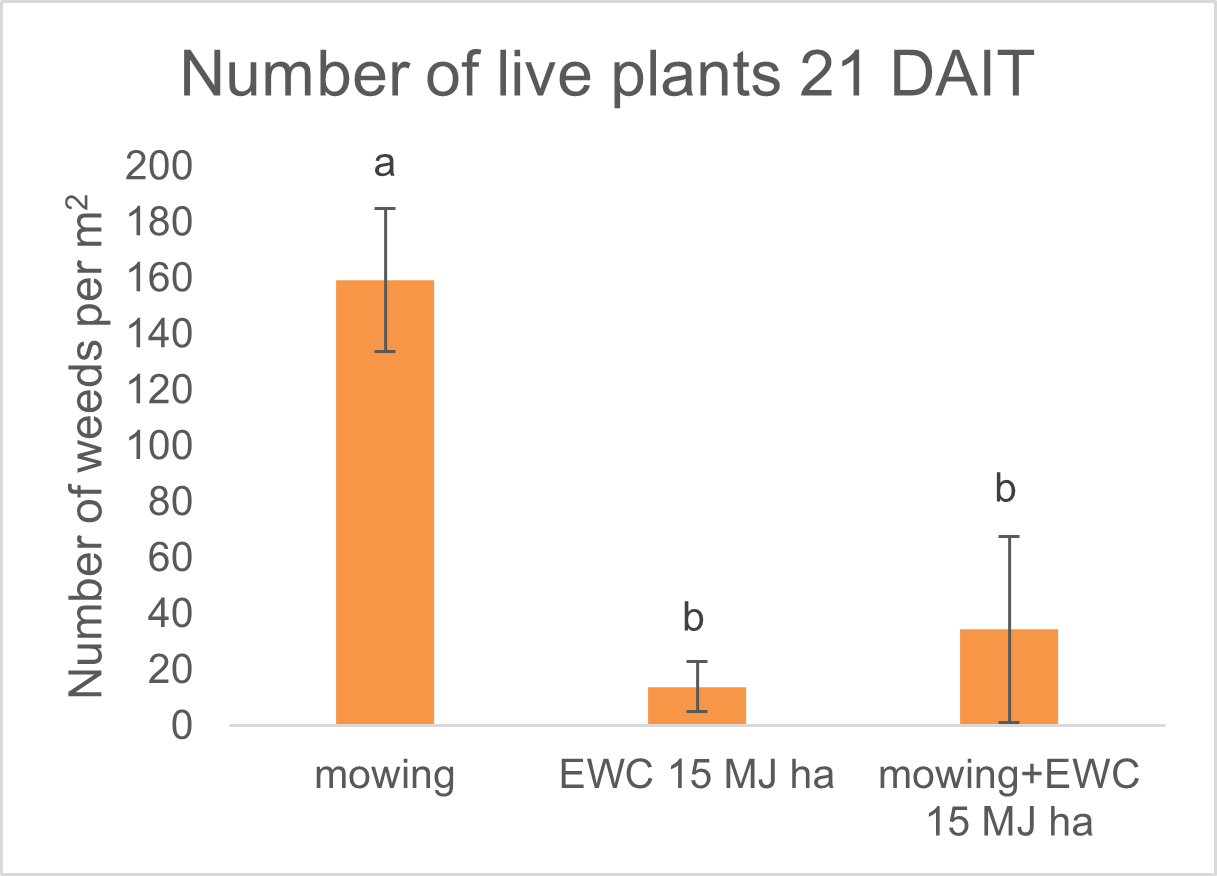
Figure 2. Results of cover crop termination with mowing, EWC, and mowing + EWC before soil preparation at 21 days after initial treatment (DAIT). Standard error is presented on error bars and means were subjected to Tukey’s HSD α=0.05.
The count of live plants includes all cover crop species and weeds present in the field. Other weeds present at the time of collection included ryegrass and filaree. EWC at 15 MJ ha-1 translates to 0.6 mph of tractor speed.
Figure 3. Close-up image of the cover crops one week after an EWC application (top) and mowing (bottom).
EWC controlled all cover species and weeds under the canopy.The treatment after mowing still left many oats to continue growing. In treatments where EWC followed, some of the dry biomass was prone to catch on fire.
In dense biomass areas, EWC had reduced control of vegetation under the cover crop canopy.
The mowing + EWC also showed good control; however, when applying the EWC after mowing there is dry plant biomass on the soil surface and there is greater chance of the dry biomass catching fire, especially if it is a windy day (Figure 3).
After the soil preparation and planting of beans, the tillage treatments proved to significantly improve bean establishment and growth compared to the no-tillage treatments (Figure 4). The beans struggled to establish in all the no-till treatments; however, the termination with EWC had killed all cover crop plants leaving greater dry residue on the surface and giving some advantage to the beans for establishment early on. Unlike the mowing + EWC which left the plots more like bare ground, and the mowing only treatment still left living grasses to continue competing with the beans. Different crops may perform better in a no-till system than snap beans in our environment and worth exploring.
Figure 4. Plots after the soil preparation treatments and 2 weeks after planting (WAP) of beans.
Tillage after cover crop termination with mowing.Tillage after cover crop termination with EWC only.Tillage after cover crop termination with mowing + EWC.
No-tillage after cover crop termination with mowing.No-tillage after cover crop termination with EWC only.No-tillage after cover crop termination with mowing + EWC.
Future research is needed to determine if EWC is capable of being a cover crop termination tool across different species, and energy levels (speeds), and its benefit for no-till farming practices. The timing of planting after the termination treatments may also be a critical aspect to improve the crop establishment and growth in no-till. However, our preliminary results are promising.
This project is funded by the Oregon State University Agricultural Research Foundation project number 25205A.
Cross- and multiple-resistance in Italian ryegrass to commonly used herbicides in seed production of Willamette Valley, Oregon
Contributed by Victor Ribeiro, Oregon State University
Herbicide resistance in weeds is a biological phenomenon in which plants evolve the ability to survive herbicide applications that were previously effective on the original, susceptible population. Herbicides are classified into groups based on their mode of action, and from an applied perspective, resistance can manifest as single, cross, or multiple resistance. Single resistance occurs when a plant is resistant to one herbicide. Cross-resistance refers to resistance to more than one herbicide from the same group but from different chemical families (e.g., resistance to imidazolinone [Beyond] and sulfonylurea [Osprey] herbicides, both in Group 2). Multiple resistance occurs when a plant is resistant to herbicides from more than one group (e.g., resistance to SelectMAX [Group 1] and Beyond [Group 2]).
Italian ryegrass (Lolium multiflorum Lam.) is a challenging weed to manage in seed production systems of the Willamette Valley, Oregon. The evolution of herbicide resistance in this species has further complicated its control. To date, resistance in Italian ryegrass in Oregon has been reported to at least seven herbicide modes of action: Group 1 (ACCase inhibitors), Group 2 (ALS inhibitors), Group 5 (PSII inhibitor), Group 9 (EPSPS inhibitor), Group 10 (GS inhibitor), Group 15 (VLCFA inhibitor), and Group 22 (PSI inhibitor). Traits such as obligate outcrossing and wind pollination make Italian ryegrass highly conducive to the evolution and spread of herbicide resistance.
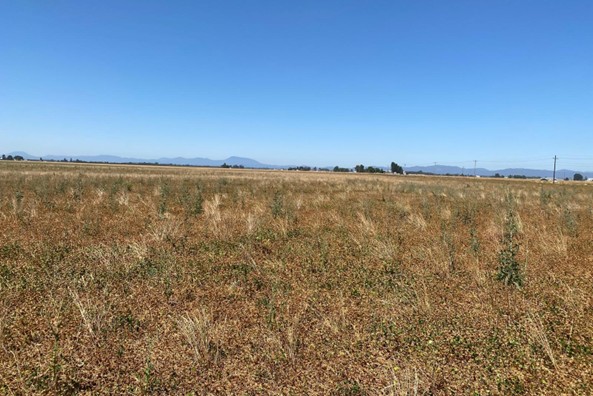
In the summer of 2024, we collected spikes from 20 individual Italian ryegrass plants (population OR13) in a white clover (Trifolium repens L.) field in the Willamette Valley, Oregon, where two applications of SelectMAX (clethodim) at 16 fl oz/A had failed to provide control (Figure 1). The field had been previously cropped with winter wheat (Triticum aestivum L.), where Group 2 herbicides had been used.
Figure 1. Italian ryegrass escapes following two applications of SelectMAX at 16 fl oz/A in a white clover field in the Willamette Valley, Oregon.
To determine whether OR13 was herbicide-resistant, we screened this population for resistance to SelectMAX and other herbicide modes of action commonly used in rotational crops in the region. A known herbicide-susceptible population (Gulf) was included in the resistance screenings for comparison.
Herbicide screenings experiments were conducted in a greenhouse at Oregon State University, Corvallis, OR. Ten representative herbicides, including eight postemergent and two preemergent, from five modes of action (Groups 1, 2, 3, 9, and 15) were tested based on their relevance to seed production cropping systems in western Oregon (Table 1). Each herbicide was applied at 0, 1, and 2 times (×) the labeled field rate. These products are not registered for greenhouse use, and most were applied at rates higher than those allowed for the representative crops listed in Table 1. All applications were conducted under controlled experimental conditions and are not intended as application recommendations. Always follow pesticide label directions for legal and appropriate use. Application rates for SelectMAX and Kerb SC were based on the recommended rates for white clover, while the rates for Assure II, Axial XL, Beyond, Osprey, PowerFlex HL, Zidua, and glyphosate were based on labeled rates for representative rotational crops grown in the region.
Table 1. Herbicides, active ingredients, timings, modes of action (MOA), and rates used in the screenings.
Herbicide
Trade name
Timing
MOA (Group)a
Chemical family
1× Rate (oz/A)b
2× Rate (oz/A)b
Clethodimc,e
SelectMAX
POST
ACCase (1)
cyclohexanedione
16
32
Quizalofopc
Assure II
POST
ACCase (1)
aryloxyphenoxy- propionate
12
24
Pinoxaden
Axial XL
POST
ACCase (1)
phenylpyrazoline
16.4
32.8
Imazamoxd,f
Beyond
POST
ALS (2)
imidazolinone
4
8
Mesosulfurond
Osprey
POST
ALS (2)
sulfonylurea
4.75
9.5
Pyroxsulamd
PowerFlex HL
POST
ALS (2)
triazolopyrimidine
2
4
Glyphosated,g
Rodeo
POST
EPSPS (9)
organophosphorus
48
96
Pronamide
Kerb SC
PRE
MTI (3)
benzamide
40
80
Pyroxasulfone
Zidua SC
PRE
VLCFA (15)
isoxazoline
3.25
6.5
aACCase, acetyl-coenzyme A carboxylase; ALS, acetolactate synthase; EPSPS; 5-enolpyruvylshikimate-3-phosphate; MTI, microtubule inhibitor; VLCFA, very-long-chain fatty acid. Assure II label rate was based on recommendation for peas (Pisum sativum). Axial XL, Beyond, Osprey, PowerFlex HL, and Zidua label rates were based on the recommendation for wheat (Triticum aestivum). Glyphosate label rate was based on recommendation for controlling most existing vegetation prior to renovating turfgrass areas or establishing turfgrass grown for seed or sod.
bRates: 1×, label rate; 2×, two times the label rate.
cCrop oil concentrate (1% v/v) was added to the spray solution.
dNonionic surfactant (0.25% v/v) + ammonium sulfate (2.5% v/v) was added to the spray solution.
eSelectMAX is labeled for use with nonionic surfactant at 0.25% v/v and 2.5 to 4 lb/A of ammonium sulfate for clover.
fBeyond is only labeled for Clearfield and Clearfield Plus wheat.
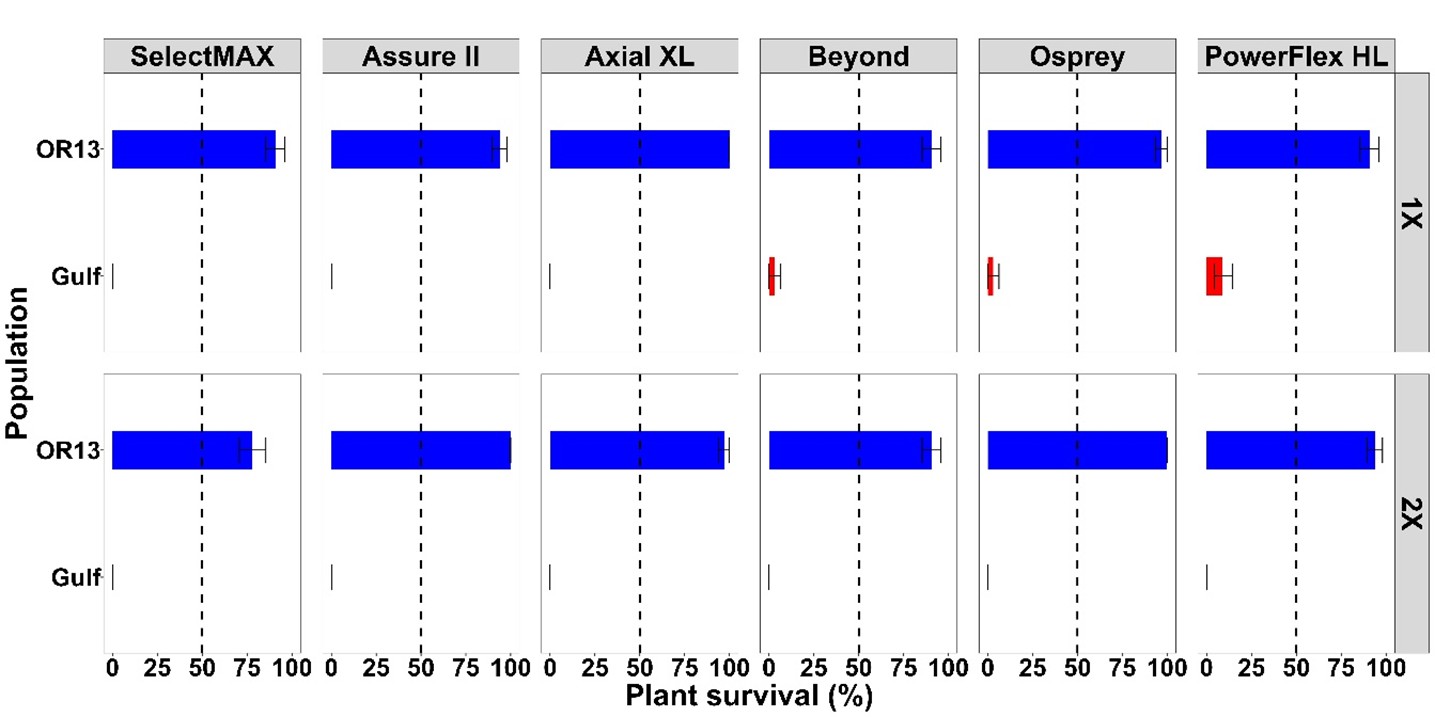
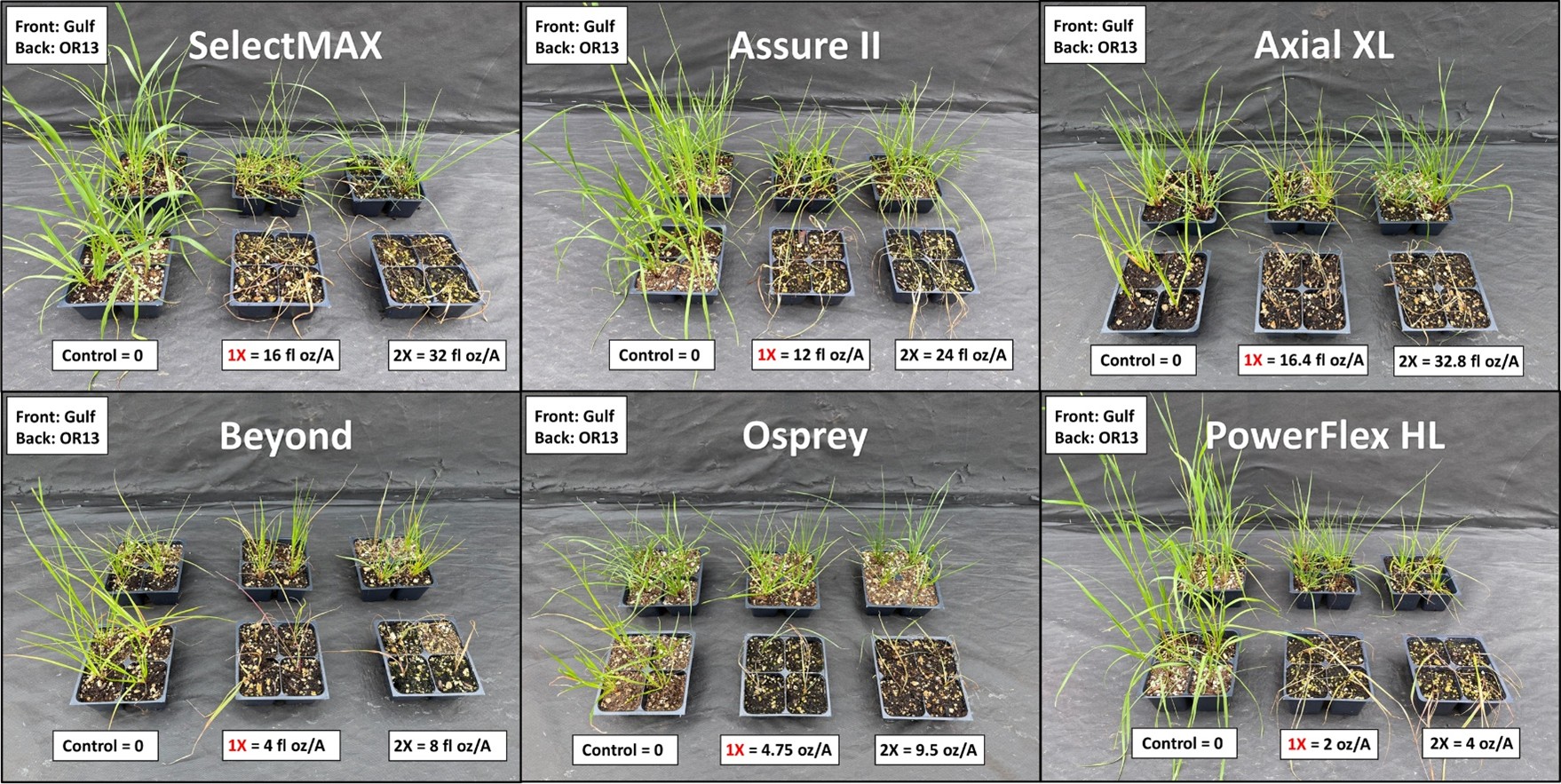
Herbicide screenings confirmed that population OR13 was resistant to the Group 1 herbicides SelectMAX, Assure II, and Axial XL, as well as the Group 2 herbicides Beyond, Osprey, and PowerFlex HL (Figure 2). Survival data showed that OR13 exhibited at least 91% survival following treatment with the 1× rate of these herbicides. At the 2× rate, survival declined slightly to a minimum of 78% but remained above 50% across all treatments. These results illustrate a clear case of cross-resistance within Groups 1 and 2, and multiple resistance across both herbicide groups (Figure 3).
Figure 2. Italian ryegrass plant survival in response to postemergence herbicides applied at the labeled field rate (1×) and two times the labeled rate (2×). The black dashed line indicates 50% survival. Gulf is the susceptible population.Figure 3. Cross- and multiple-resistance to Group 1 (SelectMAX, Assure II, Axial XL) and Group 2 (Beyond, Osprey, PowerFlex HL) herbicides in the Italian ryegrass population OR13. Gulf is the susceptible population.
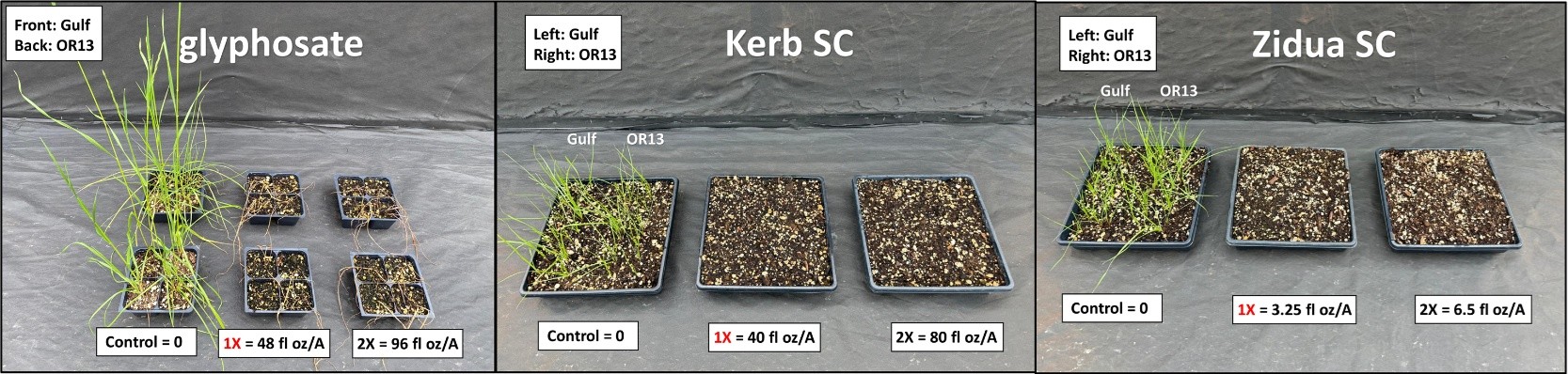
Conversely, population OR13 was susceptible to glyphosate and the preemergence herbicides Kerb SC and Zidua SC, with 0% survival at both the 1× and 2× rates (Figure 4).
Figure 4. Susceptibility of Italian ryegrass population OR13 to glyphosate (Group 9), Kerb SC (Group 3), and Zidua SC (Group 15). Gulf is the susceptible population.
Resistance to SelectMAX limits the use of one of the few effective options for selective Italian ryegrass control in white clover. Furthermore, the occurrence of cross- and multiple-resistance to Group 1 and Group 2 herbicides complicates the management of this species in key rotational crops grown in the region. On a positive note, Kerb SC remains a viable option for selective preemergence control of Italian ryegrass control in white clover. Zidua SC is also an effective tool for managing Italian ryegrass in rotational crops such as winter wheat and grass seed crops. Similarly, glyphosate continues to play an important role in site preparation and renovation areas within seed production systems. However, resistance to glyphosate in Italian ryegrass population has been increasing, underscoring the need for careful stewardship.
Effective herbicide resistance management relies on a foundation of diverse control strategies. Rotating herbicide modes of action and using tank mixes with multiple effective sites of action can help delay the evolution of resistance. Equally important are non-chemical practices such as crop rotation, cultivation, cover cropping, and mowing, which reduce weed pressure and disrupt the weed life cycle. Consistent scouting is essential for detecting early escapes before they contribute to the seedbank.
Is it possible to control downy brome with cultural management?
Contributed by Judit Barroso, Oregon State University Columbia Basin Agricultural Research Center
As you may know, downy brome (Bromus tectorum L.), also known as cheatgrass, is a difficult weed species to control in the dryland wheat production region of the inland Pacific Northwest. It is highly competitive and if left uncontrolled can cause winter wheat yield losses of up to 92%. The management of this species has become more challenging in recent years due to the widespread herbicide-resistant populations in the region.
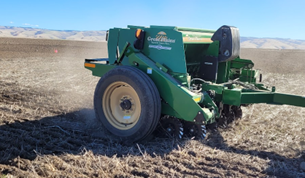
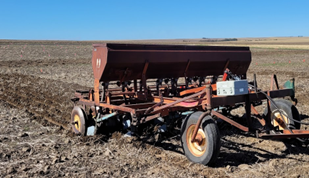
To help with downy brome management, in 2022, we initiated an experiment to study how cultural practices at seeding time might alleviate the problem. The particular objectives of this research were to determine the effect of the seeder type, winter wheat density [regular (90 lbs/ac) vs. high (135 lbs/ac)], winter wheat variety [upright (Bobtail) vs. more prostrate plant architecture (Dagger)], and crop (winter wheat vs. winter peas) on downy brome infestation. We also included soil disturbance caused by the seeders without planting seed (hereafter referred to as false seeding).
The study was a randomized complete block design with three replications established in 2022-2023, 2023-2024, and 2024-2025 at the Columbia Basin Agricultural Research Center in Adams, Oregon. The two drills we used were a conventional seeder with chisel-type openers and 14 inches of inter-row space and a no-till drill with disc openers and 7.5 inches of inter-row space (Figure 1). Plot size was the width of the drill (7.5 or 11.5 ft) by 60 ft long. Downy brome infestation was evaluated three times during each growing season by counting seedlings, estimating percentage cover, and in 2023-2024 and 2024-2025 by taking plant biomass as well. We used analysis of variance to compare the means among treatments and find differences.
Figure 1a. Photo of a drill used in this research in 2022, 2023, and 2024; No-till drill (Great Plains, GP).
Figure 1b. Photo of a drill used in this research in 2022, 2023, and 2024; conventional drill (International Harvester, IH).
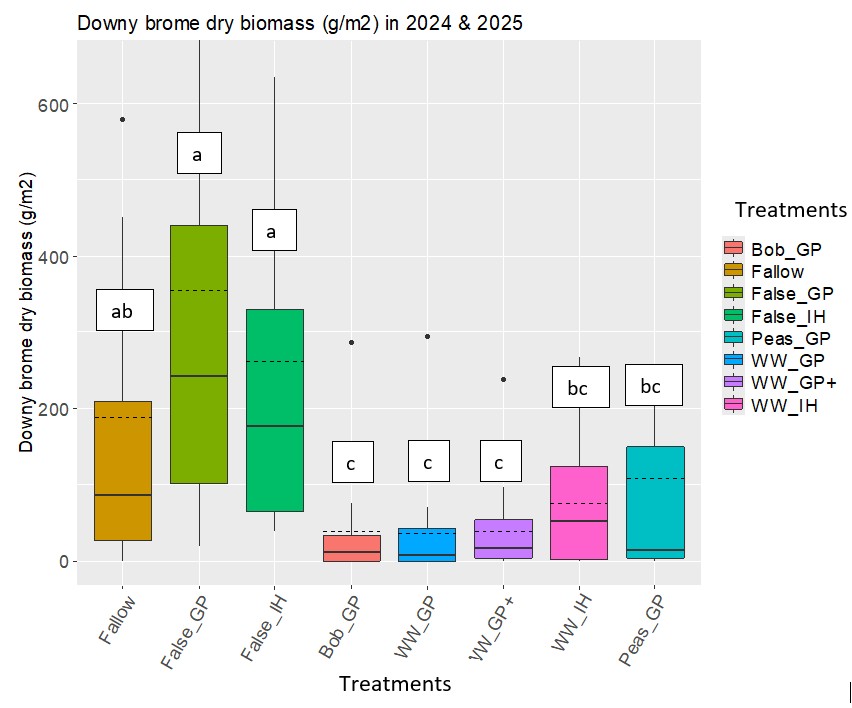
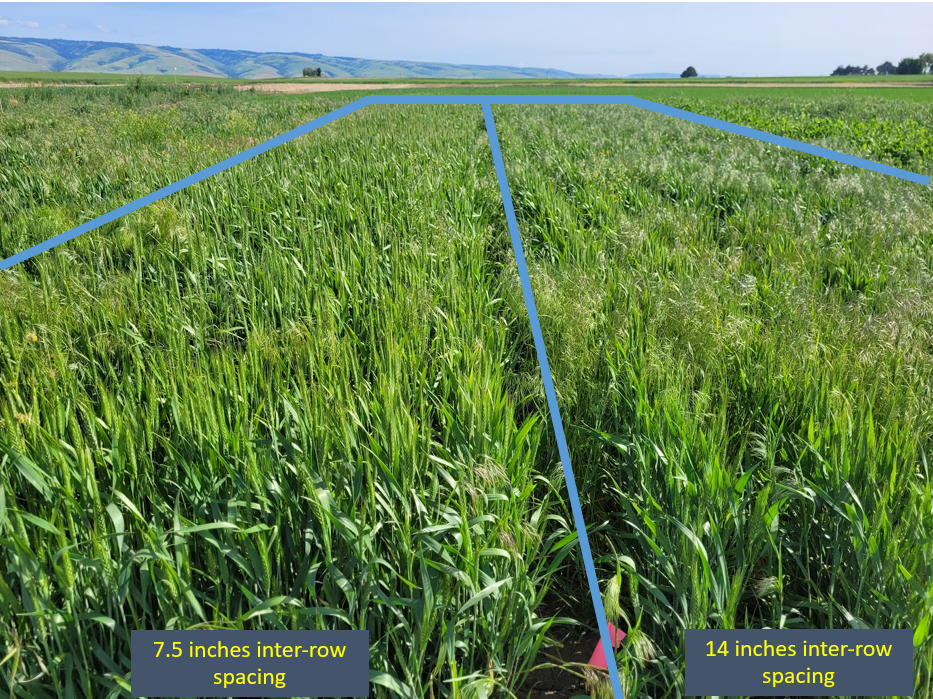
Surprisingly, results indicated no significant differences regarding downy brome emergence in any of the treatments. In relation to downy brome cover evaluated in spring (March-April), the presence of a crop (wheat or peas) reduced downy brome cover, but only the wheat seeded at narrow inter-row spacing produced a statistically significant reduction. Downy brome biomass, collected at peak biomass in May, showed results similar to downy brome cover, with significant reductions compared to fallow when the wheat was seeded at 7.5 inches inter-row spacing (Figures 2 & 3). In relation to peas, they seemed to be slightly less competitive than wheat against downy brome. While they were seeded at 7.5 inches of inter-row space, the downy brome infestation was similar to the one in wheat when the wheat was seeded at 14 inches. The peas or the wheat seeded at 14 inches seemed to suppress downy brome biomass slightly, but the results were not significantly different from the fallow treatments.
Figure 2. Downy brome dry biomass (g/m2) per treatment in the experiment in 2024 and 2025. The treatments were Fallow, False seeding with a no-till drill (False_GP), False seeding with a conventional drill (False_IH), Winter wheat var. Bobtail seeded with a no-till drill (Bob_GP), Winter wheat var. Dagger seeded with a no-till drill (WW_GP), Winter wheat var. Dagger seeded with a no-till drill at high rate (WW_GP+), Winter wheat var. Dagger seeded with a conventional drill (WW_IH), and winter peas seeded with a no-till drill (Peas_GP). The black solid line inside of the colored boxes indicates the median of the data and the dashed line the mean. Different letters on top of the boxes indicate significant differences according to the Tukey test (p-value < 0.05). Data presented in Figure 2 are described in the article.
An important and unexpected result was that differences in winter wheat variety or wheat density did not affect downy brome infestations in any of the studied years. Finally, yet importantly, is that the false seeding practice did not significantly increase downy brome density. However, the average number of downy brome plants in the false seeding treatments tended to be higher than in fallow with undisturbed soil, particularly in the fall of 2023 when we used the no-till drill and there was moisture in the soil.
Based on the findings from this study, the use of narrow inter-row spacing and a well-established competitive crop will help to suppress downy brome in the wheat cropping systems of the region.
Figure 3. Plots of Dagger winter wheat seeded at 7.5 inches with a no-till drill (left) and Dagger winter wheat seeded at 14 inches with a conventional drill (right) at the Columbia Basin Agricultural Research Center, Adams, OR in October 2024. Photo taken in May 2025.
The researcher thanks the Oregon Wheat Commission for funding this study.
Smooth Scouringrush: A Formidable Foe
Contributed by Drew Lyon, Washington State University
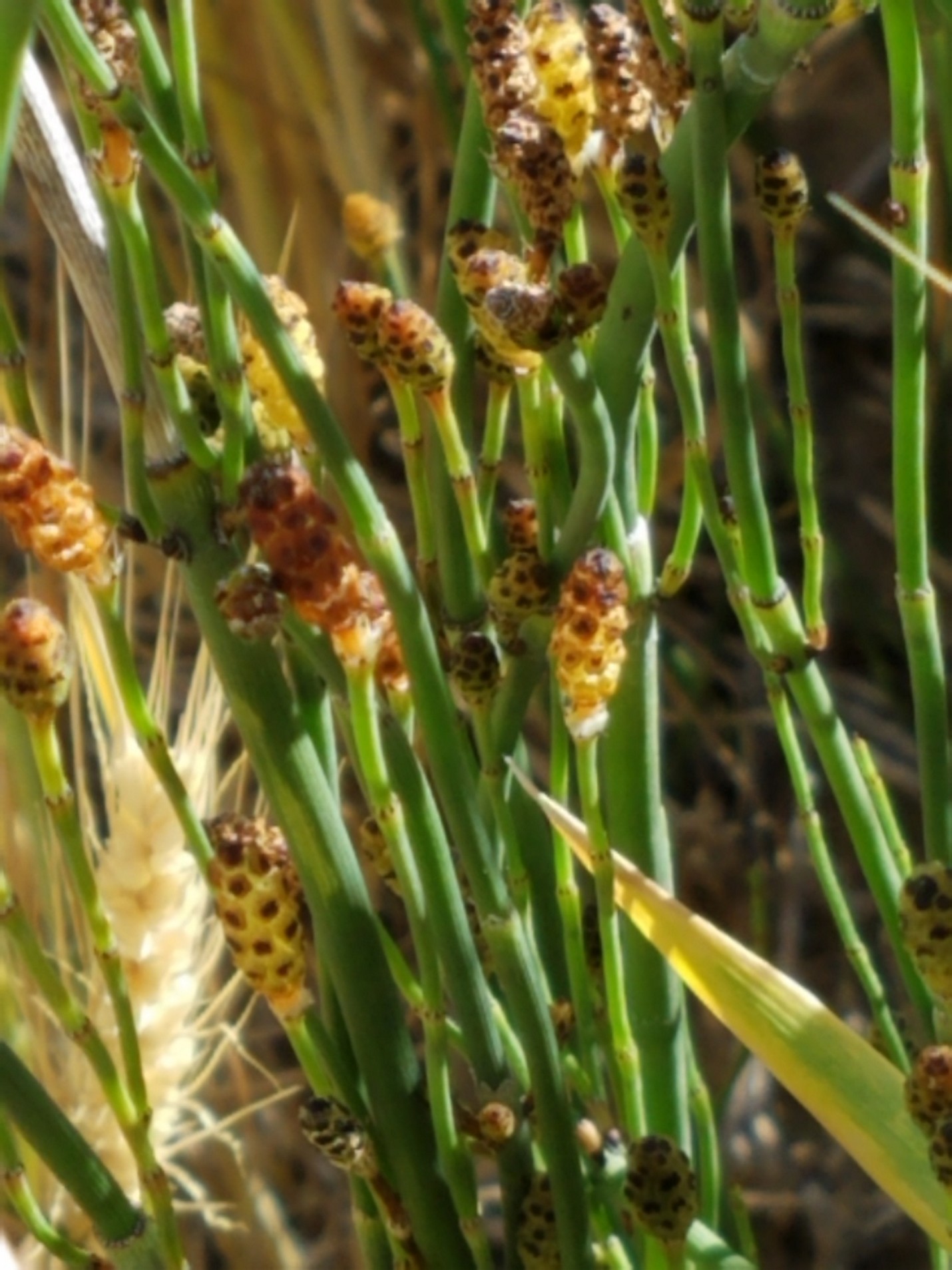
Smooth scouringrush (Equisetum laevigatum) is a member of an ancient, spore-bearing vascular plant group that arose about 400 million years ago (Figure 1). It is a perennial plant that spreads primarily by rhizomes. The underground biomass of smooth scouringrush far outweighs its aboveground biomass. The extensive rhizome system can store plant sugars (carbohydrates) that sustain a well-established colony for multiple years, which can make control efforts challenging.
Figure 1. Smooth scouringrush stems with the spore-bearing cone known as a strobilus on the top of the stems. Photo provided by Mark Thorne.
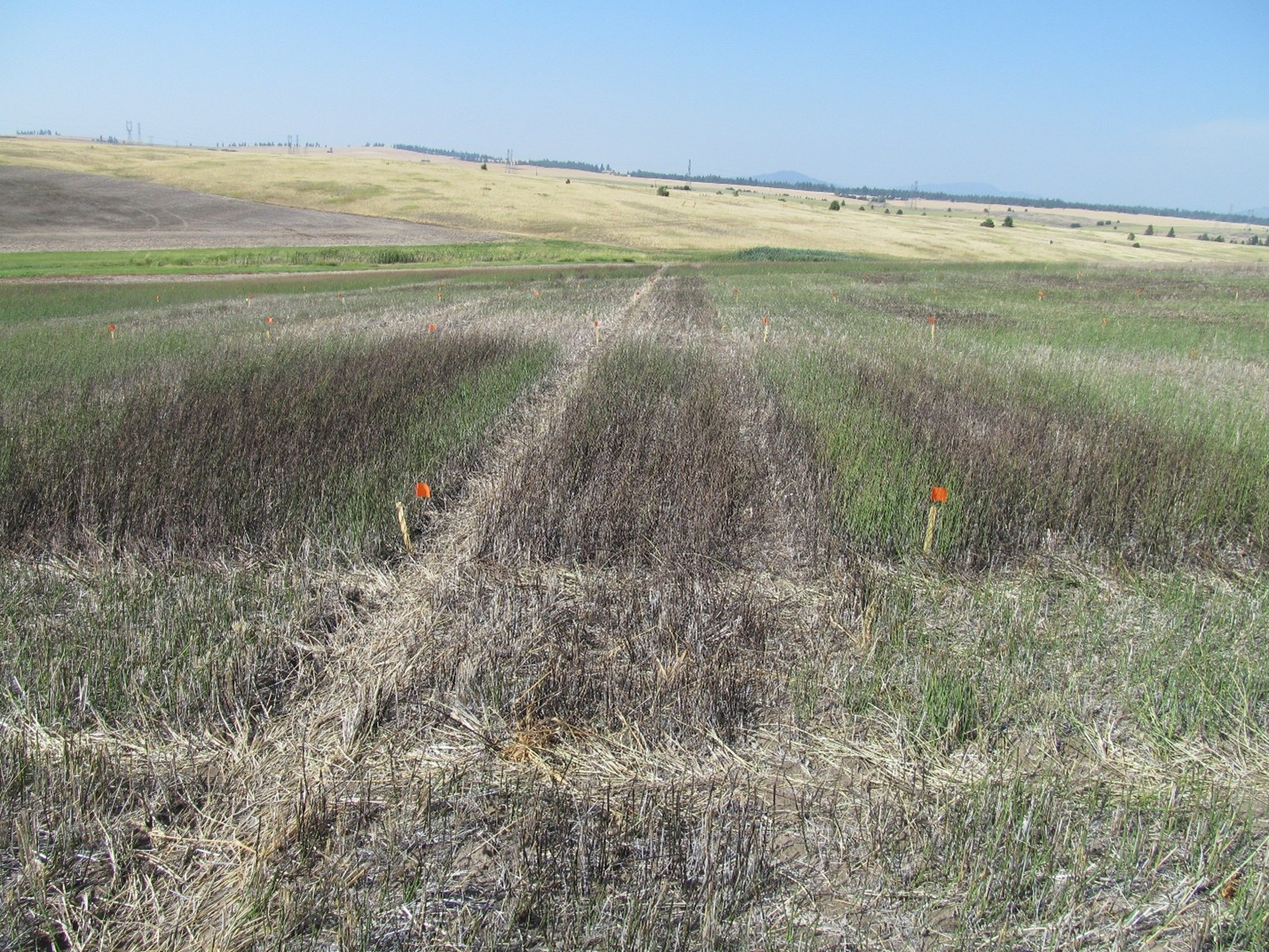
Shortly after arriving at Washington State University in the fall of 2012, I was introduced to smooth scouringrush by Tom Swainz, a Lincoln County farmer, who took me for a drive north of Reardan, WA to show me hillsides covered in large patches of smooth scouringrush. Tom told me that these patches started to appear and spread within a few years of transitioning to no-till.
Earlier work conducted at the University of Idaho identified chlorsulfuron, the active ingredient in Glean XP (Not labeled for use in fallow) and Finesse Cereal & Fallow herbicides, as effective for the control of smooth scouringrush, particularly at above-labeled rates. However, chlorsulfuron has a long soil residual time that limits rotation to many broadleaf crops. Growers were looking for an effective alternative to chlorsulfuron for smooth scouringrush management in no-till systems.
Figure 2. Field study near Reardan, WA investigating various herbicide treatments for the control of smooth scouringrush. Photo provided by Drew Lyon.
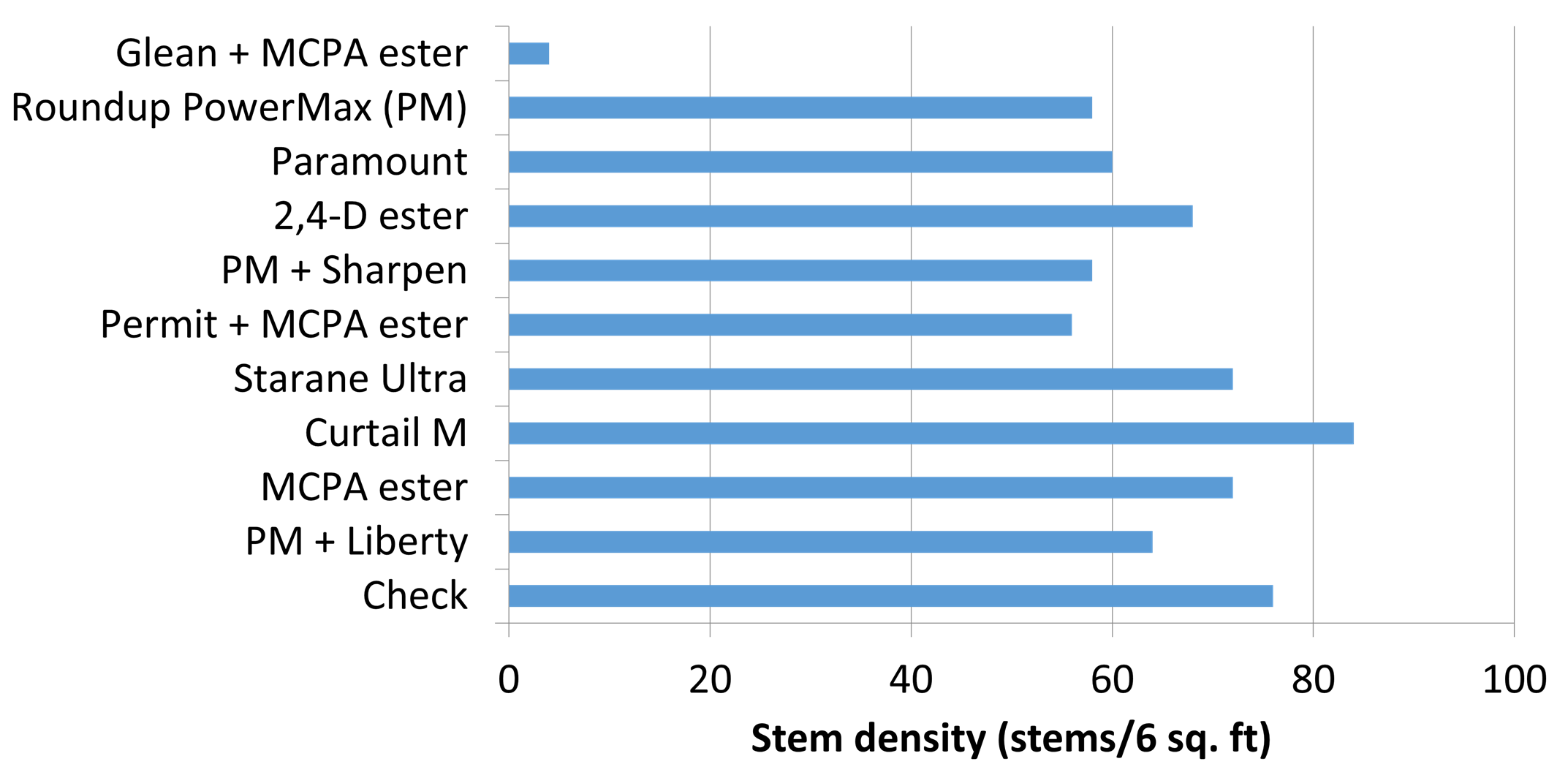
In a study conducted near Reardan, WA (Figure 2), and The Dalles, OR, Dr. Andrew Hulting, formerly with Oregon State University, and I looked at several herbicide treatments applied in summer fallow for smooth scouringrush control. Only Glean + MCPA reduced stem density one year following application (Figure 3). This was not the result we were hoping for. One of the treatments we looked at, glyphosate applied at 32 oz/acre, was not effective. We wondered if the rate was too low. In a subsequent series of studies, we increased the glyphosate rate to 96 oz/acre. At this rate, we did see stem reduction one year after application, but the results were inconsistent between years and locations.
Figure 3. Smooth scouringrush stem densities one year after herbicide applications made in summer fallow near Reardan, WA. Note: Starane Ultra is not labeled for use in fallow and the Paramount registration has been cancelled. Also, some of the product names in the figure have changed since this study was conducted. Roundup PowerMax is currently registered in Washington as Roundup PowerMAX 3 Herbicide, Permit is currently registered as Permit Plus Herbicide, and Liberty is currently registered as Liberty 280 SL Herbicide.
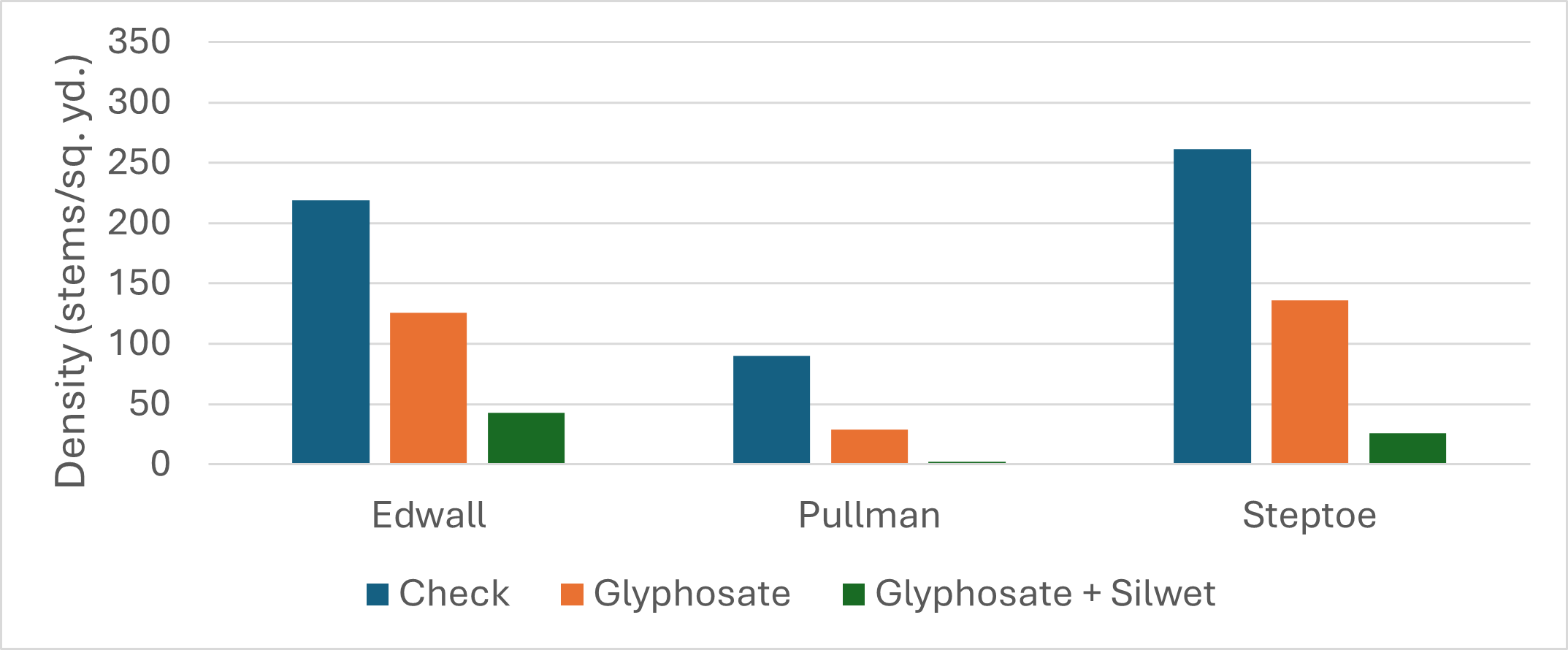
Smooth scouringrush stems lack true leaves (they have vestigial leaves at each node that are very small and non-photosynthetic) and the stem has a high silica content that makes penetration of herbicides difficult. We wondered if we could improve control with glyphosate by adding various adjuvants. What we discovered was that the addition of an organosilicone surfactant, for example Silwet L-77, improved efficacy and consistency of smooth scouringrush control with glyphosate (Figure 4).
Figure 4. Smooth scouringrush stem densities averaged over four application timings (May, June, July, and August) following three treatments at three eastern Washington locations.
Organosilicone surfactants are wetting agents, that is, they greatly reduce the surface tension of water, allowing the water droplet to spread widely across plant surfaces. Based on previous research with Silwet L-77, we hypothesized that adding Silwet L-77 to the spray solution allows spray droplets containing glyphosate to flood into open stomata on the stem surface and into the stem where it can then be translocated within the plant to the rhizomes and roots, providing effective control that can be detected one or more years after application.
Stomata, pores in the aboveground plant epidermis that allow for gaseous exchange between internal tissues and the atmosphere, are typically open during the day when plants are taking in CO2 and emitting O2 during photosynthesis. They are typically closed at night, when photosynthesis is not occurring or when the plants are experiencing water stress. When we tested this hypothesis by applying glyphosate plus an organosilicone surfactant during the day or at night, we got mixed results. At two of the three locations, our hypothesis was supported by the results. Stem densities one year after application were lower when glyphosate treatments were applied during the day, when stomates were open, than when treatments were applied at night. However, at one location the opposite was observed. We scratched our heads over this observation but settled on some possible explanations. The treatments at this location were applied on a particularly hot, dry day in August. As mentioned above, organosilicone surfactants spread spray droplets on plant surfaces. Thinned droplets evaporate quickly under hot, dry conditions, resulting in reduced stomatal flooding. At the same time, plants often close their stomata under hot, dry conditions, or when drought stressed, to conserve water that escapes through open stomata. This too reduces stomatal flooding. We do not know the extent to which either of these factors played a role in the reduced efficacy of the daytime treatment at this location, but both are reasonable explanations, and both may have contributed to the observation.
We now recommend that applicators apply glyphosate with an organosilicone surfactant to smooth scouringrush during the day except when daytime temperatures exceed 85 degrees F and/or relative humidity is below 20%, or after mid-July when plants are more likely to be drought-stressed.
In a recently completed 3-year field study, we noticed that herbicide treatments applied during summer fallow that included Finesse Cereal & Fallow and/or glyphosate, were more effective and control lasted longer at the field site located in a low-lying flat that was often flooded in the spring and likely benefited from subsurface irrigation from the surrounding hills, compared to two other field sites that were on sloping upland positions. These observations support the hypothesis that actively growing plants that are not drought stressed at the time of herbicide application are more easily controlled with herbicides.
Smooth scouringrush has survived for millions of years, and we have much yet to learn about this ancient plant. Our research over the past decade has gained some new insights but many questions remain. Please consider sharing your thoughts on managing smooth scouringrush in your farming operation. What has worked for you?
Annual bluegrass herbicide resistance confirmed in Oregon hazelnut orchards
Contributed by Joshua Miranda and Marcelo Moretti, Oregon State University
A widespread evolution of herbicide resistance
Annual bluegrass (Poa annua L.) is a winter annual species that thrives in cool, disturbed environments, including orchard floors, turfgrass, and rights-of-way. It is one of the most adaptable and persistent grass weeds in temperate agroecosystems. In Oregon hazelnut orchards, annual bluegrass has traditionally been controlled using a limited set of preemergence and postemergence herbicides, most commonly glyphosate, clethodim, paraquat, and pendimethalin. However, in recent years, hazelnut growers and crop consultants in the Willamette Valley have reported declining herbicide performance despite the use of full recommended label rates and proper application timings. These observations raised concerns about potential herbicide resistance.
To investigate this issue, we collected annual bluegrass plants from hazelnut orchards where herbicides had failed (Fig. 1). A total of ten suspected resistant accessions were collected: one for glyphosate (Gly.R), four for clethodim (CLR.OAK, CLR.ST, CLR.16, CLR.AA), three for paraquat (PQR.10, PQR.11, PQR.12), and two for pendimethalin (PER.14, PER.20). Two susceptible accessions, S-ORG and S-LB, were included for comparison. S-ORG was collected from an organically managed orchard and S-LB from a turfgrass area. Each accession was screened for the herbicide it was suspected of resistance, using both seed-based assays and whole-plant dose-response bioassays under controlled conditions. Our results confirmed that all collected accessions were resistant to the herbicides in question. This is the first time resistance to clethodim has been confirmed in annual bluegrass anywhere in the world. It’s also the first case of paraquat resistance in this species in the U.S. These results highlight the rapid evolution of herbicide resistance of annual bluegrass and the urgent need to diversify weed management strategies.
Figure 1. Annual bluegrass escapes following herbicide application in an Oregon hazelnut orchard (left). Location and resistance profile of populations tested (right). Symbols indicate confirmed resistance to clethodim, glyphosate, paraquat, and pendimethalin.
A seed-based assay for early detection
A major outcome of this research was the development and validation of a seed-based test that helps detect herbicide resistance early (Fig. 2). This method is simple, affordable, and scalable, offering a practical diagnostic tool for early detection of resistance. Seeds collected from suspected resistant plants are placed on moist filter paper inside sealed petri dishes. Four milliliters of herbicide solution are added, and the dishes are kept in a warm, illuminated area for 14 days. If the seeds germinate and grow despite the herbicide treatment, it may indicate resistance. Comparing results to a nontreated control and to a known susceptible seed sample helps confirm the diagnosis.
The test does not require specialized equipment and provides rapid and reliable results that are closely aligned with whole-plant bioassay outcomes. This test could prove invaluable for the early detection of resistance and allow growers to adapt their management strategies before resistant biotypes become dominant. The test offers a cost-effective alternative to traditional greenhouse trials and can complement molecular testing where available. It also supports high-throughput screening and has the potential for on-farm implementation. Our study demonstrated that seed-based results were consistent with whole-plant dose-response bioassays, confirming the method’s accuracy. Similar assays have been described for other weed species (Perez et al. 2021; Cutulle et al. 2009), and our findings show it can be successfully adapted for annual bluegrass.
The following concentrations were identified as discriminating concentrations, levels at which only resistant seedlings survived:
Clethodim: 1 µM
Pendimethalin: 12 µM
Paraquat: 2 µM
Glyphosate: 500 µM
These concentrations can serve as diagnostic markers for distinguishing resistant and susceptible phenotypes in field-collected populations, offering a practical framework for resistance monitoring.
Figure 2. Example of clethodim resistance detection using seed-based (A) and whole-plant dose-response tests (B).
What this means for Oregon growers
The emergence of herbicide-resistant annual bluegrass requires a shift from reactive to proactive strategies. Reliance on chemical control alone is unsustainable, particularly in systems with limited herbicide diversity. Effective resistance management must include rotation of herbicide modes of action, tank mixing with multiple effective sites of action, and integration of non-chemical strategies such as cultivation, cover cropping, mulching, and mowing. Regular scouting is essential to identify early escapes and prevent seedbank replenishment. The adoption of seed-based diagnostic tools can help growers make timely decisions, avoid ineffective applications, and preserve herbicide efficacy.
Takeaway
The confirmation of clethodim, pendimethalin, glyphosate, and paraquat resistance in annual bluegrass from Oregon hazelnut orchards reflects the adaptive potential of this species under herbicide selection pressure. This work establishes a baseline for herbicide resistance in annual bluegrass within Oregon hazelnuts. With integrated management, early detection tools, and improved stewardship, the industry can take meaningful steps to slow the spread of resistance and maintain effective weed control in the years ahead.
For assistance with herbicide resistance diagnostics or to learn more about integrated weed management strategies for hazelnut production, growers are encouraged to contact their local OSU Extension office or the Department of Horticulture at Oregon State University.
Acknowledgment
This work was supported by the Oregon Hazelnut Commission and Ferrero Hazelnut Company. We thank the growers who granted access to their orchards.
References
Cutulle MA, McElroy JS, Millwood RW, Sorochan JC, Stewart CN (2009) Selection of bioassay method influences detection of annual bluegrass resistance to mitotic‐inhibiting herbicides. Crop Sci 49:1088–1095
Perez MB, Beckie HJ, Cawthray GR, Goggin DE, Busi R (2021) Rapid On-Farm Testing of Resistance in Lolium rigidum to Key Pre- and Post-Emergence Herbicides. Plants 10:1879
Enhancing Weed Management with Spring Annual Forages
Contributed by Doug Finkelnburg, University of Idaho
Last April, Dr. Drew Lyon published a post here titled, “Creative Weed Management Approaches Using Forage Crops” outlining how forages can be useful tools in annual grassy weed management. He pointed out how spring planted forages can aid weed control when forages are swathed before annual grassy weeds set viable seed–a neat weed seedbank depletion trick. He also pointed out that forages tend to deplete less water than other spring crops harvested for seed, potentially leaving a more favorable fall seeding environment. I absolutely agree with Drew’s comments on forages as a potential weed control tool for annual grassy weeds. In fact, we did some research on the productivity of different annual forages in northern Idaho at the behest of the Idaho County Cattlemen’s Association and I think it’s worth revisiting the results in hopes anyone looking to utilize this production practice may have some productivity and performance expectations.
The information represented here is from on-farm trials in Idaho County (18” avg ppt) and Lewis County (21” avg ppt) in northern Idaho, 2018-2020. Planting occurred when conditions for spring cereal grains were optimal, typically early to late April. Using soil tests, we targeted 90 lbs of plant available nitrogen and supplemented P and S when deficient. The goal of this study was not to evaluate weed control but rather to identify an alternative forage to timothy hay, the most common source of hayed forage in this region. Swathing occurred at heading/anthesis (with different variety maturation dates and limited resources we had to shoot for an average timing to cut the trial).
We learned that we could produce a respectable volume of forage (2.4-3.2 dry tons per acre) of higher forage value than timothy hay. Forage tests of timothy hay in this area typically have 6-8% protein, 44%-48% total digestible nutrients (TDN) and a relative feed value (RFV) in the mid to upper 80’s, considered a poor-quality grade. The barley and oat varieties in our trial averaged 9.2% protein, 57% TDN and had a RFV of 95.
Spring annual forage results for Idaho and Lewis Counties, ID.
Entry
Forage Type
Yield
Dry Ton/Acre
CP
%
TDN**
%
RFV***
Otana
Oats
3.17 a****
9.1 abc
55.9 de
90 cd
Proleaf 234
Oats
3.04 a
9.0 bc
55.0 e
87 d
Everleaf 114
Oats
2.85 ab
9.5 ab
57.6 abc
97 b
Proleaf 234/Flex
Oats/Pea
2.84 ab
9.8 a
57.7 abc
86 d
Everleaf 126
Oats
2.82 ab
9.1 bc
56.6 cd
94 bc
Stockford
Barley
2.53 bc
8.8 c
57.1 bc
106 a
NZA 4.14
Oats
2.49 bc
9.3 abc
58.1 ab
98 b
Stockford/Flex
Barley/Pea
2.40 c
9.1 bc
58.4 a
105 a
Average
N/A
2.77
9.2
57.1
95
*Trials ran between 2018 and 2020 (April and May plantings) at two locations and during five site-years, as conditions allowed. Entries were replicated at least three times per trial. Samples were run at Dairyland Labs using NIR and Wet Chemistry analysis.
**Total Digestible Nutrients
***Relative Feed Value
****Within-column means, followed by the same letters, are not different, according to a least significant difference test.
While this wasn’t a weeds focused study, we did make some observations I think are very relevant to successfully using this management tool. First, as with almost any situation, good pre-plant weed control is essential for later crop success. Second, herbicide options are more limited for oat and barley forage crops than other cereals. We decided to use 2,4-D amine in the cereals only treatments applied prior to row closure. This was mostly effective for broadleaf weed control. These cool-season annuals grew rapidly and were very competitive after the rows closed.
However, not included in these data are the two varieties of Proso and German Millet we trialed. We ignorantly planted these warm season annuals with the rest of the trial and suffered predictable results. When we got into the field early enough to optimize the cool season forage species production, we had poor results with the millets. They just sat there until the soil warmed up and those plots were the weediest by far. When conditions delayed our planting into late April or early May, the millet’s performance improved in terms of speed of emergence, completeness of emergence, speed to row closure and yield.
Ultimately, we decided the millet data was too variable to include in the publication, but we can still learn an important lesson. Waiting for optimal conditions to plant warm-season forage species allows for additional weed emergence and control opportunities as well as the weed control provided from swathing when compared with a spring grain, oilseed or legume crop.
In summary, I echo Dr. Lyon’s view that forages can be valuable tools for weed management and crop diversification. Additionally, they can provide increased utility for grazers in need of higher quality forage than common alternatives.
The Pacific Northwest Weed Handbook: A Staple Resource of the Region
Contributed by Aaron Becerra-Alvarez, Department of Horticulture, Oregon State University
The Pacific Northwest Weed Handbook has been a staple resource for weed management practitioners in the states of Oregon, Idaho, and Washington. The handbook is designed as a quick and ready reference for weed control practices and herbicides used in various cropping systems or sites in the Pacific Northwest (PNW). The handbook is useful to Extension agents, company field representatives, commercial spray applicators and consultants, herbicide dealers, teachers, students, and producers.
The history of the handbook
The PNW Handbooks were in their origins a compilation of research reports, newsletters, and briefs in the 1940s (Pscheidt 2023). An Oregon State College extension bulletin on the first widely used herbicide, 2,4-D, was available in 1948, presenting the new technology and its uses while acknowledging the knowledge gaps of the herbicide (Figure 1; Freed and Warren 1948). By 1954, the first “handbook” can be found with the title “Chemical Weed Control Recommendations.” The publication provided an overview of the available herbicide products, which were few, among a variety of crops, aquatic areas, and natural areas (Figure 2; Freed et al. 1954). In the opening paragraph, the authors present the foundational idea for the need of such extension publication: “This bulletin is an attempt to bring together some generalized recommendations on weed control on the basis of present knowledge. The bulletin will be revised periodically to bring the recommendations up to date in light of new discoveries.”
Figure 1. The cover page of an Oregon State College extension bulletin from 1948 providing information on the back then new technology of 2,4-D.
Figure 2. The cover page of the first weed handbook from Oregon State College, now Oregon State University from 1954.
The weed handbook was called the “Oregon Weed Control Handbook” by the early 1960s and revised annually (Figure 3). It was until 1985, that the handbook changed its name to the “PNW Weed Control Handbook” and encompassed the three states of the region: Oregon, Idaho, and Washington. A group of editors from each corresponding land-grant university from each state were the leads in carrying out the annual revisions; however, the list of contributors is long including many regional experts from each cropping system and natural areas. If you were a weed science researcher in the PNW at some point in your career, you most likely were a contributor to the handbook at some point.
The handbooks grew in page thickness with more and more pages added, as more crops and products were added (Figure 4). By 2010, the handbooks were printed as non-bound 3-hole punched format to then be placed in a binder by the reader. At that moment, OSU Extension Communications began the development of the website for the three PNW Handbooks. The website now houses all three handbooks: the Plant Disease Management Handbook, the Insect Management Handbook, and the Weed Management Handbook.
Figure 3. The Oregon Weed Control handbook from 1962.
Figure 4. The PNW Weed handbook throughout the years in print format. Today the handbook is only available online from the website https://pnwhandbooks.org/weed. Individual chapters are available for download in pdf format.
Present and future of the handbook
The handbook is now entirely available online free of charge. Individual chapters can be downloaded and printed for your personal reference. Each chapter will have the latest revision date. Given the costs and size of the handbook, it will most likely remain online only, and further efforts to improve the handbook will be focused on the online version. Not all chapters were revised in this past revision, but we aim to have all chapters updated soon and consistently reviewed.
In the past year, as a new extension specialist and new editor of the handbook, I have been collecting input from Oregon stakeholders regarding the Weed Handbook in my various presentations. While the survey results are not extensive yet (n=54), we do find up to 60% of participants find the handbook moderately useful to extremely useful, and about 45% use the handbook every so often in their job. However, it is apparent that practitioners with less than 5 years of experience find greater value in the resource and those with over 15 years of experience find lesser value (data not shown). This presents the handbook’s impact for early-career professionals is crucial as they begin to develop their wealth of knowledge.
I am extending the survey to other practitioners and users in the PNW and would like to hear your input. Please contribute to the survey and provide your experience with the handbook. Your feedback will help us understand the impact of the weed handbook and develop current and future needs the handbook can help address. If you feel there is a need not covered or discrepancies in the handbook, feel free to contact me directly at a.becerraalvarez@oregonstate.edu.
References
Becerra-Alvarez, A., (Editor) (2025). Pacific Northwest Weed Management Handbook [online]. Oregon State University Extension Communications. Accessed April 3, 2025, from https://pnwhandbooks.org/weed
Lyon, D. (2025). Cereal and grain crops: Winter wheat. (Becerra-Alvarez, A., Ed.) Pacific Northwest Weed Management Handbook [online]. Oregon State University Extension Communications. Accessed April 3, 2025, from https://pnwhandbooks.org/weed/agronomic/cereal-grain/spring-wheat
Freed, V.H., Warren, R. (1948). 2, 4-D for Weed Control in Oregon. Oregon State College Extension Bulletin 687. Accessed March 19, 2025, from the State Library of Oregon Digital Collections, https://digitalcollections.library.oregon.gov/nodes/view/285839
Freed, V.H., Furtick, W.R., Laning, E.R. Jr., Warren, R. (1954). Chemical Weed Control Recommendations. Oregon State College, Agricultural Experiment Station Bulletin 539. Accessed March 19, 2025, from the State Library of Oregon Digital Collections, https://digitalcollections.library.oregon.gov/nodes/view/175878
Pscheidt, J.W., (2023). History of the PNW Plant Disease Management Handbook. In: Pscheidt, J.W., and Ocamb, C.M., senior editors. 2024. Pacific Northwest Plant Disease Management Handbook [online]. Oregon State University Extension Communications. Accessed March 19, 2025, from https://pnwhandbooks.org/plantdisease/history-handbook
Depleting the number of weed seeds in the soil in wheat rotations
Contributed by Albert Adjesiwor and Chandra Montgomery, University of Idaho
Problematic weeds produce a lot of seeds every single year. However, because they grow in very unpredictable environments and may not be able to produce enough seeds every single time, they “save” a lot of the seeds they produce in the only bank they have, the weed seedbank. Thus, our ability to successfully manage problematic agricultural weeds over the long term (especially annual weeds) depends almost entirely on our understanding of and ability to deplete the seedbank.
Most weeds produce seeds that choose when they come up. A significant portion of the seeds produced by most annual weeds are dormant, meaning the seeds will not germinate even when conditions are optimal (Figure 1). This means that even if we manage to kill 100% of all emerged weeds at a particular location this will not cause local extinction. This is the primary reason weeds keep coming back.
The non-dormant weed seeds will germinate and emerge every year. Some of the seedlings may die through various means: competition, tillage, and herbicide application, among others. Some may survive and produce seeds to add to the weed seedbank (Figure 1). The cycle continues every single season. You might be thinking, why don’t we just kill all the seeds in the soil? It is not that simple!
The closest we have come to killing weed seeds in the field is through the use of preemergence herbicides. However, preemergence herbicides only kill germinating (non-dormant) weed seeds. Yes, there’s fumigation but it is not very effective and not commonly used in most cropping systems because of toxicity concerns. Put differently, we currently have no practical way of controlling dormant weed seeds in the soil.
This leaves us with nature; we rely on seed-eating bugs, rodents, and pathogens to do this for us. This is where crop rotation and the choice of crops play a significant role in depleting the weed seedbank.
Figure 1. Depiction of the major inputs and outputs to the weed seed bank. The seed bank in the soil consists of both dormant and non-dormant seeds. Some of the seeds decay via pathogens such as fungi, and others are removed by predation from invertebrates such as ground beetles, crickets, etc. and vertebrates such as birds, mice, etc. The remaining seeds in the seed bank either germinate and die or germinate and live. Those that germinate and live then produce more seeds that enter the seed bank. Seeds are dispersed through rain, wind, animals, and machinery.
In a research project funded by the Idaho Wheat Commission since 2021, we are attempting to answer the following questions: (1) What happens to the weed seeds in the soil when wheat is planted in rotation with alfalfa? (2) Is it better to rotate wheat with alfalfa or other annual crops to manage troublesome weed seeds in the soil?
To answer these questions, we established a field study in Kimberly, Idaho in 2021 with the following crop rotations: spring wheat-alfalfa (3 years), spring wheat-corn-spring wheat-corn, spring wheat-dry bean-spring wheat-dry bean, spring wheat-corn-dry bean–spring wheat. In addition, we added three herbicide treatments: nontreated check, postemergence (POST) only, and preemergence (PRE) + POST herbicide.
Most of what we found was expected but there were a few fascinating results! Although weed seedbank density tended to be higher in the nontreated checks (which we expected), there was a trend of preemergence + postemergence treatments reducing weed seedbank density compared to postemergence-only treatment (Figures 2 & 4). Including alfalfa in the crop rotation significantly reduced weed seedbank density, irrespective of the herbicide treatment (Figure 3). On the contrary, dry bean in the rotation significantly increased weed seedbank density (Figures 2 & 3). Weed density within the crops during the growing season was influenced by the type of crop as well as the herbicide treatment. Both the postemergence-only and preemergence + postemergence treatments reduced weed density compared to the nontreated and the preemergence + postemergence treatments reduced weed density in nearly all the crop rotations compared to the postemergence-onlytreatment. We strongly believe that the combination of fewer weeds and greater crop yields in the preemergence + postemergence treatments holds promise for reducing weed seedbank and potentially improving crop productivity and economics. Also, if the intent is to deplete the weed seedbank of problematic weeds, including alfalfa in the crop rotation is more effective than intensive annual crop rotation.
Figure 2. Effect of postemergence (POST) and preemergence (PRE) + POST herbicide treatments on weed seedbank density in spring wheat rotations. Soils collected from fall of 2023 at Kimberly, Idaho. Application of preemergence + postemergence herbicides reduced the density of weed seeds in the soil compared to postemergence herbicides only. Including alfalfa in a rotation with spring wheat resulted in less weed seeds in the soil compared to when dry bean was included in the rotation.Figure 4. Effect of postemergence (POST) and preemergence (PRE) + POST on weed seedbank density in soils collected from fall 2021, 2022, and 2023 at Kimberly, Idaho. Three years after the study was established, the application of preemergence + postemergence herbicides reduced the density of weed seeds in the soil compared to postemergence herbicides only.
Figure 3. Effect of crop rotation sequence weed seedbank density in soils collected from fall of 2021, 2022, and 2023 at Kimberly, Idaho. Three years after the study was established, wheat-alfalfa and wheat-corn rotations were the only rotation sequences that reduced the density of weed seeds in the soil compared to the weed seed density near the beginning of the experiment.Figure 5. Effect of postemergence (POST) and preemergence (PRE) + POST herbicide treatments on weed density in spring wheat rotations in 2024 at Kimberly, Idaho. Alfalfa in the wheat-alfalfa rotation was very effective at competing with weeds which resulted in a drastic reduction in the number of weeds in the crop, irrespective of the herbicide treatment. In the wheat-corn, wheat-dry bean and wheat-corn-dry bean rotations, the application of preemergence + postemergence herbicides reduced weed density within the crops compared to postemergence herbicides only.
Assessing Weed Management Needs for Oregon Field Crops: Survey Insights
Contributed by Victor Ribeiro, Oregon State University
In September 2024, I joined the Department of Crop and Soil Science at Oregon State University as an assistant professor and Extension weed specialist with a statewide assignment. As part of my efforts to establish an effective applied research and extension program, I conducted a weed management needs assessment survey to identify the key challenges and priorities of Oregon growers and other agricultural stakeholders. The findings will help guide future research and outreach efforts to improve weed management strategies in Oregon’s field crops.
The survey was made available online through the Qualtrics platform from October 2024 to February 2025. A survey link was distributed via email to several commodities and industry groups. The survey was also shared on LinkedIn and Twitter, and a QR code linking to the survey was shared during the Oregon Society of Weed Science and winter extension meeting presentations. Additionally, Extension agents assisted in distributing the survey.
The survey included eight questions divided into three sections: the first section gathered general information (respondent’s occupation and location); the second focused on resource and support needs; and the third addressed current weed management challenges. The survey allowed only one response for questions Q1, Q2, Q3, Q4, Q7, and Q8, resulting in cumulative totals of 100%. In contrast, questions Q5 and Q6 allowed multiple responses, leading to totals exceeding 100%. The data were exported to a Microsoft Excel file, with responses to each question organized into separate columns, and were analyzed and visualized using bar graphs in R statistical software.
A total of 184 respondents participated in the survey, with 47% identifying as growers, 28% as crop consultants, 8% as extension agents, and 17% as “other” (e.g., researchers, field representatives, and educators) (Figure 1a). Seventy-four percent of the respondents were located in Western Oregon, while 26% were based in Eastern Oregon (Figure 1b).
(a)
(b)
Figure 1. General information. (a)Q1. What is your occupation? (b)Q2. What is your location?
When respondents were asked about topics they would like more information or training on, 46% expressed interest in new herbicide technologies, 25% indicated herbicide resistance, 17% in non-chemical weed control methods, and 12% in weed biology and ecology (Figure 2a). In terms of preferred methods for receiving weed management information, 36% of respondents favored field days, 22% preferred workshops, 21% chose webinars and online courses, and 20% preferred website posts (Figure 2b).
(a)
(b)
Figure 2. Resource and support needs. (a)Q3. What topics would you like more information or training on? (b)Q4. How do you prefer to receive weed management?
Respondents indicated several weed species as particularly problematic in their fields (Figure 3ab). Among grass weeds, annual bluegrass (Poa annua), Italian ryegrass (Lolium multiflorum), and roughstalk bluegrass (Poa trivialis) were the most frequently reported, with at least 52% of respondents indicating them as major concerns, followed by downy brome (Bromus tectorum L.) at 39% (Figure 3a). Wild oat (Avena fatua), jointed goatgrass (Aegilops cylindrica), and feral rye (Secale cereale) were reported by 12%, 5%, and 4% of respondents, respectively. Additionally, 28% of respondents listed “other” grass weeds, including rattail fescue (Vulpia myuros), barnyardgrass (Echinochloa crus-galli), foxtail (Setaria spp.), and other bromegrasses (Bromus spp.).
For broadleaf weeds, wild carrot (Daucus carrota L.) was by far the most problematic weed species, reported by 65% of respondents (Figure 3b). Sharppoint fluvellin (Kickxia elatine) and Russian thistle (Salsola tragus) followed, with 37% and 31%, respectively. Prickly lettuce (Lactuca serriola L.), mayweed chamomile (Anthemis cotula), pineapple weed (Matricaria matricarioides), Kochia (Bassia scoparia), and Palmer amaranth (Amaranthus palmeri) were identified as concerns by 26%, 24%, 22%, 16%, 9% of respondents, respectively. Additionally, 30% of respondents listed “other” problematic broadleaf weeds, including common groundsel (Senecio vulgaris), horseweed (Erigeon canadensis L.), thistles (Cirsium spp.), and pigweeds (Amaranthus spp.).
(a)
(b)
Figure 3. Current weed management challenges: grass and broadleaf weeds. (a)Q5. What are the most problematic grass weed species in your fields? (b)Q6. What are the most problematic broadleaf weed species in your fields?
To better understand the economic impact of weed management in growers’ fields, respondents were asked about the average cost of weed control per acre in their crops. Thirty percent of respondents reported an average weed control cost of $50-100 per acre, followed by 23% who estimated $100-150 per acre (Figure 4a). Other responses included 22% reporting costs of $10-50 per acre, 15% reporting $150-200 per acre, and 10% reporting spending more than $200 per acre.
In addition to the costs associated with weed management, respondents were also asked about their level of concern regarding herbicide-resistant weeds on their farms. Fifty-eight percent of respondents indicated being very concerned, 39% were somewhat concerned, and only 3% were not concerned (Figure 4b).
(a)
(b)
Figure 4. Current weed management challenges: economic and resistance concerns. (a)Q7. What is the average cost (per acre) of weed control in your crops? (b)Q8. How concerned are you about herbicide-resistant weeds on your farm?
As I move forward in my role, these findings will serve as a foundation for prioritizing research topics, fostering collaborations with key stakeholders, and designing applied research projects and extension programs that are directly aligned with the needs and concerns of Oregon’s growers. I look forward to collaborating with stakeholders across the state to address these challenges and develop practical, science-based solutions that are adaptable to Oregon’s diverse field crops.
Thank you to everyone who participated in the survey. Your input is instrumental in guiding the direction of future research and outreach efforts within Oregon’s agricultural community.
Does legume intercropping affect wheat establishment and weed suppression? It’s complicated!
Contributed by Vhuthu Ndou and Judit Barroso, Oregon State University
Herbicides are an essential component of weed management. However, the repeated use of the same mode of action has given rise to herbicide resistance and a more integrated weed management approach is desirable. One agroecological approach to weed reduction that might not have received enough consideration in the region is intercropping.
Intercropping is the growing of two or more crops at the same time and in the same field. Intercropping cereals and legumes increases nitrogen (N) stocks since legumes can fix N from the atmosphere. In addition to improving N stocks, intercrops can compete with weeds in the interrow for light, nutrients and water, provide a physical barrier, and they can also shade the interrow, reducing the establishment and survival of weeds. Some other intercrops can also release chemicals that can negatively affect weeds, pests, and diseases (e.g., Brassica intercrops).
In the 2021-2022 growing seasons, we initiated an experiment where winter wheat was intercropped with various legumes: Frosty Berseem (FB) clover, Kentucky Pride Crimson (KPC) clover, or Dixie Crimson (DC) clover, Icicle winter peas, and common vetch at the USDA-ARS Columbia Plateau Conservation Research Center, Adams, OR, using a partially randomized experiment with four replications. In the 2022-2023 and 2023-2024 growing seasons, we repeated the study in the same area (Figure 1). In the three years, we evaluated the effect of the intercrop on the wheat and weeds by estimating visually the percentage cover per species in each plot. After our evaluation in spring, we applied a grass weed herbicide uniformly in the experimental area. Aggressor® (quizalofop) was applied to CoAXium wheat with two 8 fl oz/A applications in 2022 and 2023, and Beyond® (imazamox) was applied to Clearfield wheat at 6 fl oz/A in 2024. In 2022, the intercrops were grown to maturity and there was no application of broadleaf herbicide. Prickly lettuce, the predominant broadleaf weed in the experiment, was hand-pulled prior to crop harvest that year. In 2023 and 2024, Huskie® (bromoxynil + pyrasulfotole) at 15 fl oz/A was used to terminate the intercrops and control broadleaf weeds in mid-May 2023 and mid-March 2024.
(a)
(b)
Figure 1: Winter wheat growing alongside (a) peas (May 16, 2023, courtesy of Wayne Polumsky) and (b) dixie crimson clover (May 20, 2024, courtesy of Hero Gollany) in the field at the Columbia Plateau Conservation Research Center in Adams, Oregon.
The first two years of the study, none of the clover intercrops survived winter due to late planting (October). In the last year of the study (2023-2024), the clovers were seeded earlier, following the initial rains in August, and they established successfully that year.
In 2022, the results for total weed cover showed no differences among the plots growing peas, vetch, or no intercrop (both clovers did not establish that year). In 2023, the total weed cover in peas (12%) was not different from the vetch (14%), but both had lower total weed cover than the plots without intercrop (22%). In 2024, when the clovers were well established, the control, clover and pea plots had significantly less weed cover than vetch (31%), particularly the Dixie clover (16%). However, the highest percentage of weeds in the vetch plots this year was partially due to the great amount of volunteer vetch in those plots. (Figure 2a).
Results regarding wheat percentage cover showed no differences between the treatments in 2022. In other words, no negative or positive effect of the intercrops (peas or vetch) on the cash crop (wheat) was observed during spring plant surveys. In 2023, pea and vetch plots tended to show a lower percentage of wheat cover (13%) than the plots without established intercrop (16%). However, in 2024, when the Dixie and FB clovers were well established, vetch and peas resulted in significantly greater wheat cover (40 and 38%, respectively) than both clovers (32%), and the control (31%) (Figure 2b).
(a)
(b)
Figure 2: a) Total weed percentage cover in winter wheat growing with different intercrops and without intercrop (control) and b) Winter wheat percentage cover when growing with different intercrops and without intercrop (control) in Adams, OR in the 2023-2024 season. Boxes indicate the distribution of 50% of the data, and the black solid line and the dashed line inside the boxes indicate the median and mean of the data, respectively.
It would be interesting to study how some of the mentioned differences translate to higher or lower yield, and we hope to be able to provide that information in the near future. However, due to the different results obtained in each of the three years, extended years of study are necessary to understand the variability. Stay tuned for additional findings regarding this study.
We are grateful to Wayne Polumsky, Steve Umbarger, Kyle Carlson and Bret Carter for trial establishment and management; Dr. Fernando Oreja and Jennifer Gourlie for assisting with data collection; and Dr. Hero Gollany for leading this research.