Contributed by Victor Ribeiro and David Maliszewski, Department of Crop and Soil Science, Oregon State University
Diflufenican (Group 12 mode of action) is a selective contact and residual herbicide that inhibits the enzyme phytoene desaturase. Discovered in 1979, it has been widely used since the mid-1980s for pre- and early postemergence control of broadleaf weeds in cereal production in Europe (Cramp et al. 1987). Under favorable growing conditions, diflufenican provides residual weed control for up to eight weeks.
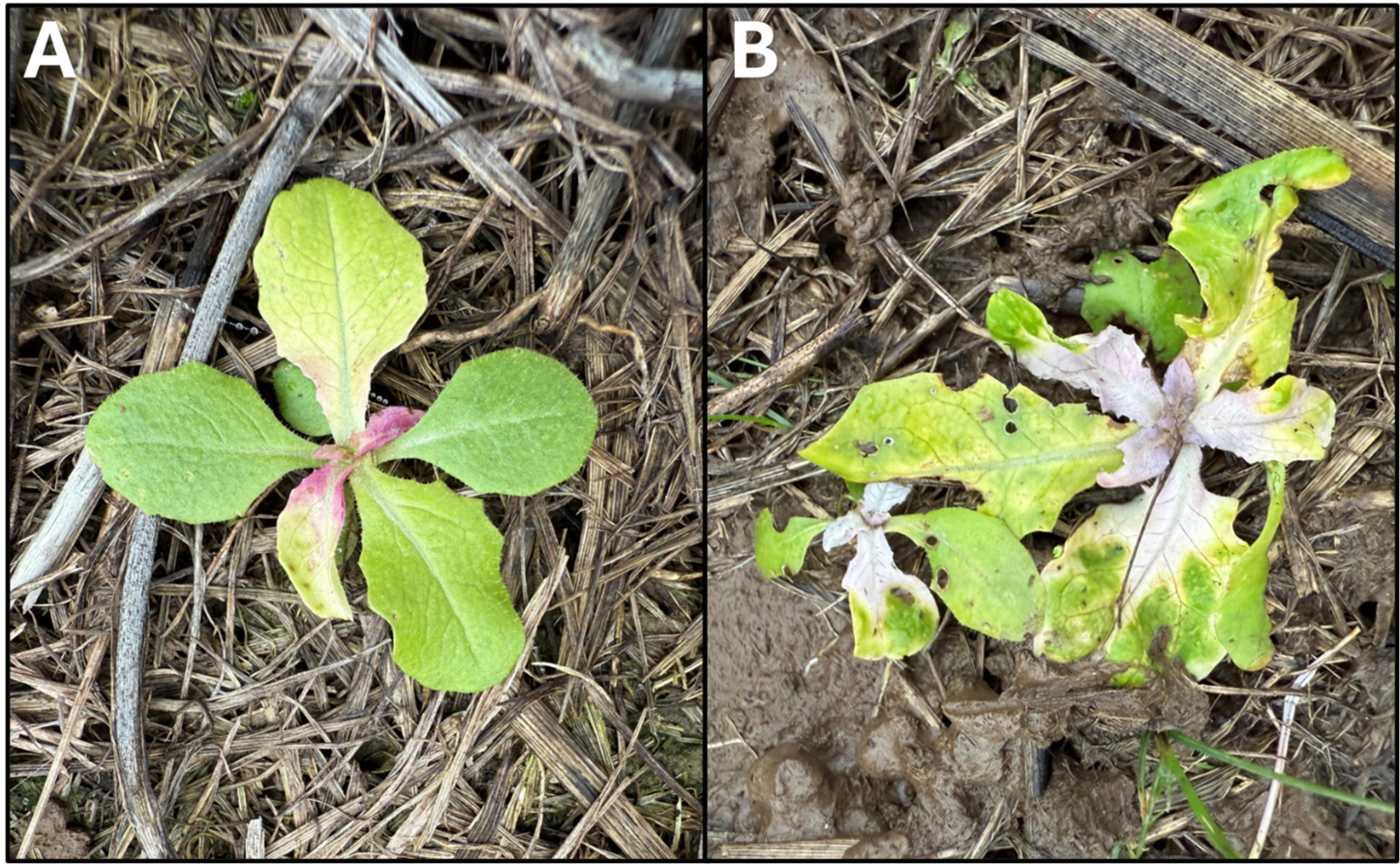
Diflufenican is absorbed primarily through the shoots of germinating seedlings, with limited movement within the plant (Haynes and Kirkwood 1992). It disrupts carotenoid biosynthesis by inhibiting phytoene desaturase, causing susceptible plants to develop the characteristic bleaching symptoms associated with Group 12 herbicides (Figure 1A). As injury progresses, plants may also exhibit pink to mauve discoloration, chlorotic spotting, and eventually tissue necrosis (Figure 1B).
From an environmental perspective, diflufenican has several characteristics that influence its behavior following application. It has low water solubility (<0.05 mg/L at 25°C) and minimal volatility (vapor pressure: 4.25 × 10⁻⁶ Pa at 25°C), which reduce the potential for off-target movement (Shaner 2014). Diflufenican is strongly adsorbed to soil organic matter (Koc = 1,622-2,369 mL/g), limiting movement through the soil profile and contributing to its residual activity. The herbicide is relatively persistent in soil, with field dissipation half-lives (DT50) ranging from 15 to 30 weeks, depending on environmental conditions.
Commonly used in Europe, Australia, New Zealand, and South America, diflufenican is now registered for use on corn and soybean in the United States. In 2026, the U.S. Environmental Protection Agency (EPA) approved diflufenican for preplant and preemergence use in corn and soybean production systems, providing growers with a new herbicide option for residual broadleaf weed control in these crops.
Because diflufenican has been used in clover-based pasture systems in Australia and New Zealand, it may also have potential for Oregon clover seed production. However, no local data are available regarding crop tolerance under Pacific Northwest growing conditions. To address this knowledge gap, our program evaluated the crop safety of diflufenican in crimson (Trifolium incarnatum L.) and white clover (T. repens L.).
Evaluating diflufenican crop safety on clover species
Field trials were established during the fall of 2025 at the Oregon State University Hyslop Experimental Farm near Corvallis, Oregon. Crimson and white clover were planted on October 8, 2025.
Diflufenican was applied on December 12, 2025, when crimson and white clover plants had reached the 5- and 3-trifoliate growth stages, respectively. Treatments consisted of three application rates: 1.37, 2.74, and 5.47 fl oz/A. The first two rates corresponded to the lower and upper labeled use rates for clover-based pasture systems in Australia (Genfarm Diflufenican 500 SC Selective Herbicide label), whereas the highest rate represented twice the maximum labeled rate. Crop injury was visually assessed at 7, 14, 21, 28, 42, 56, 70, and 98 days after treatment (DAT). Injury consisted primarily of foliar bleaching followed by necrosis.
Crimson clover response to diflufenican
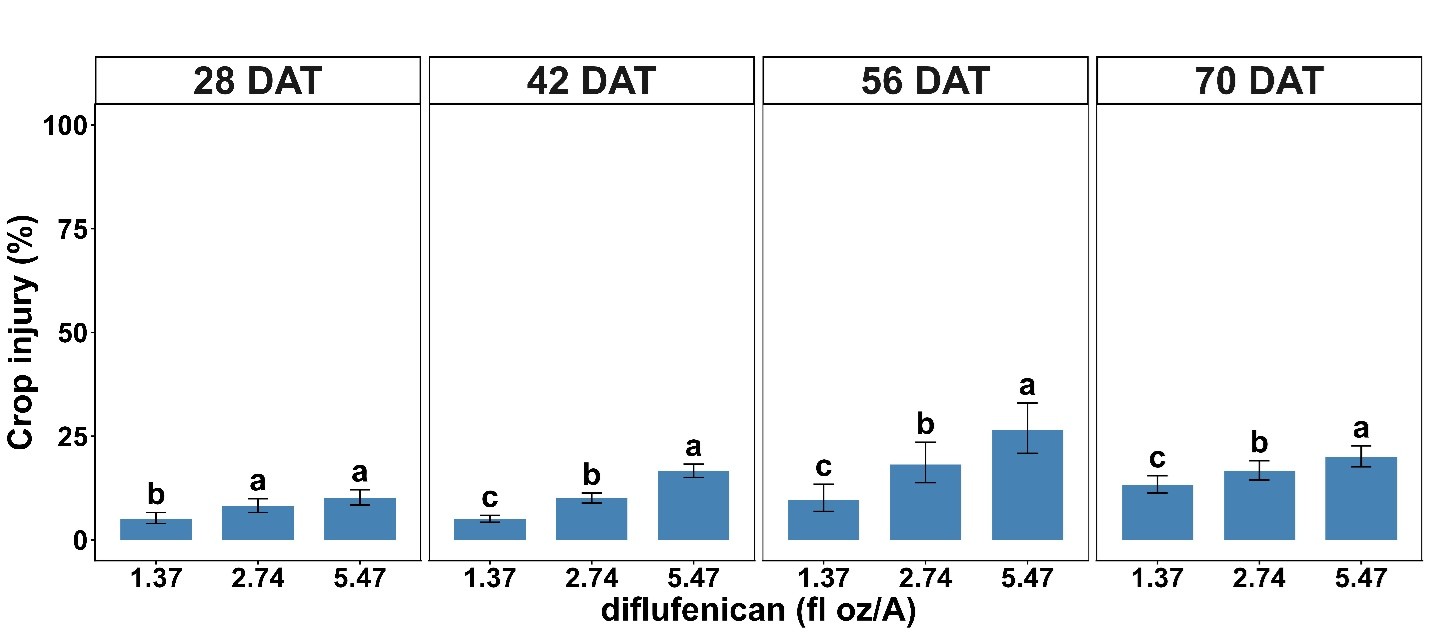
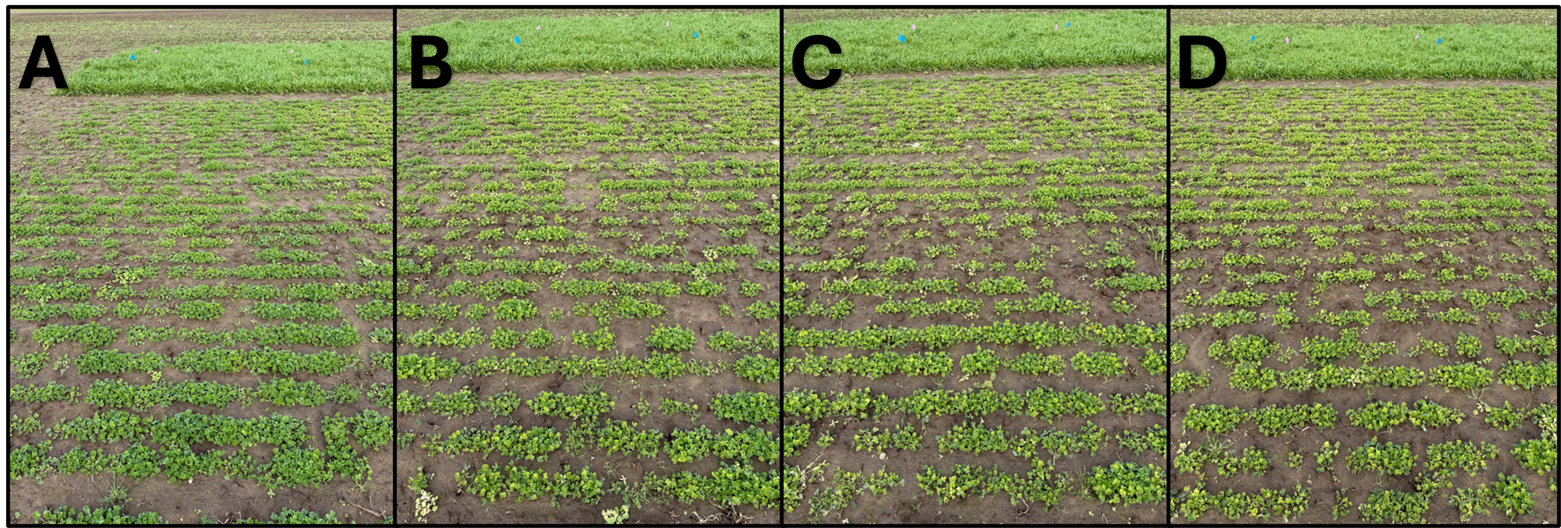
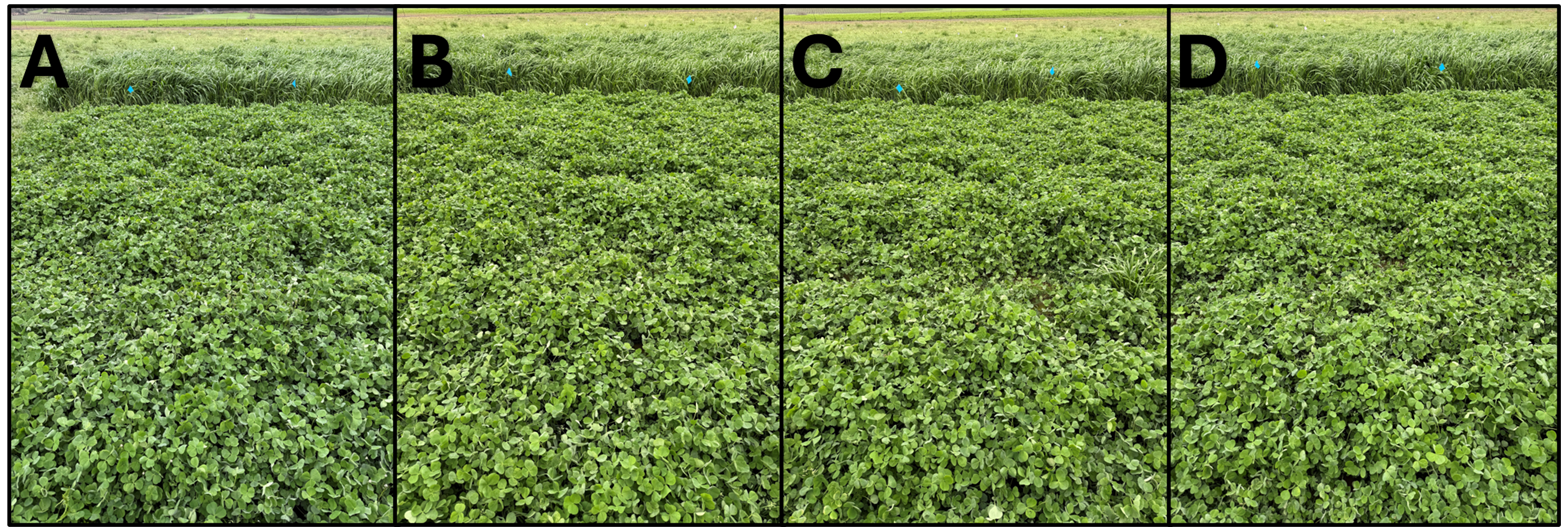
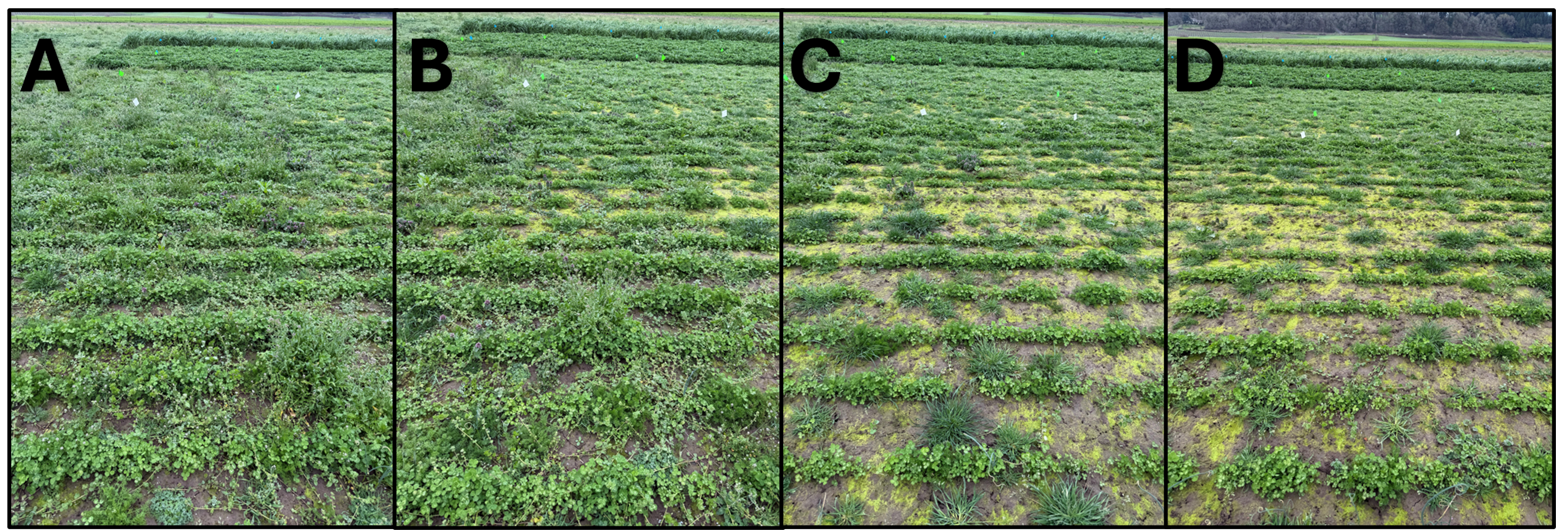
No crop injury was observed at 7 or 14 DAT (P = 0.99). At 21 DAT, all treatments resulted in 5% injury, with no significant differences among application rates (P = 0.99). By 28 DAT, injury increased to 5-10%, and differences among treatments became significant (P < 0.01; Figures 2 and 3). The 1.37 fl oz/A rate caused the least injury (5%), whereas the 2.74 and 5.47 fl oz/A rates resulted in greater injury (8 and 10%, respectively).
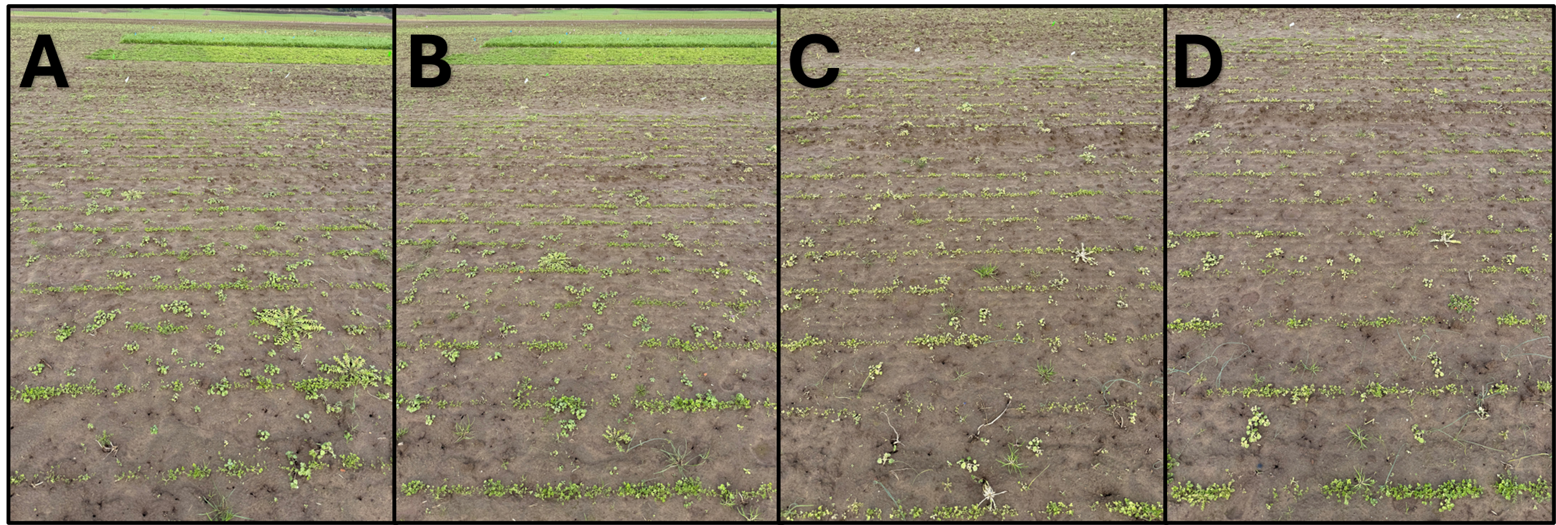
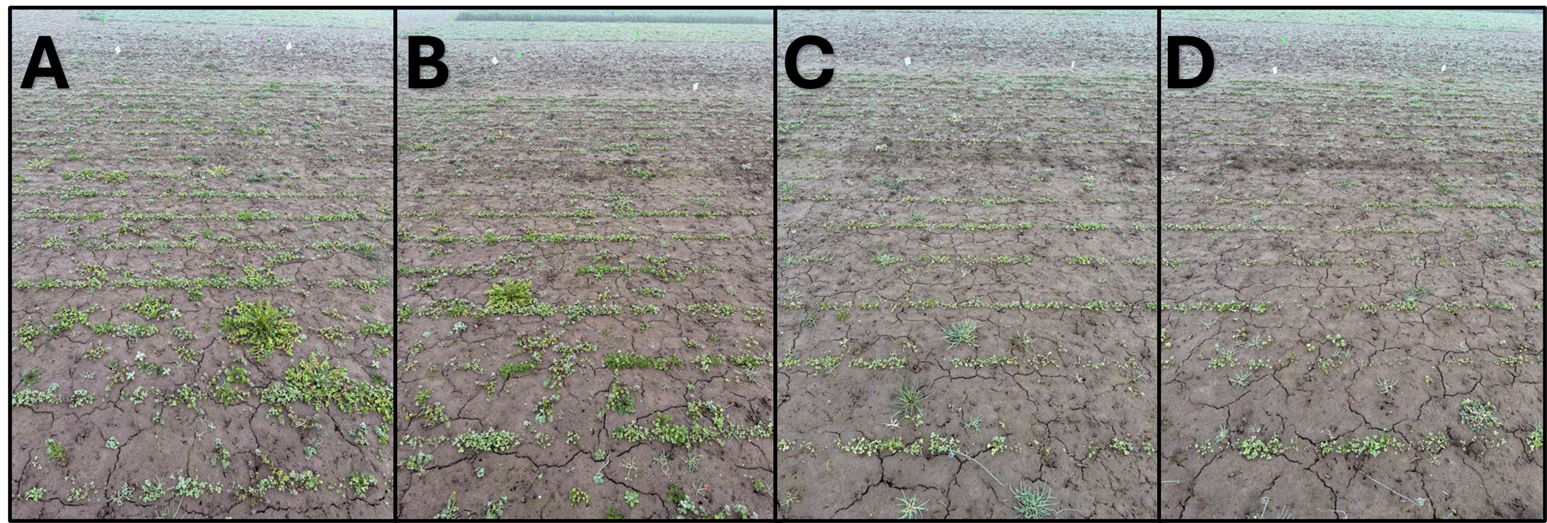
A similar response was observed at 42, 56, and 70 DAT, with crop injury increasing as diflufenican rate increased (Figure 2). Maximum injury occurred at 56 DAT, reaching 9%, 18%, and 26% for the 1.37, 2.74, and 5.47 fl oz/A rates, respectively (Figure 4). Despite the temporary injury, crimson clover recovered over time, and by 98 DAT no visible crop injury was observed at any application rate (Figure 5).
White clover response to diflufenican
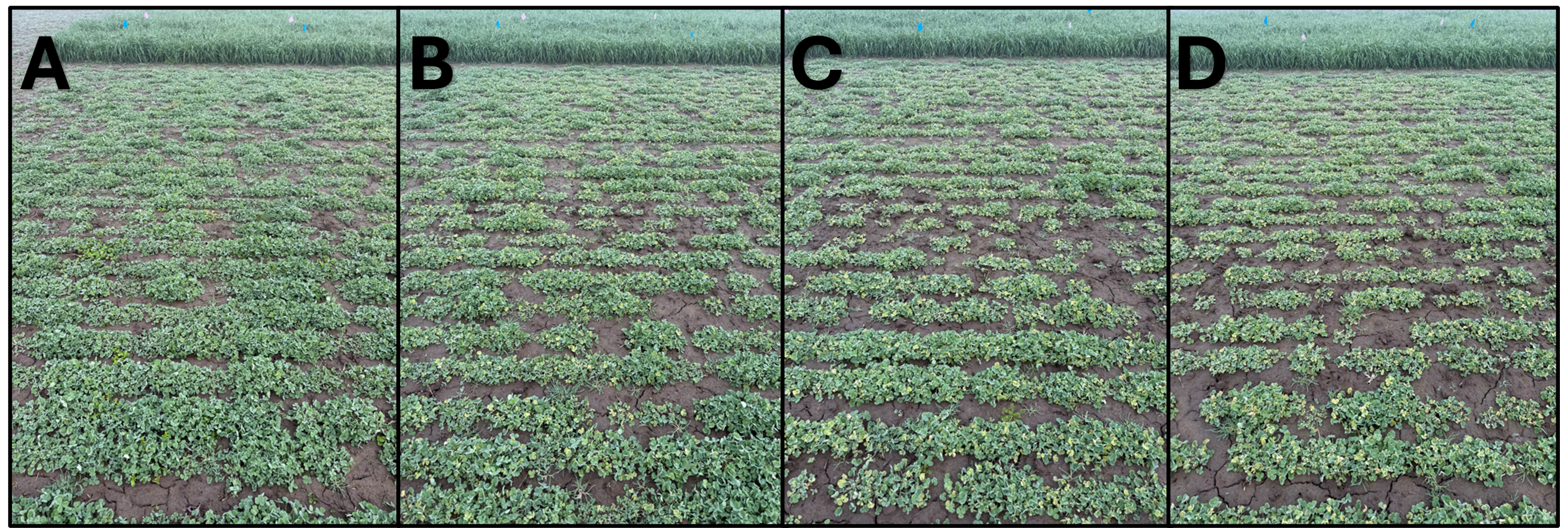
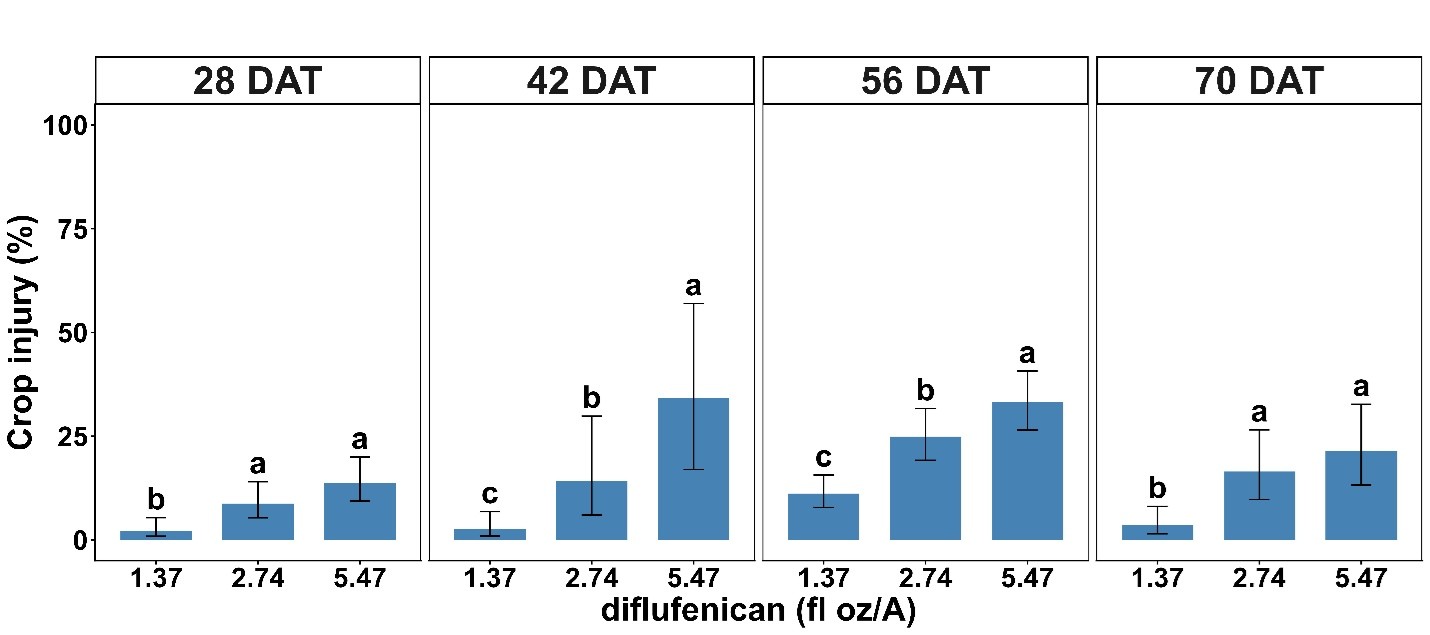
White clover responded similarly to diflufenican, although crop injury appeared to persist slightly longer than in crimson clover. No visible crop injury was observed at 7 or 14 DAT (P = 0.99), and injury remained low (5-6%) at 21 DAT (P = 0.28), with no differences among application rates (data not shown). Treatment differences became apparent by 28 DAT (P < 0.01; Figures 6 and 7), when injury ranged from 2 to 13%. The 1.37 fl oz/A rate resulted in the least injury (2%), whereas the 2.74 and 5.47 fl oz/A rates caused greater injury (8 and 13%, respectively).
Injury continued to follow a rate response through 42 and 56 DAT, with greater injury observed as diflufenican rate increased (Figures 6 and 8). Symptoms began to decline by 70 DAT, although the two highest rates (2.74 and 5.47 fl oz/A) continued to exhibit greater injury than the lowest rate. By 98 DAT, plants had largely recovered (Figure 9).
Key Takeaways
Both clover species exhibited transient injury following diflufenican application, with injury generally increasing as application rate increased. Crimson clover appeared to recover more rapidly than white clover, possibly because of its faster growth rate. By the end of the evaluation period, both species had recovered from the observed injury, although additional research is needed to determine whether temporary injury affects seed yield.
Although weed control was not the primary objective of this study, diflufenican visibly suppressed several broadleaf weeds present in the trial. Weed control generally improved with increasing application rate and varied among species. Shepherd’s purse was the most sensitive species, exhibiting good control even at the lowest application rate, whereas ivyleaf speedwell required higher rates for effective control. Mayweed chamomile was the least sensitive species.
During the 2026-2027 growing season, these studies will be repeated and carried through harvest to determine whether the observed crop injury affects seed yield. Red clover (T. pratense L.) will also be included.
This research was conducted at Oregon State University for experimental purposes. Diflufenican is not registered for use on clover in the United States, and the rates evaluated were based on an Australian product label. The pesticide uses described in this article do not conform to current product labels and are not use recommendations. Always follow the pesticide label.
References
Cramp, M.C., Gilmour, J., Hatton, L.R., Hewett, R.H., Nolan, C.J., and Parnell, E.W. (1987). Design and synthesis of N-(2,4-difluorphenyl)-2-(3-trifluoromethylphenoxy)-3-pyridinecarboxamide (diflufenican), a novel pre- and early post-emergence herbicide for use in winter cereals. Pestic Sci 18:15-28.
Haynes, C., and Kirkwood, R.C. (1992). Studies on the mode of action of diflufenican in selected crop and weed species: basis of selectivity of pre- and early postemergence application. Pestic Sci 35:161-165.
Genfarm. (2020). Genfarm Diflufenican 500 SC Selective Herbicide. APVMA Approval No. 58804/0608. Nutrien Ag Solutions Limited, Macquarie Park, NSW, Australia.
Shaner, D.L. (2014). Herbicide Handbook. 10th Edition, Weed Science Society of America, Champaign, 513.