Contributed by Aaron Becerra-Alvarez, Department of Horticulture, Oregon State University
The use of false and stale seedbed methods are effective tools to reduce weed populations in a field in both conventional and organic fields.
False seedbeds are prepared well in advance before the crop is planted and weed seedlings are encouraged to emerge, then herbicide, flaming, or shallow tillage is used to kill emerging weeds on the soil surface. This method is beneficial in fields where a high weed population is present. The crop planting will need to be delayed; however, this may be more effective weed control than other methods during the crop growth. In organic production, this is especially useful where other tools are limited.
The stale seedbeds are prepared, and the crops are planted and irrigated, then, weeds emerging on the surface of the soil are controlled by herbicides, flaming, or blind tillage before the crop emerges over the soil. This method is more effective on large-seeded vegetables. Crop injury is possible depending on the method used and its timing related to the crop emergence.
New Research with Electric Weed Control
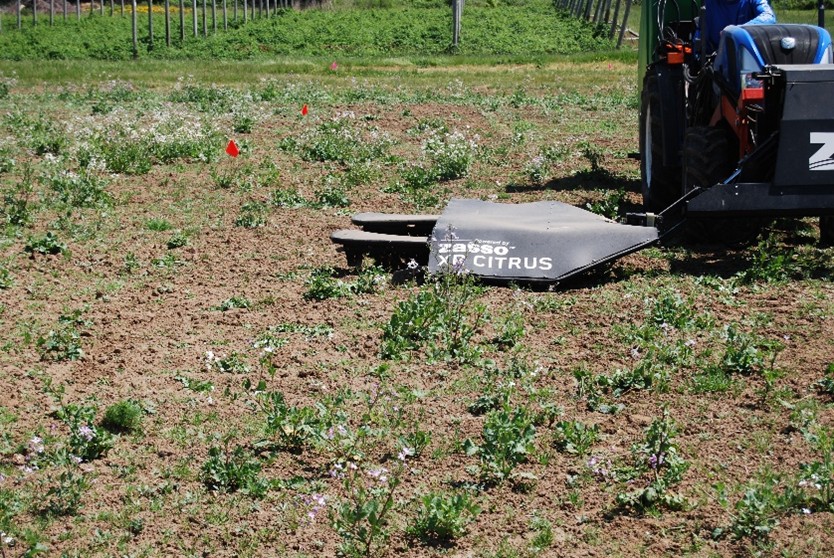
At Oregon State University, we have been evaluating using electric weed control (EWC) in false and stale seedbed methods with the EH30 Thor, Zasso applicator (Figure 1). In false seedbeds, EWC controls emerged weeds well when they are large enough to receive good contact with the electrodes. Weeds that are cotyledon to 1-leaf stage may be missed if the soil surface is uneven. However, when compared to tillage, the EWC may provide additional indirect control of specific weeds. The reduced soil disturbance appears to reduce weed emergence of species like nightshade and purslane after snap bean planting (Table 1). One limitation with the EWC in false seedbeds is the weed biomass residue left on the soil surface, which makes it challenging to plant without a no-till planter in our trials; however, EWC could be a tool for producers who are practicing no-till or reduced till methods (Figure 2).
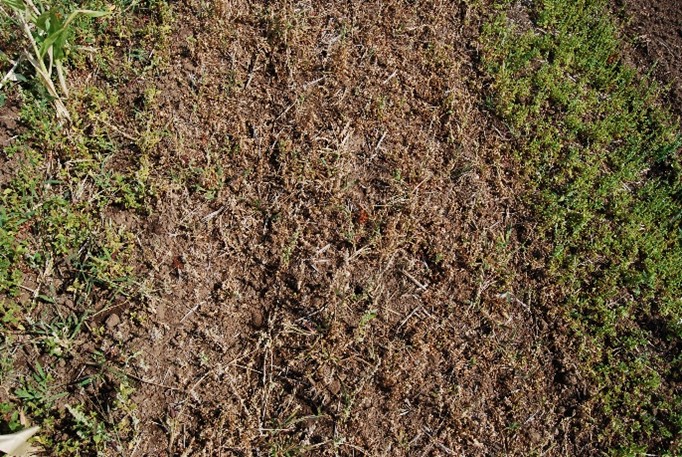
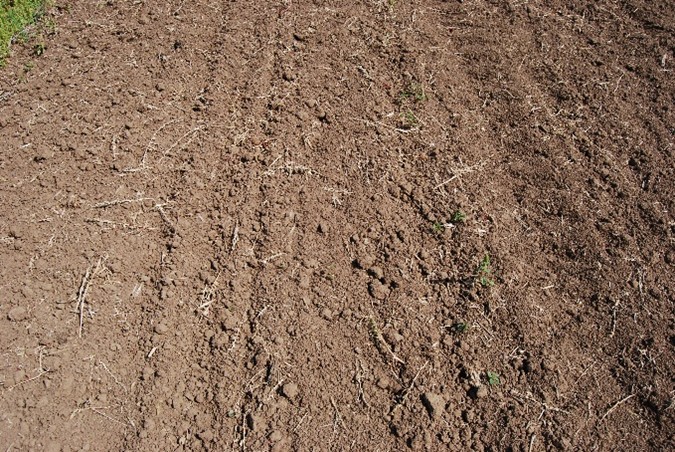
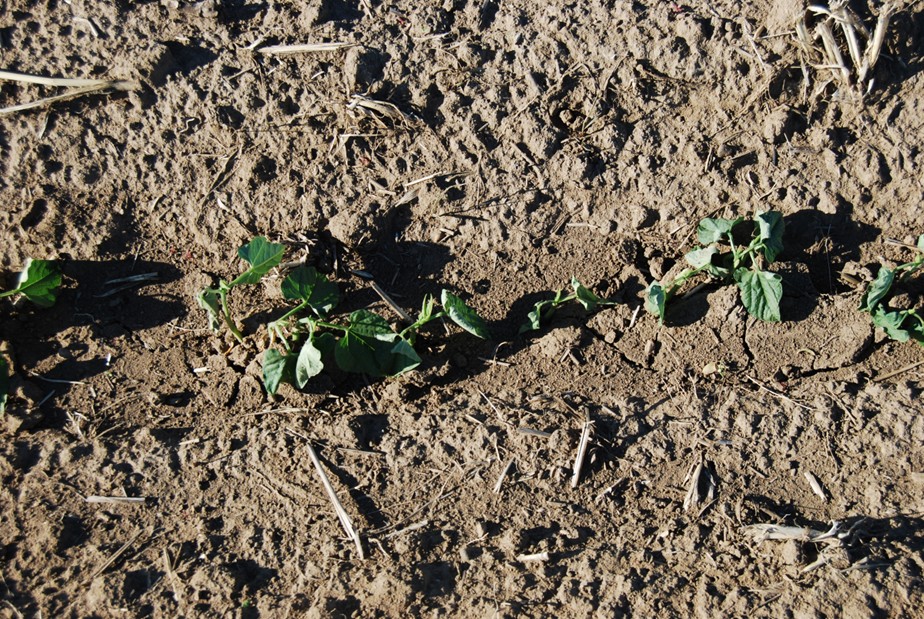
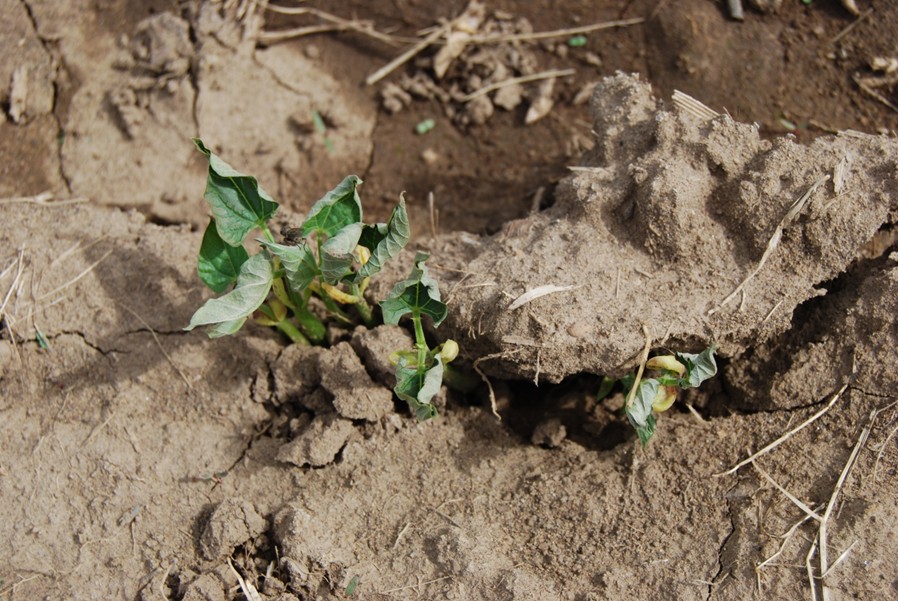
In a stale seedbed method, the EWC method increased the potential for crop injury in snap bean in our trials (Figures 3 and 4). However, the EWC method may still be an option in stale seedbeds for crops that can tolerate deeper planting and when weeds on the soil surface grow quickly.
Table 1. Snap bean and weed count within the crop row of the plot at 3 WAT in false stale seedbed methods with electric weed control (EWC) and tillage in Corvallis, OR, in 20251. Quadrat was 24 in by 5 in.
1Means with the same letter within a column to do not differ by Tukey’s HSD α=0.05.
2Data was log-transformed and back transformed for presentation.
3Grasses were grouped together but most species observed was witch grass and crabgrass.
| Treatments | Number of snap beans per quadrat in crop row. | Number of pigweed plants per quadrat in crop row. | Number of lambsquarters plants per quadrat in crop row. | Number of nightshade plants per quadrat in crop row. | Number of purslane plants per quadrat in crop row.2 | Number of wild radishes per quadrat in crop row.2 | Number of grasses per quadrat in crop row.2,3 |
| Tillage | 3 ab | 13 a | 11 b | 7 ab | 6 a | 2 a | 0 b |
| Tillage, fb flaming after planting | 2 b | 15 a | 25 a | 8 a | 2 b | 1 ab | 0 b |
| EWC | 3 a | 6 ab | 11 b | 4 bc | 1 bc | 0 b | 1 a |
| EWC, fb flaming after planting | 2 b | 3 b | 10 b | 1 c | 0 c | 0 b | 1 a |
Other New Technologies
The use of broad-spectrum herbicides in false and stale seedbeds is also very effective. In organic production, organic herbicides may be used; however, high volume needs may result in reduced cost-effectiveness (Boyd et al. 2006). The use of targeted spray applications may reduce the need for high volumes where the herbicide is applied only where it is needed.
Lasers for weed control is another new thermal weed control technology that is becoming popular. Like targeted sprays, computer vision is used to identify crops and weeds and apply laser energy to the weeds. This technology is effective on weeds up to 2- to 3-leaf and most effective at cotyledon stage but is also species dependent.
However, one big reason for practicing false seedbeds is the high weed population pressure in the field which would make an herbicide or blind tillage applied broadly over the whole field more cost effective than using targeted applications. Therefore, technologies with targeted applications may be a better fit in stale seedbed methods where crop injury potential could be reduced.
In stale seedbed methods, targeted applications could be useful if the computer vision model can correctly identify crops and weeds down to the cotyledon or 1-leaf stage. Then, applications can be made earlier and give the crop a better competitive advantage early on. The weed population pressure will also play a big role in cost-effectiveness because slower speeds may be needed for correct identification and application.
More applied research is needed on using the new technologies for weed control. There is no new technology giving us the single answer for weed control, instead many of these tools will need to be part of an integrated weed management plan.
References
Boyd, N. S., Brennan, E. B., & Fennimore, S. A. (2006). Stale seedbed techniques for organic vegetable production. Weed Technology, 20(4), 1052-1057.
Becerra-Alvarez and Moretti, M. (2025). Evaluating novel stale and false seedbed methods for weed control in organic snap bean production. California Weed Science Society Research Updates and News, 17(2):4-8. Accessed from https://horticulture.oregonstate.edu/vegweedsci/research/ewc-organic-vegetables
Becerra-Alvarez, A. (2026) Stale and False Seedbeds. (Becerra-Alvarez, A., Ed.) Pacific Northwest Weed Management Handbook [online]. Oregon State University Extension Communications. Accessed May 15, 2026 from https://pnwhandbooks.org/weed/horticultural/vegetable/site-preparation-stale-seedbeds-directed-nonselective-applications/stale-false-seedbeds