Contributed by Judit Barroso, Oregon State University
This year’s weather has been anything but typical. At the CBARC station (Adams, Oregon), September and October brought 153% and 122% more precipitation than normal, but the trend reversed in November, December, and January that were 96%, 99%, and 23% drier than average. With these kinds of unusual shifts, we launched a study this fall to better understand how grass weeds germinate under varying conditions. Our long-term goal is to develop predictive germination models using multi-year data. These models could help growers anticipate weed emergence based on seasonal weather patterns, ultimately improving herbicide timing and reducing the soil seedbank.
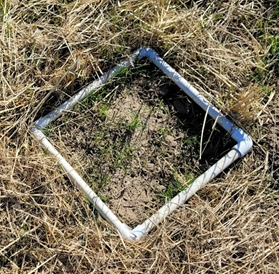
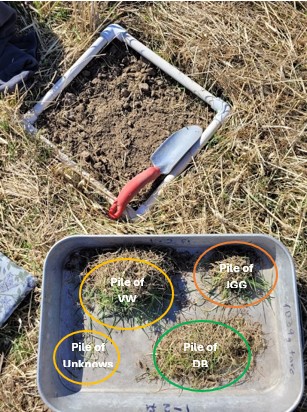
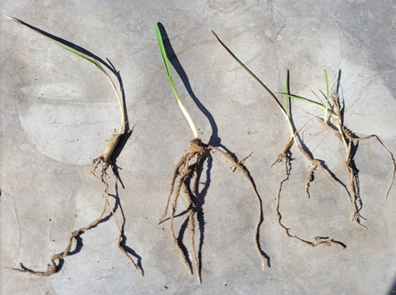
For this first year, we worked in a fallow field at CBARC. We set up four plots and placed three permanent sampling frames (13 × 12 inches) in each one (Image 1). In total, we monitored 12 frames every other week from September 23 through December 23, which is when colder temperatures led to a clear decline in germination and resumed sampling on February 16, 2026. During each sampling event, we removed, identified, and counted all grass seedlings. The species we documented included downy brome (Bromus tectorum), jointed goatgrass (Aegilops cylindrica), feral rye (Secale cereale), and volunteer wheat (Triticum aestivum) (Image 2).
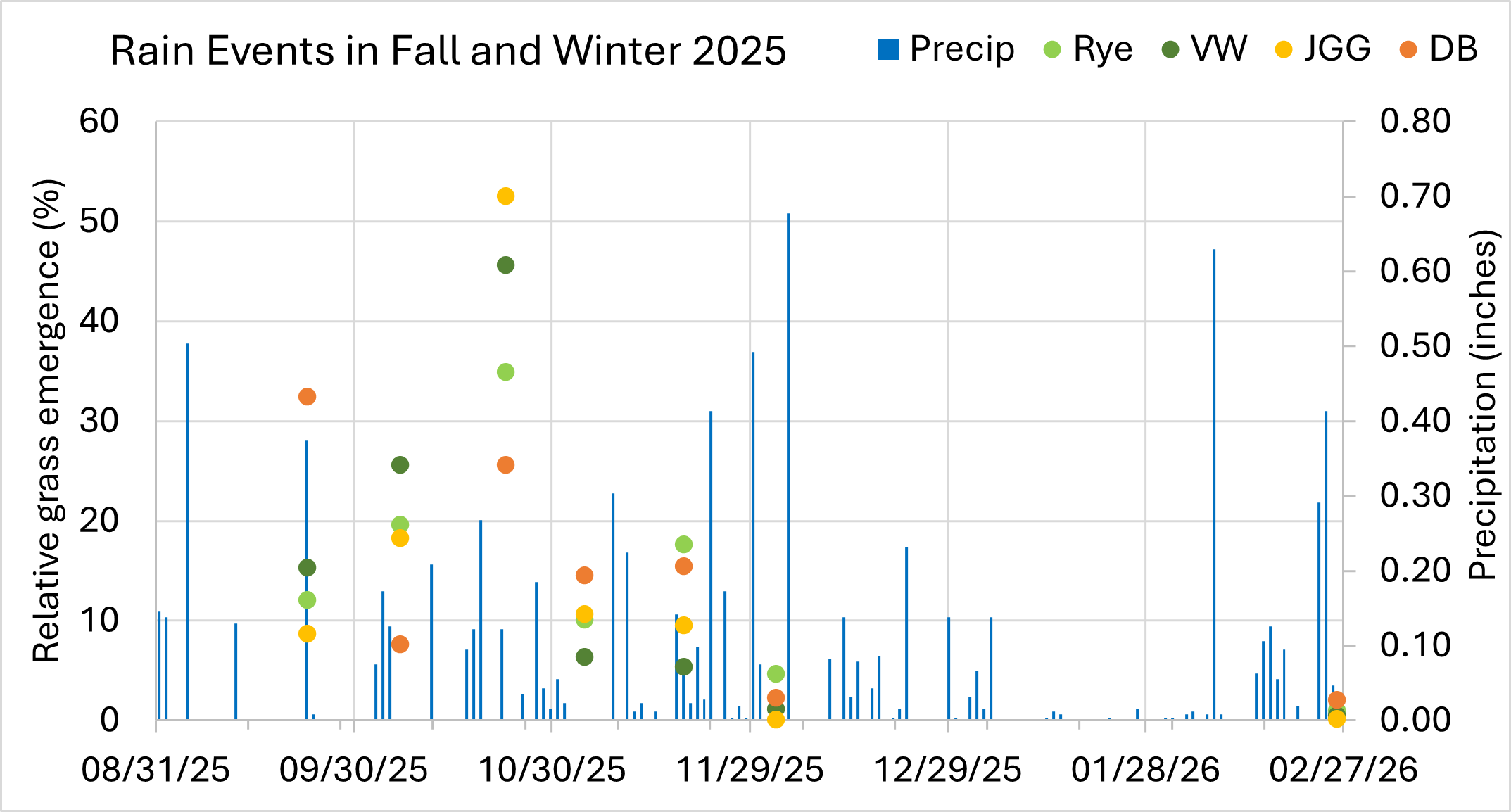
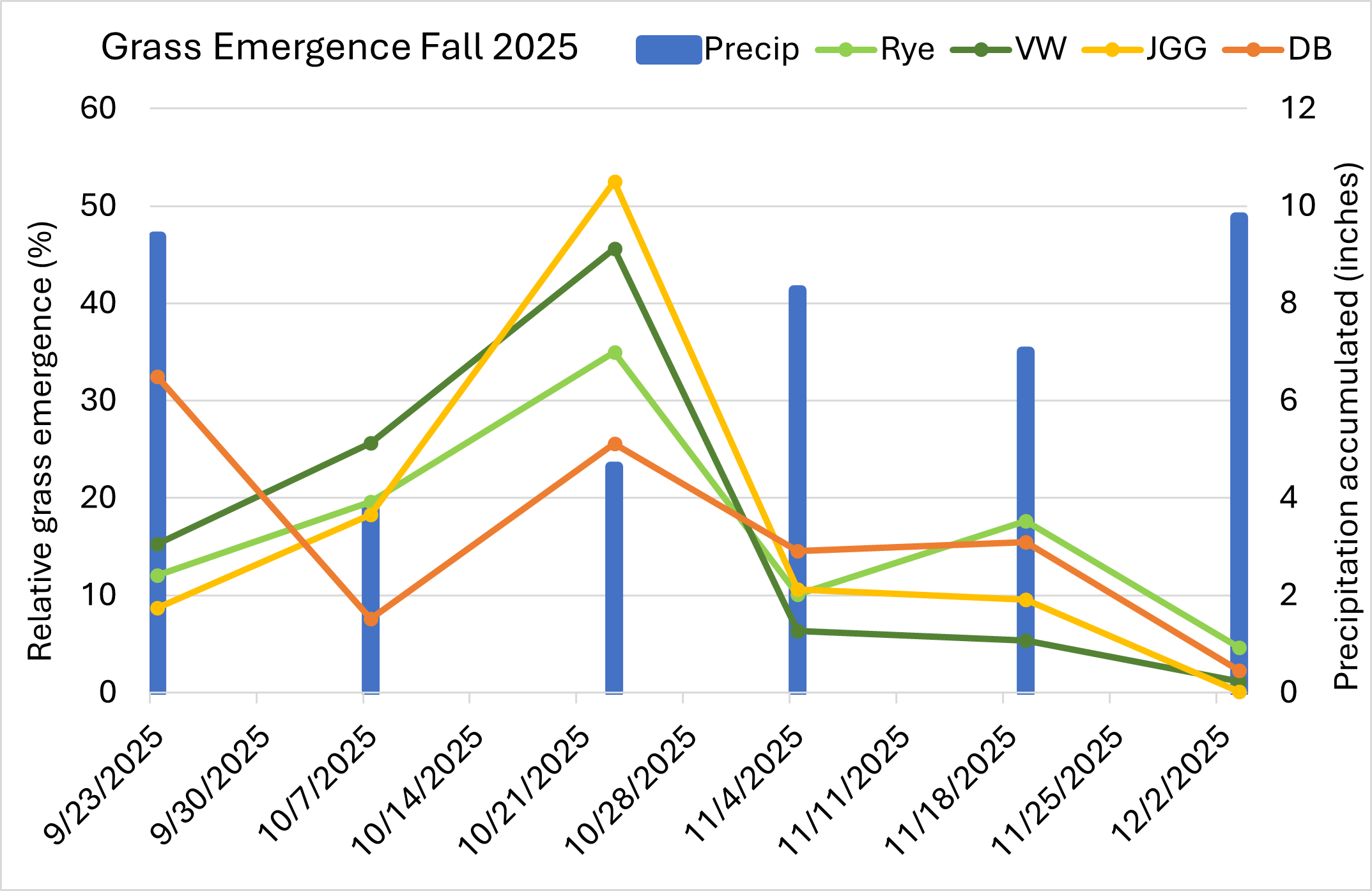
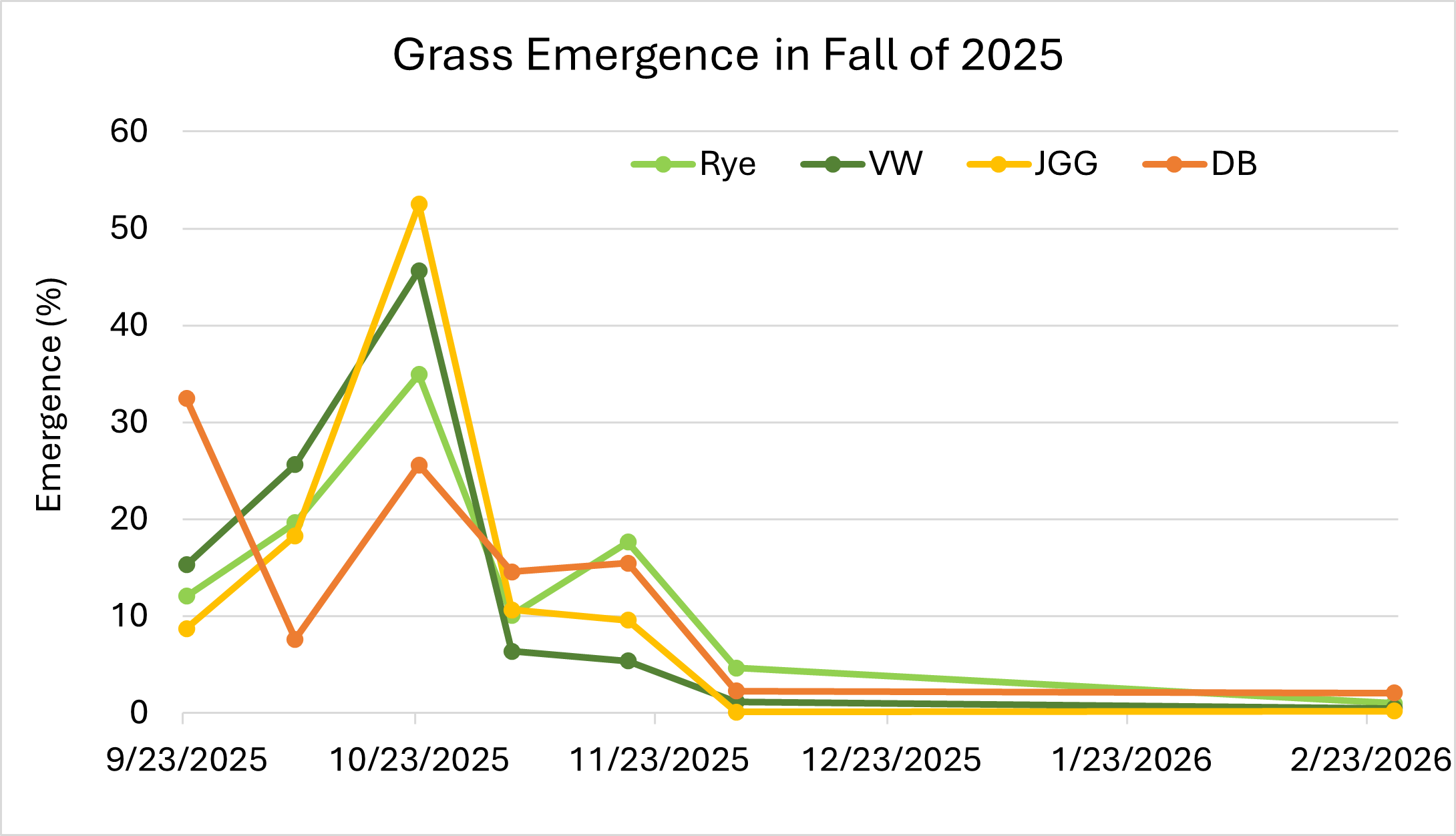
The numbers we’ve collected so far are striking. Altogether, we counted 9,767 grass seedlings—an average of 2,442 per plot and 814 per square foot. Of these, 71% were downy brome, 22% volunteer wheat, 3.5% jointed goatgrass, and 1.8% feral rye. When we look at relative emergence patterns (Figure 1), downy brome stands out. While jointed goatgrass, feral rye, and volunteer wheat showed peak emergence on our third sampling dates (10/21/2025), downy brome peaked much earlier, on our very first sampling date (9/23/2025). This early flush is likely tied to its small seed size and its ability to germinate right on the soil surface, especially when residue helps conserve moisture.
We also examined how precipitation patterns might relate to emergence (Figure 2). In this first season, we did not find a correlation—soil moisture simply didn’t seem to limit germination last fall. Looking ahead, we hope to expand the study by adding a second site in northeastern Oregon and sites in Idaho and Washington. The goal is to build a regional, multi-state collaboration across the Pacific Northwest that will strengthen the accuracy and usefulness of future weed germination models, which we envision to include some broadleaf weeds as well. Your feedback helps guide our work. Please, let us know which weed species you are most interested in learning about and the region you farm, so we can direct our efforts more effectively.