Contributed by Doug Finkelnburg, University of Idaho
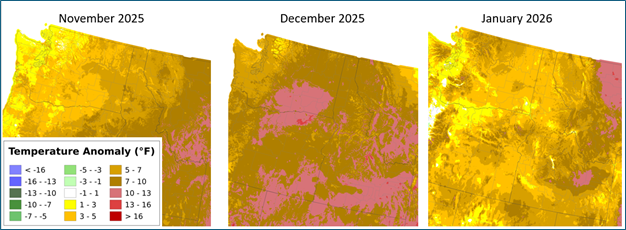
If anyone hasn’t noticed yet, we have not had much of a winter in the northwest. In fact, it’s been almost tropical in many parts of the region with reports of trees budding early, insects pressuring crops when they have no right to be out and about, and a downright dreary ski season for those inclined to inclined thrills. There’s just no way to argue it, the weather has been warmer than usual. According to PRISM, the inland Pacific Northwest has been roughly 3-10 degrees Fahrenheit above the 30-year normal for November through January.
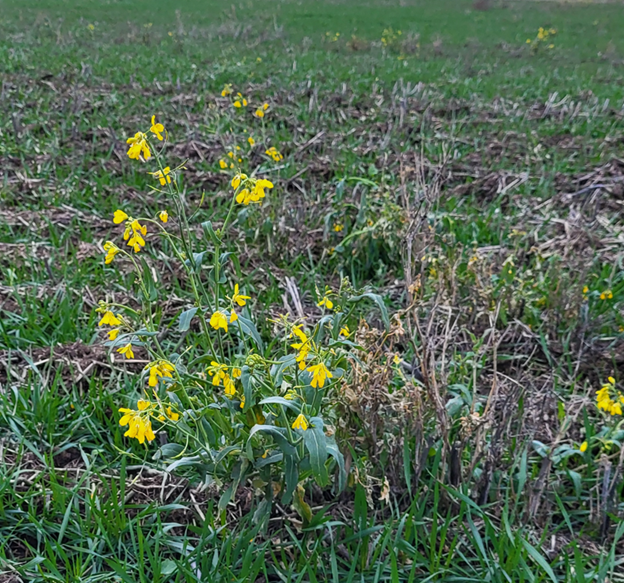
Of specific concern to me are the plants misbehaving in spectacular fashion. We have had multiple reports of volunteers that would normally be long dead happily thriving in these abnormal conditions. Catchweed bedstraw and common groundsel are green and growing just outside my office in Lewiston, Idaho. However, Lewiston, Idaho is known for being a low elevation location (750 ft elevation at the Snake River) and reliably the warmest point in the immediate area. So, earlier this week I drove around the cropped fields between 1100-1400 feet elevation outside of town and was surprised (horrified?) to see volunteer canola in bloom–in late January!
Whether this year’s weather is a harbinger of future years’ new-normals or just an anomalous blip on the long-term climate pendulum is of course yet to be seen. However, if we don’t get normal average temperatures soon, we will have some abnormal weed control issues come spring. So much of our weed control relies on multiple factors syncing up just right. The optimal growth stage of a target plant to kill, the right crop growth stage to withstand the application without injury, and the right temperatures at chemical application timing all need to be within specific windows to get it right. Sitting in the heart of fall wheat production country and seeing weeds and crops so far along make me understandably nervous but it also suggests a few other potential effects of the warmer than usual weather. Soil biology, specifically soil microbes, significantly ramp down their activity as soils cool to near freezing or frozen temps. Coupled with our predictably dry summer conditions and unfortunately acidified topsoil conditions in many places, microbes don’t have a wide window of opportunity to break things down in these soils, resulting in some notable herbicide label exceptions for this region concerning microbially driven herbicide degradation. I must wonder if those degradation processes have not been extended more than usual. And, what other soil microbe-mitigated processes are similarly affected due to the warmer conditions?
One way or another we will find out the effects of this year’s weather on crops in 2026 soon enough. I do think it is worth pausing and considering how we might learn from this season’s weather oddities and plan how to make changes to our weed control programs if we see conditions like this coming again in areas where a moderate uptick from normal temps can result in growing degrees days being present rather than absent.