Contributed by Drew Lyon, Washington State University
Smooth scouringrush (Equisetum laevigatum) is a member of an ancient, spore-bearing vascular plant group that arose about 400 million years ago (Figure 1). It is a perennial plant that spreads primarily by rhizomes. The underground biomass of smooth scouringrush far outweighs its aboveground biomass. The extensive rhizome system can store plant sugars (carbohydrates) that sustain a well-established colony for multiple years, which can make control efforts challenging.
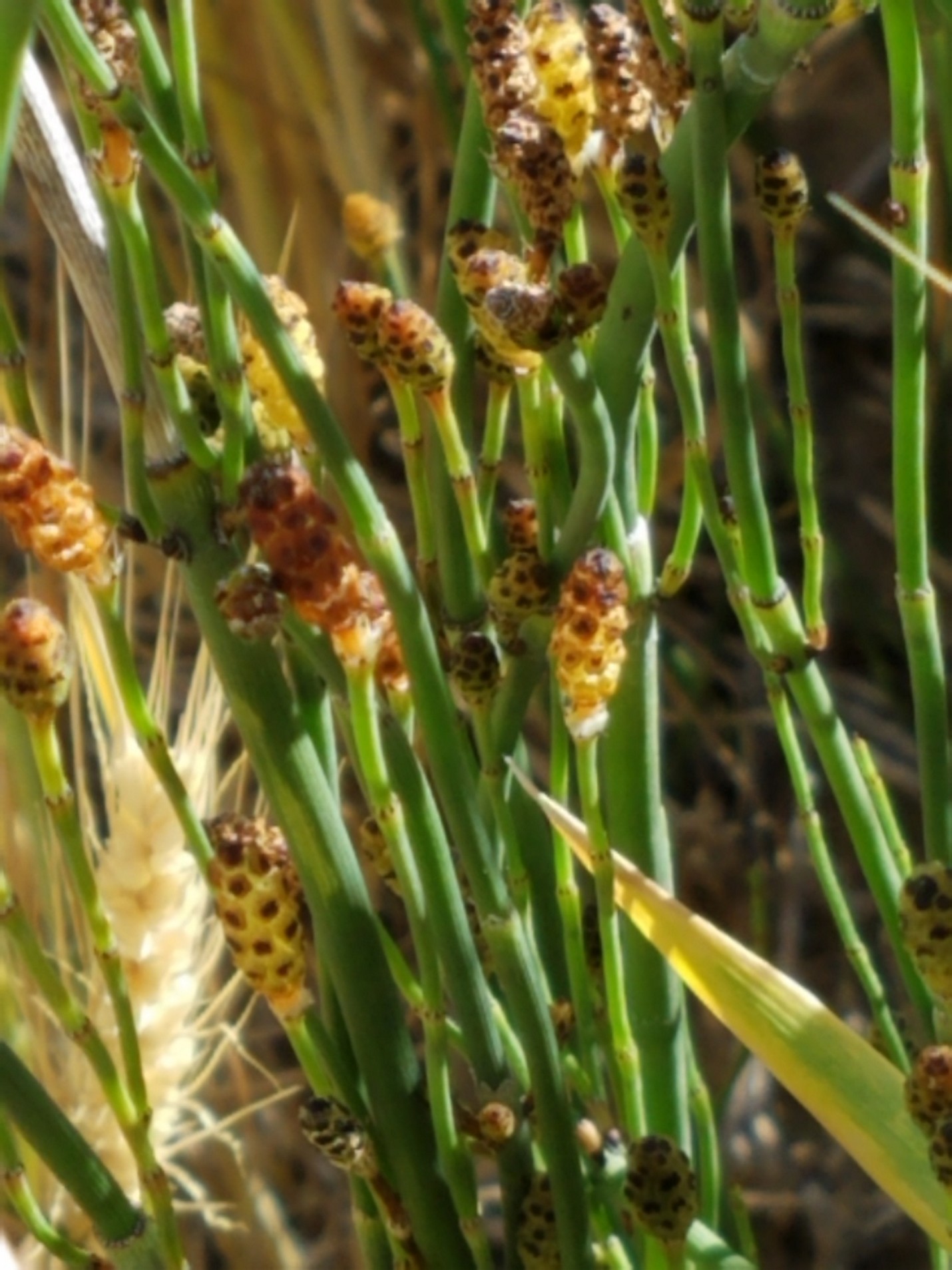
Shortly after arriving at Washington State University in the fall of 2012, I was introduced to smooth scouringrush by Tom Swainz, a Lincoln County farmer, who took me for a drive north of Reardan, WA to show me hillsides covered in large patches of smooth scouringrush. Tom told me that these patches started to appear and spread within a few years of transitioning to no-till.
Earlier work conducted at the University of Idaho identified chlorsulfuron, the active ingredient in Glean XP (Not labeled for use in fallow) and Finesse Cereal & Fallow herbicides, as effective for the control of smooth scouringrush, particularly at above-labeled rates. However, chlorsulfuron has a long soil residual time that limits rotation to many broadleaf crops. Growers were looking for an effective alternative to chlorsulfuron for smooth scouringrush management in no-till systems.
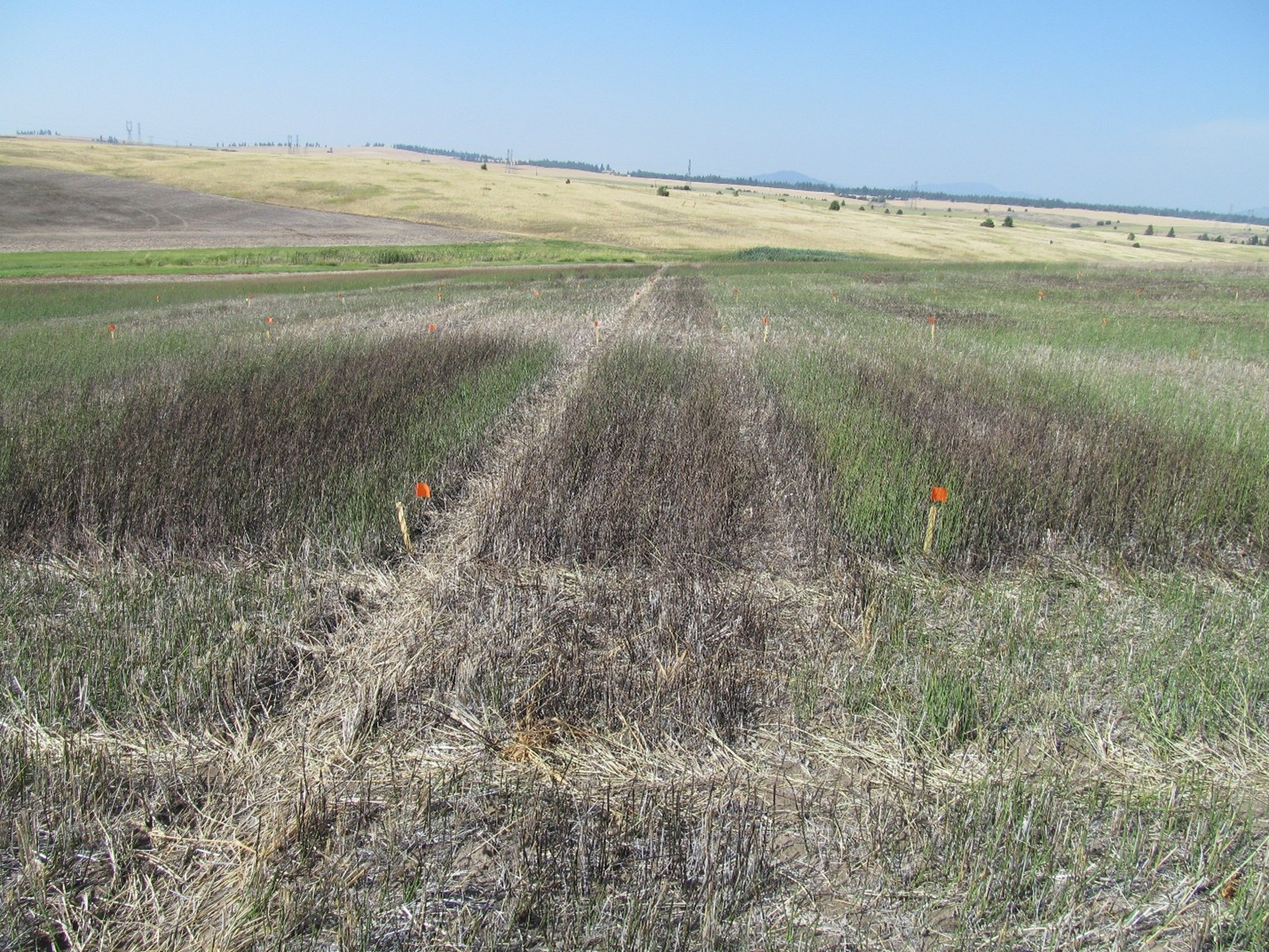
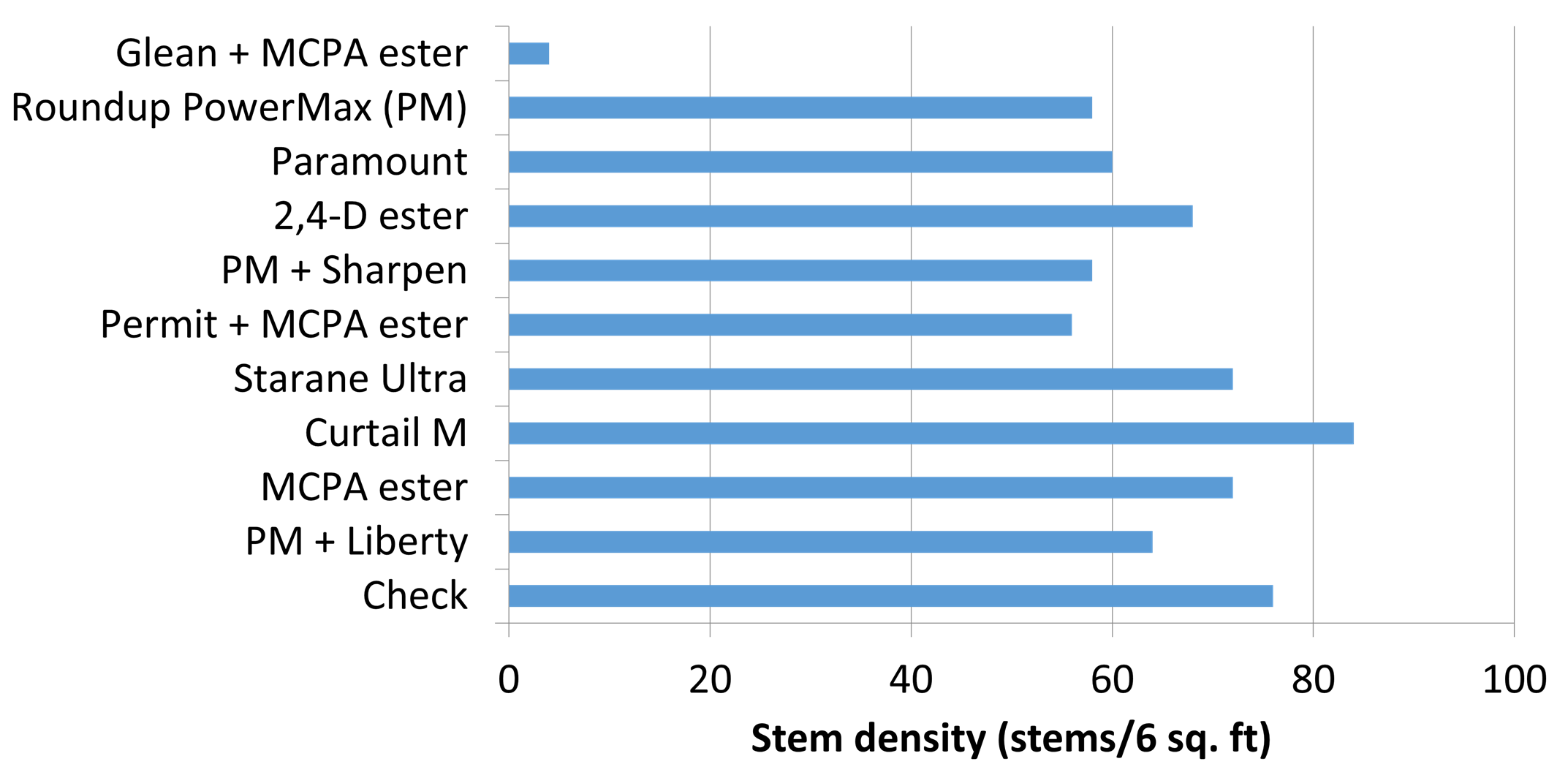
In a study conducted near Reardan, WA (Figure 2), and The Dalles, OR, Dr. Andrew Hulting, formerly with Oregon State University, and I looked at several herbicide treatments applied in summer fallow for smooth scouringrush control. Only Glean + MCPA reduced stem density one year following application (Figure 3). This was not the result we were hoping for. One of the treatments we looked at, glyphosate applied at 32 oz/acre, was not effective. We wondered if the rate was too low. In a subsequent series of studies, we increased the glyphosate rate to 96 oz/acre. At this rate, we did see stem reduction one year after application, but the results were inconsistent between years and locations.
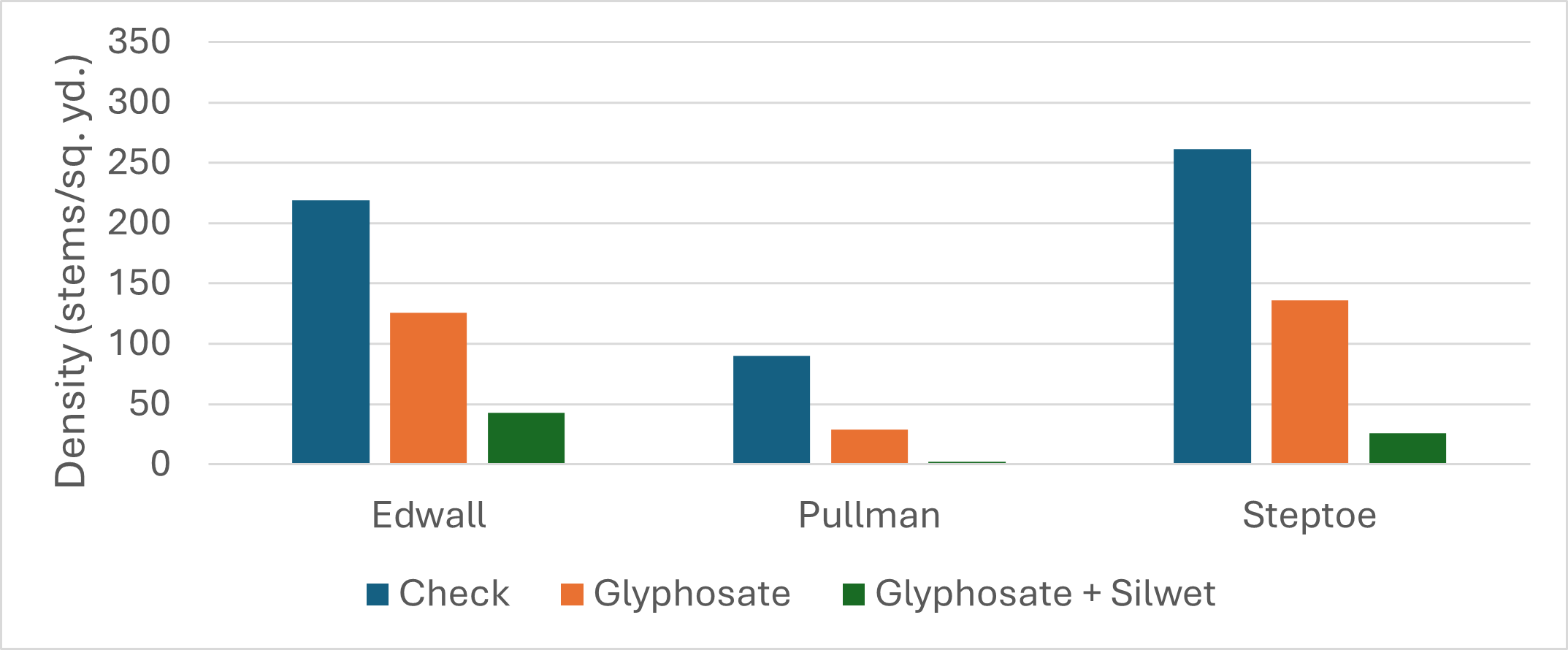
Smooth scouringrush stems lack true leaves (they have vestigial leaves at each node that are very small and non-photosynthetic) and the stem has a high silica content that makes penetration of herbicides difficult. We wondered if we could improve control with glyphosate by adding various adjuvants. What we discovered was that the addition of an organosilicone surfactant, for example Silwet L-77, improved efficacy and consistency of smooth scouringrush control with glyphosate (Figure 4).
Organosilicone surfactants are wetting agents, that is, they greatly reduce the surface tension of water, allowing the water droplet to spread widely across plant surfaces. Based on previous research with Silwet L-77, we hypothesized that adding Silwet L-77 to the spray solution allows spray droplets containing glyphosate to flood into open stomata on the stem surface and into the stem where it can then be translocated within the plant to the rhizomes and roots, providing effective control that can be detected one or more years after application.
Stomata, pores in the aboveground plant epidermis that allow for gaseous exchange between internal tissues and the atmosphere, are typically open during the day when plants are taking in CO2 and emitting O2 during photosynthesis. They are typically closed at night, when photosynthesis is not occurring or when the plants are experiencing water stress. When we tested this hypothesis by applying glyphosate plus an organosilicone surfactant during the day or at night, we got mixed results. At two of the three locations, our hypothesis was supported by the results. Stem densities one year after application were lower when glyphosate treatments were applied during the day, when stomates were open, than when treatments were applied at night. However, at one location the opposite was observed. We scratched our heads over this observation but settled on some possible explanations. The treatments at this location were applied on a particularly hot, dry day in August. As mentioned above, organosilicone surfactants spread spray droplets on plant surfaces. Thinned droplets evaporate quickly under hot, dry conditions, resulting in reduced stomatal flooding. At the same time, plants often close their stomata under hot, dry conditions, or when drought stressed, to conserve water that escapes through open stomata. This too reduces stomatal flooding. We do not know the extent to which either of these factors played a role in the reduced efficacy of the daytime treatment at this location, but both are reasonable explanations, and both may have contributed to the observation.
We now recommend that applicators apply glyphosate with an organosilicone surfactant to smooth scouringrush during the day except when daytime temperatures exceed 85 degrees F and/or relative humidity is below 20%, or after mid-July when plants are more likely to be drought-stressed.
In a recently completed 3-year field study, we noticed that herbicide treatments applied during summer fallow that included Finesse Cereal & Fallow and/or glyphosate, were more effective and control lasted longer at the field site located in a low-lying flat that was often flooded in the spring and likely benefited from subsurface irrigation from the surrounding hills, compared to two other field sites that were on sloping upland positions. These observations support the hypothesis that actively growing plants that are not drought stressed at the time of herbicide application are more easily controlled with herbicides.
Smooth scouringrush has survived for millions of years, and we have much yet to learn about this ancient plant. Our research over the past decade has gained some new insights but many questions remain. Please consider sharing your thoughts on managing smooth scouringrush in your farming operation. What has worked for you?