Contributed by Davi Fiedler and Marcelo L. Moretti, Department of Horticulture, Oregon State University
Wild carrot (Queen Anne’s lace) has become an increasingly common and persistent weed in hazelnut orchards throughout western Oregon. While it is often associated with roadsides and non-crop areas, this biennial species has established itself firmly in perennial production systems. Its deep taproot, competitive growth habit, and strong seed production make it particularly difficult to manage once established.
For many years, flazasulfuron has been one of the most reliable herbicides for controlling wild carrot in perennial systems. In some orchards, it has served as the backbone of weed management programs targeting this species. However, recent research conducted at Oregon State University confirms that certain wild carrot populations in Oregon are now resistant to flazasulfuron. This is the first confirmed case of flazasulfuron resistance in wild carrot, and it carries important implications for hazelnut growers across the Pacific Northwest.
How resistance was confirmed
Growers began reporting patches where flazasulfuron no longer delivered the level of control they had previously observed. In some cases, plants survived labeled field rates and continued normal growth. To investigate, we collected seed from multiple orchard sites with a history of repeated flazasulfuron use.
Under controlled greenhouse conditions, we compared these populations to a known susceptible population. The differences were clear and consistent. While susceptible plants were largely controlled at labeled rates, resistant populations survived and maintained significant biomass. These findings confirmed that resistance had evolved under field conditions.
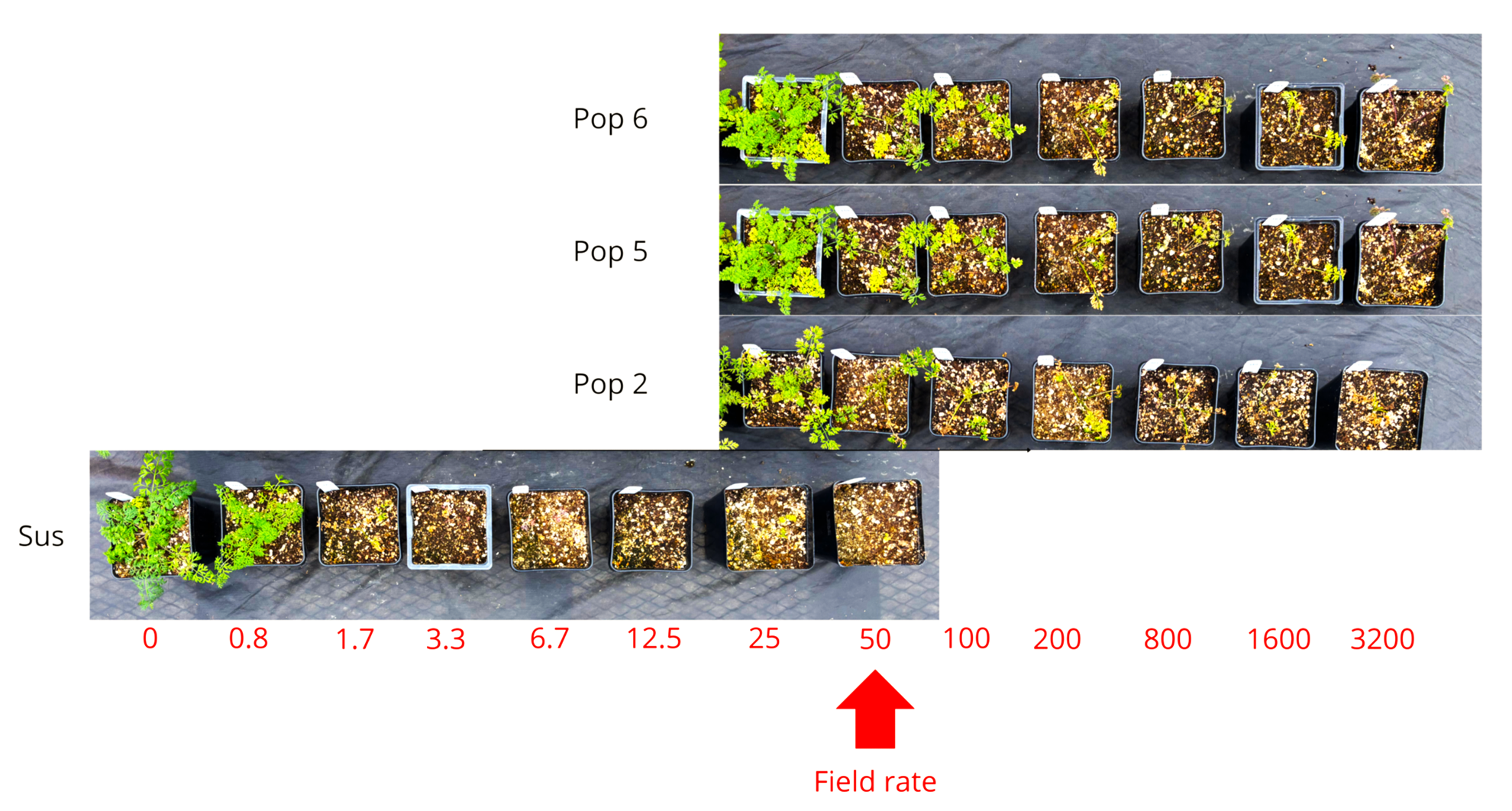
Importantly, resistance was observed at both pre-emergence and post-emergence application timings. This means the issue is not related solely to application timing or environmental conditions. It reflects a biological shift in the weed population.
A quick overview of wild carrot biology
Wild carrot possesses several biological traits that favor rapid adaptation. It is a biennial weed, growing the first year, and flowering on the second year. It is predominantly cross-pollinated, which promotes high genetic diversity within populations. Greater diversity increases the probability that naturally resistant individuals are present before herbicide selection occurs.
Additionally, wild carrot produces abundant seed and can persist in orchards for multiple seasons before flowering. In perennial systems such as hazelnut orchards, where soil disturbance is minimal, plants that survive herbicide treatments are more likely to mature and replenish the seedbank.
When a single herbicide mode of action is used repeatedly over multiple years, selection pressure increases substantially. Several plants with natural tolerance survive and pass the resistant traits to the next generation. Over time, the population shifts toward resistant biotypes.
What does this mean for hazelnut growers?
Resistance does not mean flazasulfuron is ineffective everywhere. It does mean that in certain orchards, reliance on flazasulfuron alone is no longer a sustainable strategy.
If resistant plants are allowed to survive and produce seed, patches will expand. As seed disperses and germinates, resistant individuals become more common. Eventually, growers may experience widespread control failures rather than isolated escapes.
The economic implications can be significant. For example, reduced herbicide performance increases labor costs, may require additional applications, and can lead to greater weed competition with young trees. Left unmanaged, resistant wild carrot can compromise orchard floor uniformity and overall management efficiency.
Alternative postemergence options
To identify practical solutions, we evaluated several alternative herbicides applied alone and in tank mixtures in both container and field studies across Oregon.
Florpyrauxifen-benzyl (Hulk) consistently provided strong control of both susceptible and resistant populations. As a Group 4 herbicide, it offers a different mode of action and represents a viable rotational option in orchards where it is labeled.
Glufosinate (Rely 280) also performed well when applied alone, providing substantial biomass reduction in resistant populations. However, wild carrot regrowth was observed making this herbicide an option for preharvest clean up, but with short term results.
However, as with all contact herbicides, thorough coverage and appropriate timing remain critical.
Tolpyralate (not registered for use in hazelnuts and used experimentally for this research), tiafenacil (Gamma special local needs label for nonbearing hazelnuts in Oregon), and glyphosate (various formulations, including Roundup) did not provide satisfactory control when applied alone. However, their performance improved significantly when used in tank mixtures with stronger partners.
The role of tank mixtures
One of the most consistent findings across field sites was the benefit of combining herbicides with different modes of action. Mixtures that included florpyrauxifen-benzyl resulted in the lowest biomass levels across sites. In some cases, combinations reduced biomass to negligible levels 42 days after treatment.
These results support a central principle of resistance management: using multiple effective modes of action in the same application can improve control and reduce selection pressure on any single chemistry.
However, mixtures must include products that are each active on the target species. Mixing a strong herbicide with a weak partner does not provide meaningful resistance protection. Effective mixture design requires understanding product performance and label restrictions.
Practical recommendations
Based on our findings, we suggest the following steps for hazelnut growers managing wild carrot:
- Avoid continuous use of flazasulfuron (Mission) as the primary control tool.
- Incorporate florpyrauxifen-benzyl (Hulk) where labeled.
- Use tank mixtures that contain multiple effective modes of action.
- Scout orchards regularly to detect early resistance patches.
- Remove surviving plants before seed set to limit spread.
Early detection is critical. Resistance often begins in small areas. Addressing those patches quickly can prevent broader orchard-wide problems.
Looking ahead
We are continuing molecular work to identify the specific resistance mechanism involved. Understanding whether resistance is limited to flazasulfuron or extends to other ALS-inhibiting herbicides will help refine future recommendations.
In the meantime, the most important takeaway for Pacific Northwest hazelnut growers is the need for diversification. No single herbicide should serve as the sole foundation of a weed management program. Integrated approaches—combining chemical rotation, effective mixtures, and cultural practices—provide the best defense against further resistance development.
Resistance evolution is not a sudden event; it is a gradual shift driven by repeated selection. By adjusting management strategies now, growers can slow that shift and preserve the tools that remain effective.
Acknowledgment
This work was funded by the Oregon Hazelnut Commission and the Ferrero Hazelnut Company.